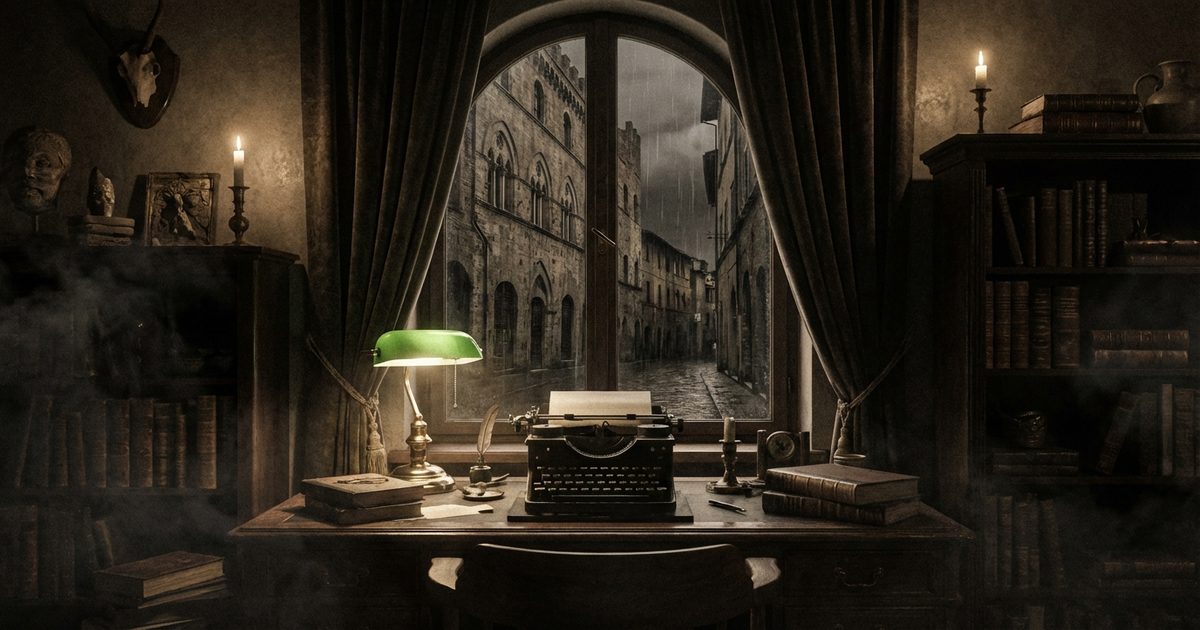
Italian horror literature possesses a rich, layered genealogy that is far too often overlooked in international conversations about the genre. While the English-speaking world celebrates its own masters of terror, from Poe to King, Italy has cultivated for centuries its own tradition of the macabre — rooted in the grotesque, the fantastic, and a singular relationship with the supernatural. The great Italian horror authors never needed to imitate foreign models: they drew from a homegrown imaginative well, steeped in folk superstition, metaphysical unease, and decadent beauty.
The origins: the Scapigliatura and romantic terror
Iginio Ugo Tarchetti, a central figure of the Milanese Scapigliatura movement, was already publishing stories suffused with sinister atmospheres, tormented bodies, and self-destructive passions in the 1860s. His fiction blended a fascination with the macabre and a savage critique of bourgeois society, creating a form of horror that was deeply social in nature. Tarchetti understood that true terror does not dwell only in crypts and graveyards but in the unresolved contradictions of the human conscience.
The Scapigliatura as a whole represents the first Italian literary movement to systematically confront the uncanny. These rebellious writers looked to Baudelaire and Hoffmann, but filtered their influences through the Italian sensibility for melodrama, carnality, and physical suffering. The result was a form of visceral horror that anticipated by decades the genre's most extreme developments.
Buzzati, Landolfi, and the unease of the twentieth century
Dino Buzzati remains perhaps the greatest narrator of subtle horror in twentieth-century Italian literature. His genius lay in transforming apparently ordinary situations into metaphysical traps with no way out. In his stories, horror does not burst in from the outside: it grows slowly from within things, like an invisible mold corroding the surface of normalcy. A building that expands night after night, a train that never reaches its destination, a desert that devours the ambitions of an entire lifetime — Buzzati demonstrated that the most authentic terror springs from the imperceptible distortion of the familiar.
Tommaso Landolfi traveled even darker paths. His tortuous, visionary prose explored liminal zones where the real blurred into the grotesque without warning. Landolfi was a writer of the absurd before absurdism became a recognized category, and his stories retain to this day a disturbing power that defies classification. His horror was linguistic as well as narrative: the words themselves seemed contaminated by something alien.
Alongside them, writers like Giorgio Manganelli pushed the Italian language toward uncharted territories, where syntax became a labyrinth and every sentence contained the seed of a purely conceptual horror. Manganelli did not tell frightening stories: he constructed verbal architectures that produced in the reader a vertigo indistinguishable from terror.
The giallo tradition and its cinematic legacy
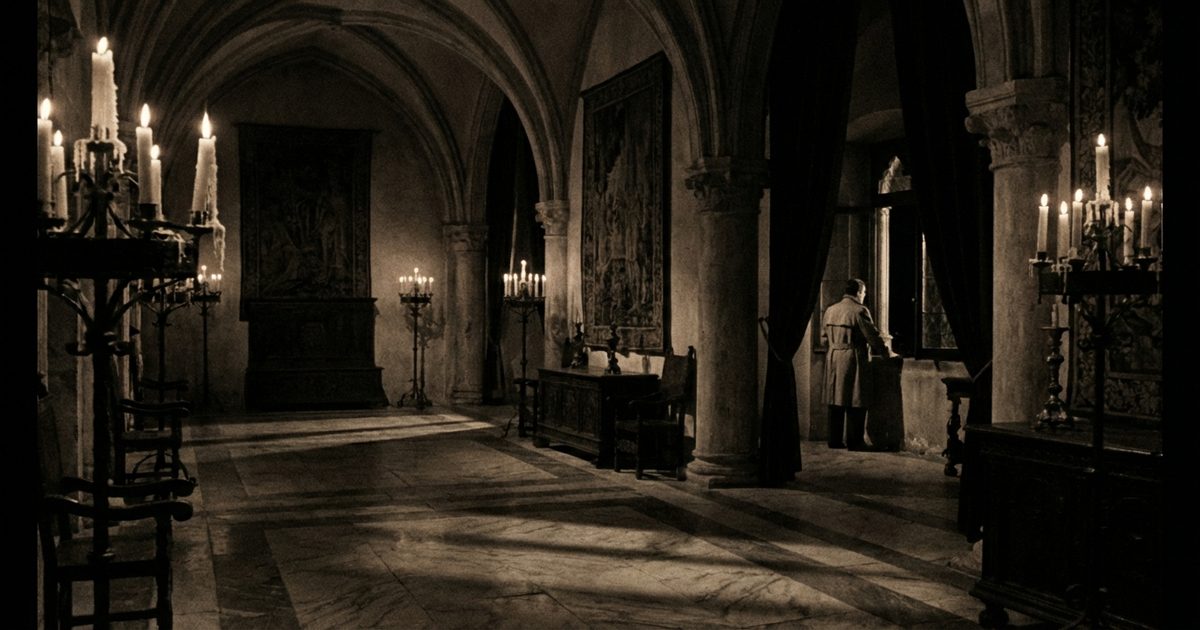
No discussion of Italian horror is complete without the giallo — that cinematic and literary genre that redefined the boundaries between thriller, horror, and visual art. Directors like Dario Argento and Mario Bava created a visual language of horror that has influenced generations of storytellers around the world. Their works blended stylized violence, dreamlike atmospheres, and a conception of fear as a total aesthetic experience.
This cinematic legacy has had a profound impact on literature as well. Contemporary Italian horror writers carry within them the memory of those images: Argento's saturated colors, Bava's baroque compositions, the fusion of beauty and revulsion that defines the Italian tradition. The giallo taught that horror can be magnificent, that fear and aesthetic pleasure are not incompatible but in fact amplify each other.
The new generation: toward a cosmic-gothic horror
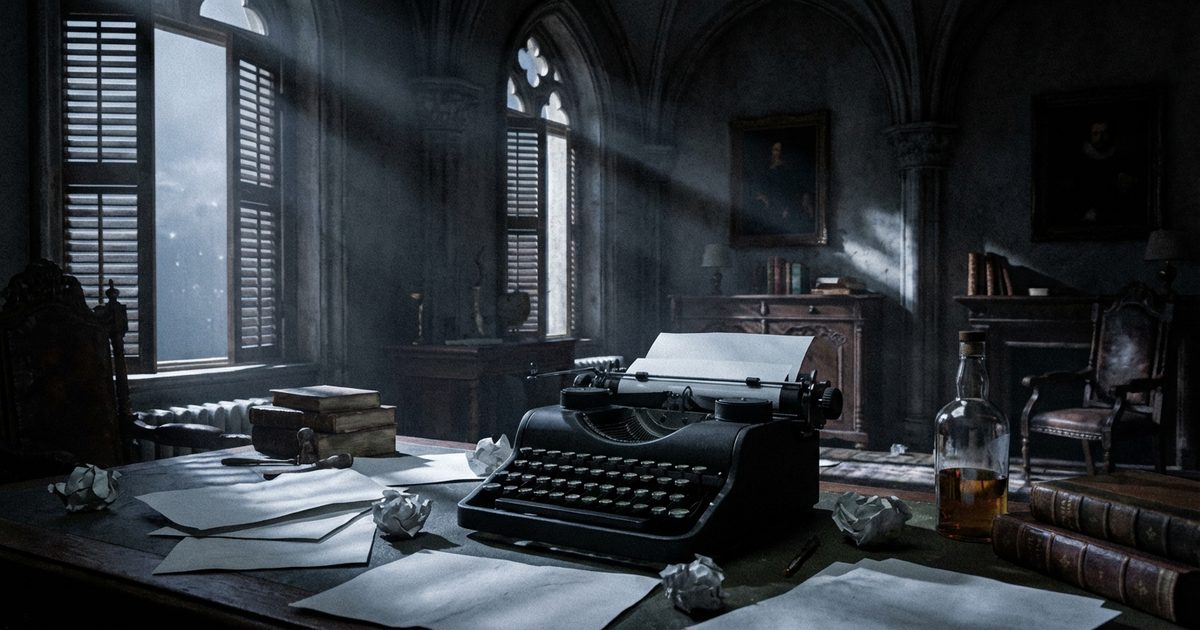
Today, Italian horror literature is experiencing a significant renewal. A new generation of authors is recovering the roots of the tradition while enriching them with contemporary sensibilities and international influences. The result is a cosmic horror that speaks Italian but resonates universally — a terror rooted in cultural history but gazing toward boundless horizons.
The Brothel of Shadows by Jan Willem Koster sits precisely at this point of convergence between tradition and innovation. The novel inherits from Buzzati the ability to transform a physical space into an ontological trap, from Landolfi the attention to language as a vehicle of disturbance, from the giallo tradition the fusion of beauty and horror. But to these elements it adds a properly cosmic dimension: the brothel in 1980s Amsterdam is not merely a physical location but a portal to inconceivable dimensions, a space where dreams become gateways and human desire reveals its abyssal nature.
The novel's cosmic-gothic approach fuses decadent European aesthetics with a sense of terror that transcends the contingent. The characters do not simply face danger: they confront the revelation that reality itself is infinitely more layered and alien than they had ever suspected. In this, The Brothel of Shadows reconnects with the deepest lesson of the Italian horror tradition: authentic terror does not reside in the monster, but in the discovery that the boundary between the known and the unknown is far thinner and more permeable than we would like to believe.
Why the Italian horror tradition matters
In a global landscape dominated by English-language horror, rediscovering Italian horror writers means gaining access to a different way of thinking about terror. The Italian tradition privileges atmosphere over action, implication over the explicit, the psychological dimension over mechanical violence. The finest Italian horror authors have always understood that the most enduring fear is the kind that lingers after you close the book — the kind that seeps into the cracks of rational thought and silently widens them.
From the feverish tales of the Scapigliatura to the metaphysical architectures of Buzzati, from the hallucinatory visions of Landolfi to today's new cosmic-gothic fiction, Italian horror literature continues to prove that the deepest terror does not need to shout. It only needs to whisper.
In the Italian tradition, terror is not an invasion from the outside. It is a discovery that happens from within: the moment when the familiar reveals itself to be what it has always been — something irredeemably strange.
Discover The Brothel of Shadows by Jan Willem Koster.
A novel that unites the Italian horror tradition with a cosmic terror that knows no boundaries.