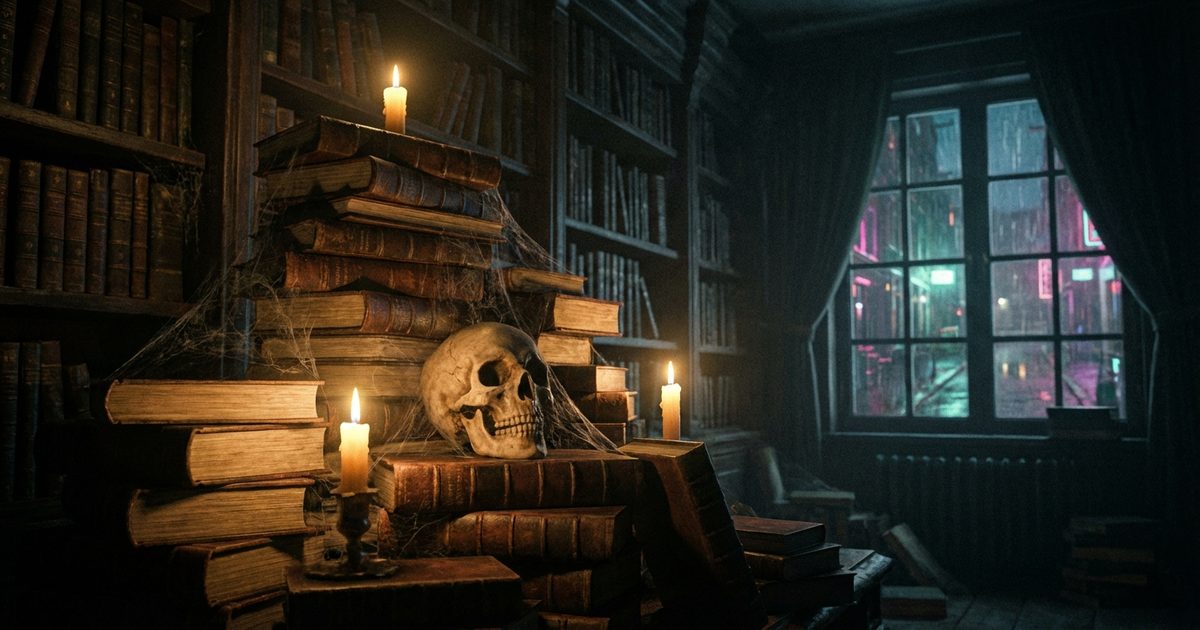
The gothic genre never died. It transformed, shed its skin, crossed centuries and continents absorbing the fears of every era. In 2026, the gothic horror novel is experiencing a season of extraordinary vitality, driven by readers who seek something deeper than a simple fright: they seek the unease that clings to you after closing the book, the subtle doubt that the shadows in the room have shifted position while you were reading.
This guide to the best gothic horror books to read in 2026 is not a simple list of titles. It is a journey through the themes, obsessions, and innovations that make contemporary gothic fiction one of the most fertile narrative territories in literature today.
What gothic means today
When we talk about gothic horror in the twenty-first century, we are no longer referring solely to the crumbling castles and damsels in distress of the eighteenth-century tradition. Contemporary gothic fiction has metabolized that heritage and evolved it into forms its founding fathers could not have imagined. The castles have become apartments in historic cities, repurposed heritage buildings, structures that preserve in their very walls the memory of previous lives. The damsels have become complex protagonists, carriers of traumas and desires that classical gothic would never have dared explore.
Three pillars support the gothic of every era and continue to sustain the atmospheric horror fiction of 2026: haunted places, not necessarily by ghosts but by the persistence of the past; dark secrets that families and communities bury beneath layers of respectability; and forbidden desires that push characters beyond the boundaries of prudence and morality.
Haunted places: the geography of horror
The setting is the true protagonist of every great gothic novel. There is no gothic without a space that breathes, that watches, that traps. In 2026, the most interesting writers have abandoned predictable settings to explore unexpected geographies: port cities of northern Europe with their layered historic quarters, Mediterranean country villas where the sun itself seems complicit in the horror, Asian metropolises where the vertical modernity of skyscrapers coexists with ancient temples and rituals.
The fundamental lesson of contemporary gothic is that any place can become haunted. You don't need medieval cellars: just a building with enough history in its walls, enough secrets in its corridors, enough silence in its rooms. Terror is born from betrayed familiarity, from the moment when what we thought we knew reveals a different nature entirely.
Dark secrets: the gothic as archaeology of the repressed
Every family has its locked rooms. Every community has its pacts of silence. The gothic novel is the narrative instrument that forces those locks, that breaks those pacts, that drags into the light what was hidden. In 2026, this function of the gothic assumes particular relevance, in an era when transparency is proclaimed as an absolute value but reality remains woven with omissions and manipulations.
The best contemporary gothic novels function as archaeological digs into the human soul. They proceed layer by layer, patiently removing the encrustations of normalcy until they reach the buried core: the original trauma, the foundational sin, the truth no one wanted to face. And when that core is exposed, the reader discovers that the horror was never in the supernatural, but in the human capacity to coexist with the monstrous while pretending it does not exist.
Forbidden desires: Eros and Thanatos in modern gothic
The link between desire and horror is as old as literature itself, but the gothic is the genre that explores it with the greatest honesty. Where other genres separate attraction from repulsion, the gothic fuses them into a single emotional experience. Gothic characters don't simply flee danger: they are attracted to it, seduced by it, transformed by it. The brothel, the labyrinth, the crypt, the secret chamber — all these gothic spaces are simultaneously places of terror and desire.
In the landscape of 2026, the bravest novels are those that confront this fusion without hypocrisy. That recognize in forbidden desire not a character flaw, but a primordial narrative force — the engine that drives the story into territories where moral conventions lose their grip and the human being confronts their deepest, most uncomfortable nature. This is the territory of dark romance horror at its most authentic.
Gothic horror books to read in 2026: our picks
Navigating the publishing landscape of 2026 requires a compass. Here are the currents and works that deserve the attention of anyone who loves the gothic in its most authentic forms.
European urban gothic
Historic European cities offer perfect settings for contemporary gothic. Amsterdam, Venice, Prague, Lisbon: each of these cities possesses an urban fabric where past and present overlap, creating narrative shadow zones. The current of urban gothic set in Amsterdam is particularly vital, thanks to the city's ability to combine a facade of openness and normalcy with underground quarters and districts that guard centuries of secrets.
Psychological horror with gothic undertones
The most interesting frontier of the genre in 2026 is the intersection of gothic and psychological horror. Novels that renounce visible monsters to explore inner ones, that use gothic architecture as a metaphor for the human mind: corridors that lead nowhere, rooms that change dimensions, staircases that ascend downward. This category contains the genre's most sophisticated works, those that dialogue with psychoanalysis and philosophy.
Cosmic gothic
Lovecraft's legacy continues to bear fruit in 2026, but the best contemporary authors have freed cosmic gothic from its creator's limitations. The result is works that combine the horror of the unknown with a classical gothic sensibility: the idea that the universe itself is a haunted house, and that we inhabit only a tiny room without knowing what moves in the others.
The Brothel of Shadows: the gothic novel you didn't expect
Among the gothic horror books to read in 2026, The Brothel of Shadows by Jan Willem Koster occupies a singular place. Set in 1980s Amsterdam, the novel constructs a gothic experience rooted in the contradictions of a real city — the nocturnal canals, the leaning facades of the old center, the red-light district with its permanent tension between sacred and profane — then drags them into a dimension where reality folds in on itself.
What distinguishes this novel in the landscape of contemporary gothic is its refusal to separate horror from desire. The brothel of the title is not simply a place of terror: it is a space of transformation, where characters are confronted with parts of themselves they preferred to ignore. The building's architecture obeys an impossible geometry — corridors multiply, rooms change nature — but the true labyrinth is the interior one, made of memory, guilt, and attraction to what should be avoided.
For anyone seeking atmospheric horror fiction that refuses to settle for established formulas and reinvents the genre with its own voice, The Brothel of Shadows represents essential reading in 2026.
Enter the brothel. Discover what hides beyond the threshold.
Read the NovelWhy gothic is the genre of our time
We live in an era that produces unease at industrial rates. Certainties dissolve, familiar structures transform, and the boundary between real and artificial grows thinner every day. The gothic novel, with its capacity to give narrative form to the anxiety of living in spaces we don't fully understand, has never been more relevant. Reading gothic horror in 2026 is not an exercise in escapism: it is a way of facing the shadows that the light of our screens cannot erase.
The best gothic books don't offer comforting answers. They offer questions that remain open like doors to dark rooms. And in those rooms, for those with the courage to enter, lie truths that no other literary genre knows how to tell.