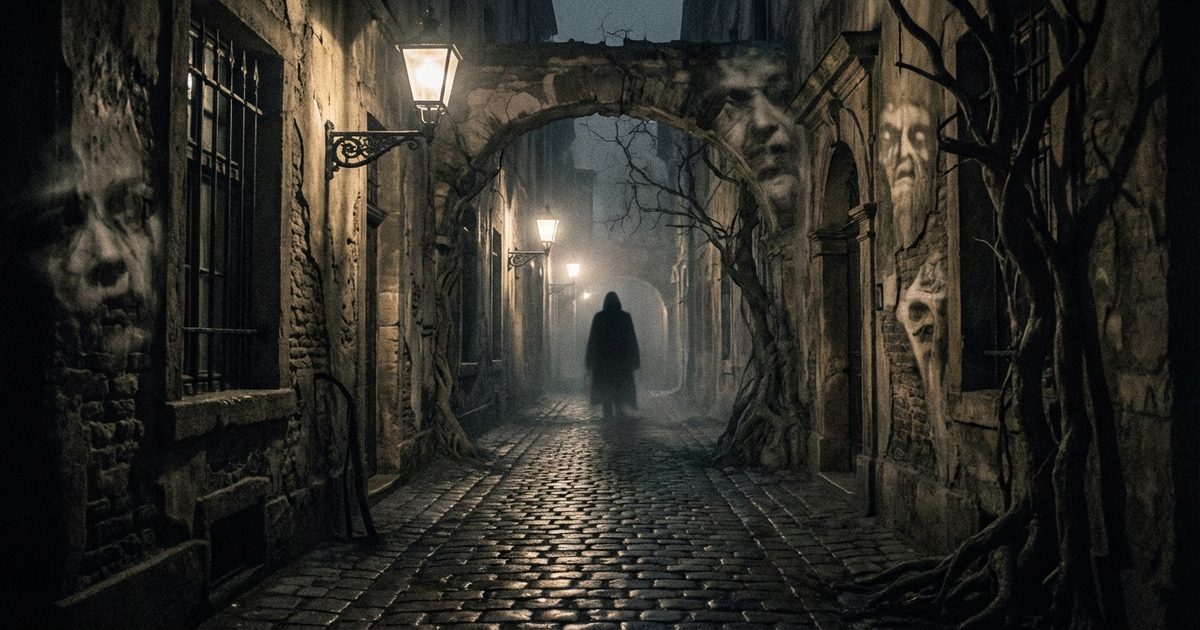
Every night, millions of people close their eyes and surrender to a territory without laws. Sleep — a necessary, biological, seemingly innocent act — leads us to a place where reason abdicates and images reign alone. Dreams can be luminous gardens or sealed chambers. But when they become nightmares, when sleep horror transforms rest into a prison from which there is no escape, then terror assumes a particularly intimate form: that of an enemy who lives inside us, who awaits us in our most absolute vulnerability.
It is no surprise that horror literature has found in nightmares one of its most powerful narrative instruments. The dream is the natural border between what we know and what we fear, between consciousness and the abyss. And every great author of the macabre has known how to cross that border, bringing the reader along.
The dream as threshold: the gothic tradition
In classic gothic literature, the dream functions as a doorway. The protagonists of eighteenth- and nineteenth-century novels don't encounter horror by chance: they glimpse it first in sleep, as a premonition, a warning they cannot decipher until it is too late. The gothic dream is prophetic and insidious — it reveals a truth the character does not want to accept, one the plot will confirm with merciless precision.
This function of the dream as portent intertwines with the tradition of gothic fiction set in real places, where the physical architecture of a city or building merges with the dreamlike geography of the mind. Rooms dreamed of resemble rooms that exist. Corridors traversed in sleep lead to doors that will open in waking life too. The boundary between interior and exterior, between psyche and world, becomes permeable.
The cosmic nightmare: dreaming the impossible
With the advent of cosmic horror, the dream takes on a new and vertiginous dimension. It is no longer a matter of premonitions or ghosts visiting the sleeper: it is contact with realities that the human mind cannot contain. The dreamer becomes an involuntary receiver of signals from elsewhere — from dimensions that exist beyond ordinary perception and that use sleep as a channel of communication.
In this vision, the nightmare is not a sleep disorder. It is a revelation. What the sleeper sees in their nocturnal visions is not the product of their imagination, but a fragment of a reality vaster and more terrible than anything the conscious mind dares to conceive. The terror does not arise from what is dreamed, but from the awareness that the dream might be true. This is dream horror at its most existentially devastating.
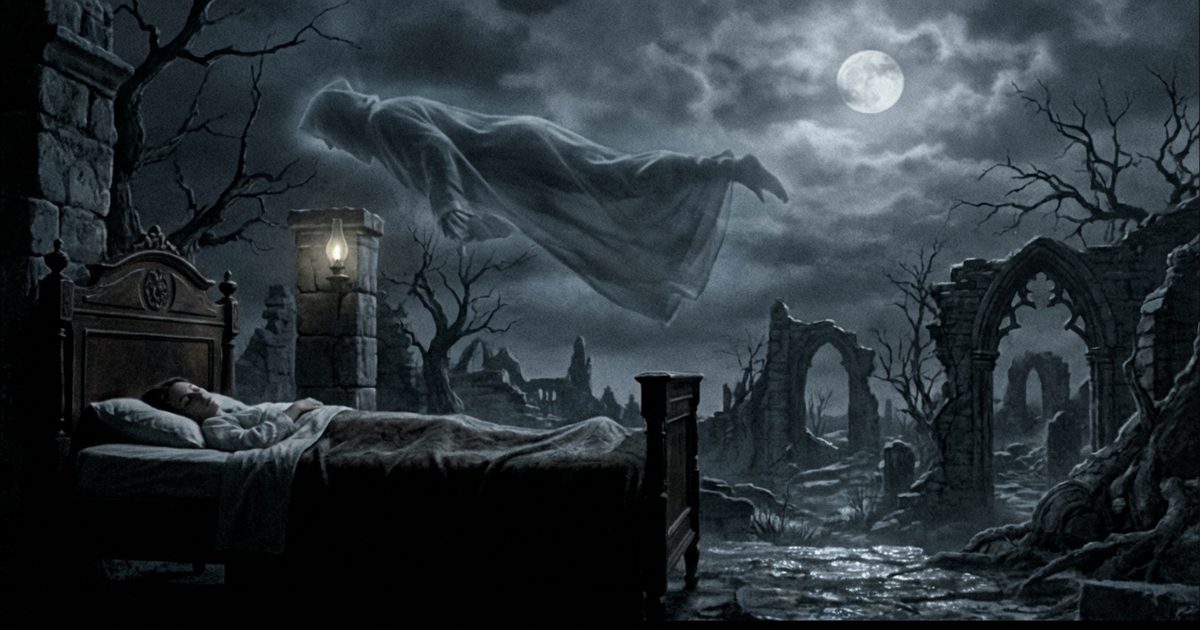
Sleep as psychological battlefield
Contemporary psychological horror has taken the relationship between dream and terror to yet another plane. Here the nightmare is not a door to the outside, but a mirror reflecting the interior — buried fears, repressed traumas, truths the protagonist has tried to forget. The dream becomes the place where the subconscious presents the bill, where the mind's defenses collapse and repressed material emerges with a violence no therapy could equal.
The narrative power of this approach lies in its ambiguity. The reader, alongside the protagonist, can no longer distinguish between dream and waking. Every scene might be real or dreamed. Every certainty might dissolve upon waking — or, worse, at the moment the character realizes they never woke up at all. This dissolution of boundaries between states of consciousness generates a narrative anxiety that few other techniques can produce.
Recurrence: when the nightmare returns
Among all dream-related devices in nightmare horror novels, the recurring nightmare is perhaps the most disturbing. A single terrifying dream can be dismissed as an anomaly, a caprice of the tired mind. But when the same dream returns — night after night, with minimal variations that make it ever clearer, ever more detailed — then it is no longer a random phenomenon. It becomes a message. An invitation. A summoning.
The recurring nightmare transforms sleep from refuge into trap. The protagonist begins to dread the evening, to delay the moment of turning off the light, because they know what awaits them on the other side of their eyelids. And each night the dream becomes more real, more tangible, closer — until the distance between the dream world and the waking world is annihilated entirely.
The Brothel of Shadows: summoned through nightmares
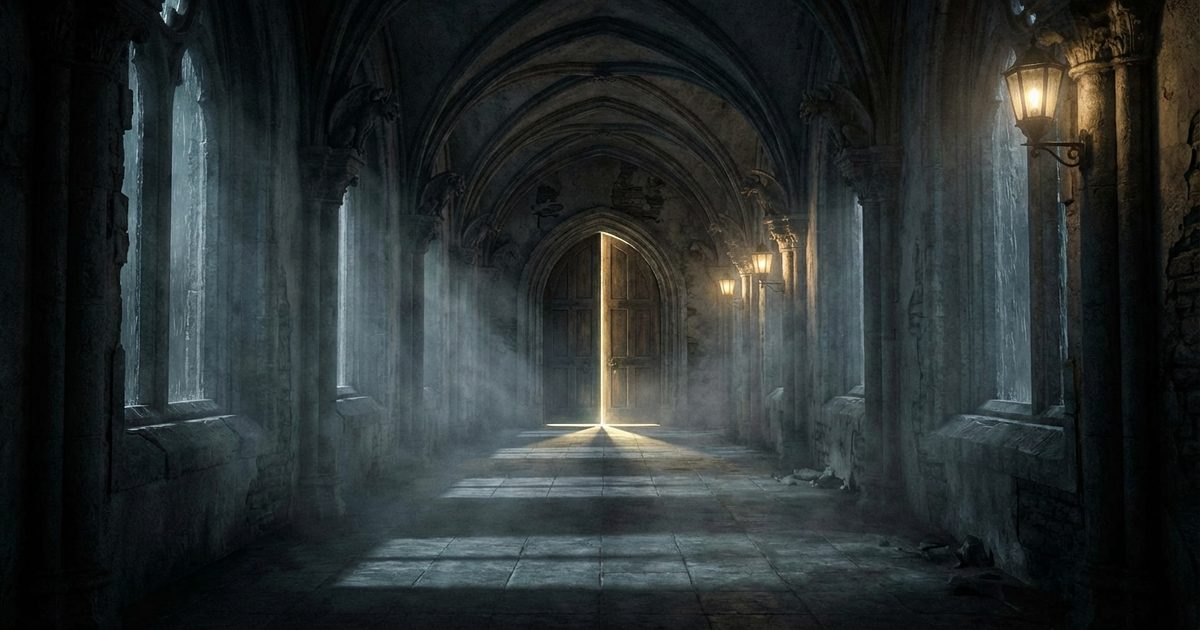
In The Brothel of Shadows by Jan Willem Koster, the dream is not merely a narrative device: it is the central mechanism through which the horror manifests. The protagonist Alex does not discover the brothel by chance; he does not find it while walking through the nighttime streets of the red-light district. He is called. And the call comes through nightmares.
Night after night, Alex's dreams fill with images that do not belong to him: corridors lit by a reddish glow, doors opening onto rooms where shadows assume seductive and terrible forms, a distant music that seems to come from beneath the surface of consciousness itself. Each awakening brings clearer fragments, more precise details — an address that does not exist on any map, a sign written in characters he should not be able to read, yet understands.
The brothel uses dreams as a fishing line. It casts its images into the victim's sleep and waits for the attraction to become irresistible, for curiosity to overpower fear, for the desire to know whether that place truly exists to grow stronger than the certainty that it shouldn't. It is a seduction conducted in the most vulnerable territory of the human being: the one where we cannot defend ourselves, because we are not the ones who decide what we dream.
In this sense, Koster's novel joins the great tradition of the nightmare as a gateway between worlds, but renews it in an original way. The brothel is not a place reached by crossing a physical threshold: it is a place that reaches the protagonist through sleep, that lures him through nocturnal visions constructed like traps of velvet and shadow. When Alex finally crosses the brothel's door in waking life, he has the sensation of having been there before — dozens of times, in his nightmares. And in a certain sense, he truly has.
Why nightmares attract us
Horror literature that employs dreams in horror fiction touches a deep chord in the human experience. We have all felt the terror of a nightmare — that moment of waking with a heart beating too fast, with the certainty that something was in the room, with the residue of an image that daylight cannot fully erase. The best horror novels draw on this universal experience and amplify it, structure it, give it a narrative form that makes it even more powerful.
Because ultimately, what makes nightmares so terrifying is not their content. It is the awareness that they are ours — that they emerge from a place inside us to which we have no access, that they speak a language we only half understand, that they show us something we may have always known but would prefer not to see. The nightmare is the most personal horror that exists. And precisely for this reason, it is the one from which we cannot flee.
Discover what happens when nightmares become real.
Enter the brothel — if sleep will let you.