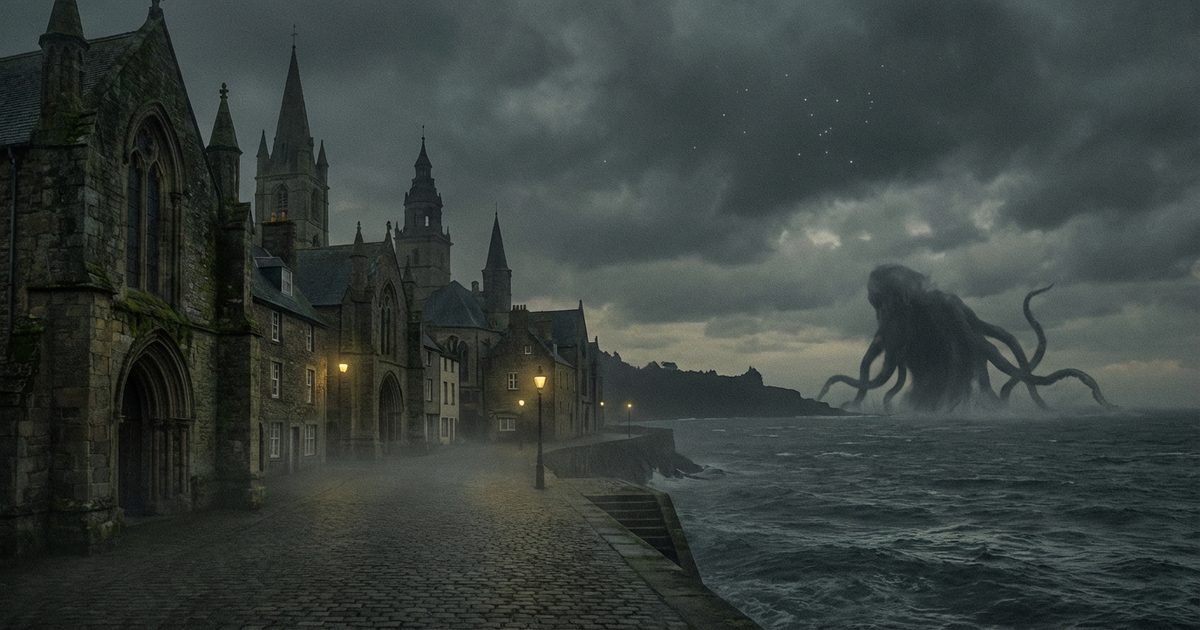
There is a terror that goes beyond blood and shadows. A horror that does not hide in basements or behind locked doors, but dwells in the very fabric of reality itself. Cosmic horror — eldritch, unfathomable, and deeply unsettling — is experiencing a remarkable resurgence, fueled by a literary tradition that draws from myth, philosophy, and the kind of metaphysical dread that has always simmered beneath the surface of Western thought.
The roots of cosmic horror: beyond Lovecraft
When people talk about cosmic horror, the mind immediately turns to H.P. Lovecraft and his pantheon of alien deities. But reducing the genre to Lovecraft's legacy alone would mean ignoring a much deeper genealogy. The idea that humanity is insignificant in the face of incomprehensible forces did not originate in twentieth-century America — it runs through centuries of European philosophical and literary thought.
In the broader tradition of weird fiction, this sensibility found fertile ground long before the term "cosmic horror" entered the reader's vocabulary. Philosophers and writers had already described a universe indifferent to human suffering, where nature is not a benevolent mother but a blind, mechanical force. From the existentialists who shattered identity against the absurdity of existence, to authors who built towering metaphors of waiting for an enemy that might never arrive — or might prove incomprehensible when it does — the foundations of cosmic dread were laid well before Lovecraft put pen to paper.
These are not horror works in the traditional sense, but they share with eldritch horror its essential thematic core: the awareness that human beings occupy a marginal place in a vast and inscrutable cosmos.
Lovecraft's enduring influence on dark fiction
Lovecraft's impact on world literature was profound and far-reaching. Readers across continents recognized in those stories of ancient entities and forbidden knowledge something hauntingly familiar: an echo of their own philosophical and literary traditions, filtered through an Anglo-Saxon sensibility that gave cosmic dread a new and terrifying shape.
Cinema quickly grasped the genre's potential. Visionary directors explored territories adjacent to cosmic horror, creating atmospheres in which reality warps and the supernatural follows no comprehensible rules. Films featuring portals to unfathomable dimensions represent perhaps the purest expression of cosmic horror on screen — visions of places where the laws of physics and reason simply cease to apply.
But it is in literature that the genre has found its most interesting evolution. Contemporary authors blend medieval darkness with cosmic terrors. Others explore the folds of the absurd with prose that seems to describe the indescribable. The European tradition of magical realism and the fantastic offers unique narrative tools for tackling themes that Lovecraft only intuited.
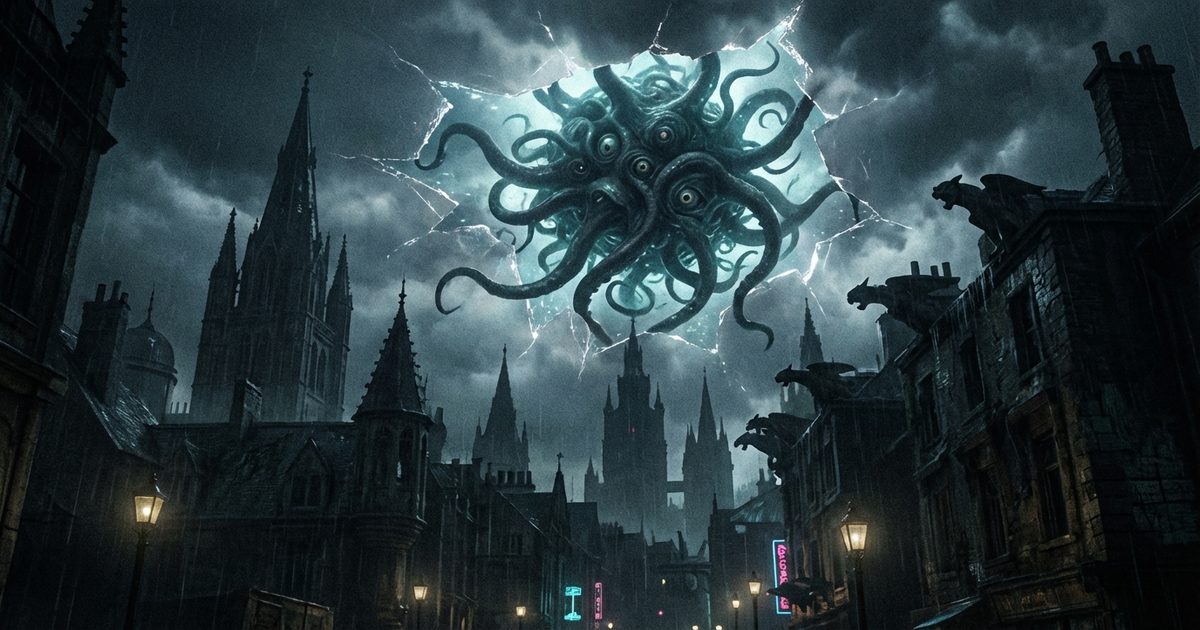
The pillars of cosmic horror: insignificance, entities, and forbidden knowledge
Cosmic horror rests on three thematic pillars that distinguish it from every other form of dark fiction.
The first is human insignificance. We are not at the center of the universe. We are not the apex predators of the cosmic food chain. There exist intelligences so vast and ancient that our entire civilization represents less than a blink of an eye to them. This awareness, when it reaches the characters of a cosmic horror tale, does not kill them physically — it destroys their ability to assign meaning to reality.
The second pillar is ancient entities. Not demons in the religious sense, not ghosts tied to individual traumas, but beings whose existence predates the very concept of human time. These entities are not necessarily evil: their danger comes from the fact that they operate according to logics that the human mind cannot contain without fracturing.
The third is forbidden knowledge. In cosmic horror, knowledge is not power — it is a curse. Every fragment of truth about the authentic nature of the cosmos erodes the sanity of whoever receives it. Cursed books, ancestral rituals, symbols carved into millennial stones: all are vehicles for a knowledge that humanity was never meant to possess.
The Brothel of Shadows: contemporary cosmic horror
The Brothel of Shadows by Jan Willem Koster inserts itself into this tradition with a unique and disturbing voice. Set in 1980s Amsterdam, the novel tells the story of Alex's descent into a brothel that seems to exist at the edges of reality — a place that chooses its own visitors through dreams, and that conceals a secret tied to cosmic forces far beyond human comprehension.
What makes this novel a significant contribution to cosmic horror is its fusion of narrative registers. The European setting, steeped in history and decadence, intertwines with a horror that is never purely physical but always ontological. The characters do not face monsters to fight: they face the progressive revelation that the reality they have always believed in is merely a thin veil over something immeasurable.
The novel explores the concept of Cosmic Interception — the idea that certain places function as antennas capable of receiving signals from other dimensions. The brothel becomes a threshold, a point of contact between the everyday and the inconceivable, where human desire transforms into an instrument of cosmic revelation.
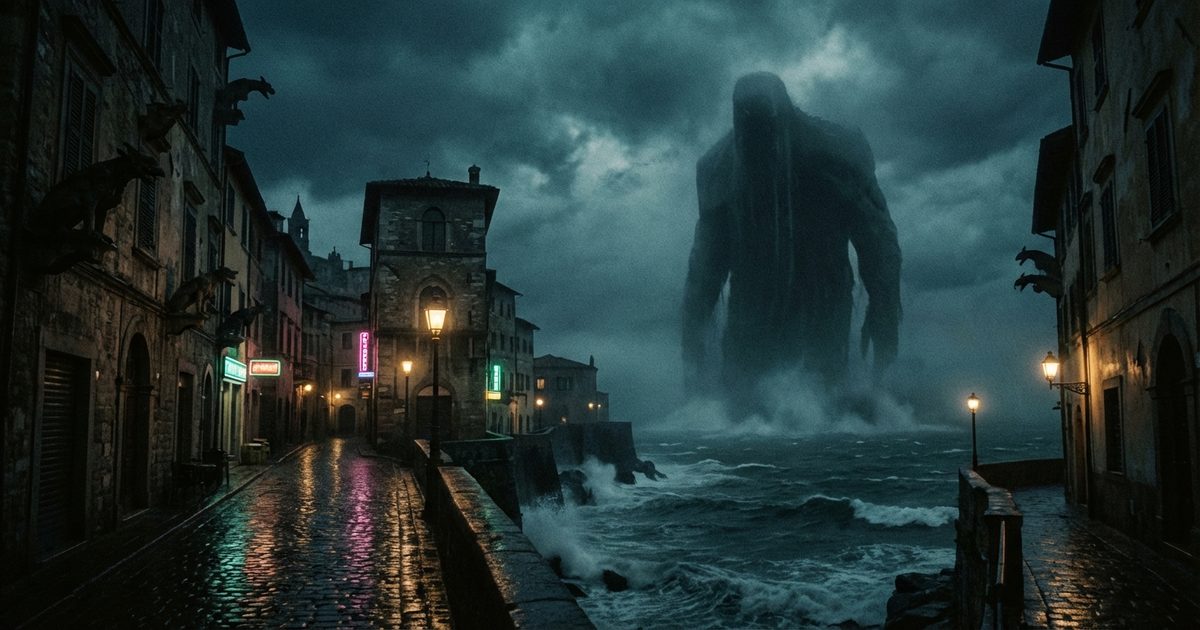
Why read cosmic horror today
In an era when science constantly reveals how little we understand about the universe — from the problem of dark matter to the paradoxes of quantum mechanics — cosmic horror has never been more relevant. The genre offers us an emotional language to process what reason struggles to accept: that perhaps we are not equipped to comprehend the true nature of reality.
Eldritch horror and weird fiction, with their unique philosophical and literary heritage, bring a depth to this exploration that few other cultural contexts can offer. From meditations on nature's indifference to the visionary aesthetics of genre cinema, from existential unease to the new contemporary cosmic narrative — the tradition of dark fiction has all the tools to become one of the most important voices in worldwide cosmic horror.
The greatest horror is not what hides in the dark. It is discovering that the dark is not hiding at all: it has always been here, and it is infinitely vaster than the light.
Discover The Brothel of Shadows by Jan Willem Koster.
A cosmic horror novel set in 1980s Amsterdam.