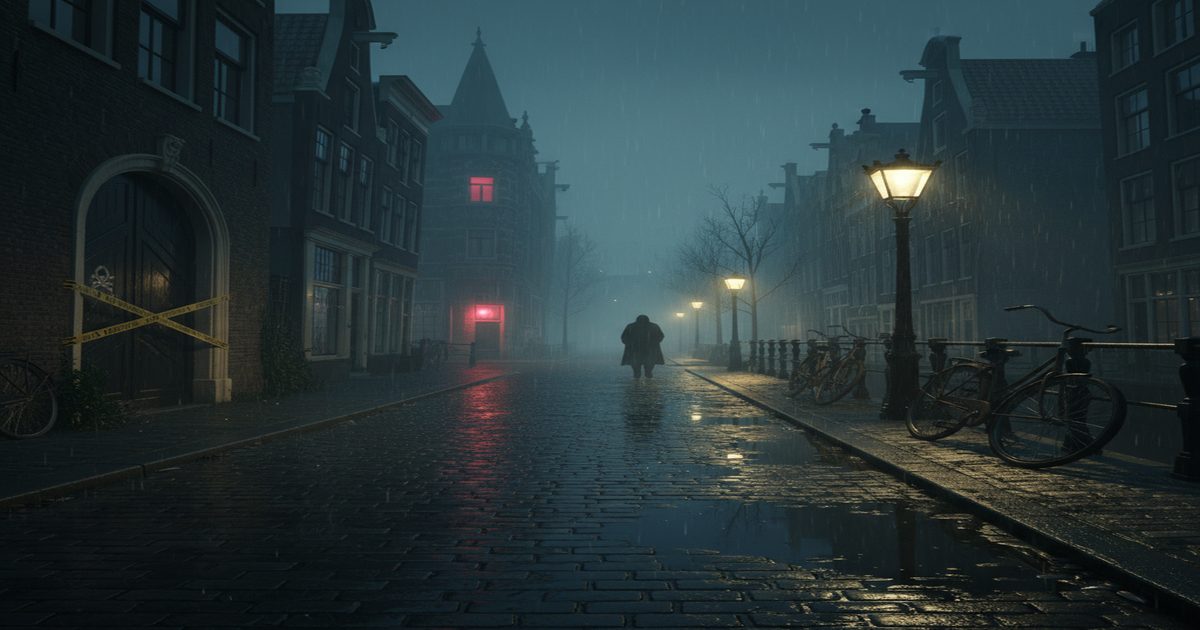
Contagion is invisible. No claws. No teeth. It moves through damp air, through the breath of whoever stands beside you.
From Poe’s plague-ridden castle to the emptied streets of 28 Years Later: The Bone Temple in 2026, contagion horror has always been about something else. Collective fear. Bodies that betray. A threat that cannot be fought or outrun.
The Death You Could Smell: Poe and the Age of Miasma
In 1842, Edgar Allan Poe wrote The Masque of the Red Death. The plague did not knock. It slipped between crimson velvet curtains, silent as the smoke from a dying candle, filling the lungs with the sweet iron smell of blood.
Poe gives us no medical symptoms. He gives us color and sound: scarlet stains spreading on pale skin, a clock ticking in the dark. Two senses mapping an advance that cannot be stopped.
Nineteenth-century Europe knew cholera personally. The stench of a stagnant canal meant contagion. “Miasma”—bad air—was the official explanation before Pasteur discovered bacteria. Science offered nothing. Terror filled the gap.
That is where contagion horror begins: the dread of what cannot be seen, touched, or reasoned with—only smelled, heard, and felt in the fever that climbs at night.
“The Red Death had long devastated the country. No pestilence had ever been so fatal, or so hideous.” — Edgar Allan Poe, The Masque of the Red Death (1842)
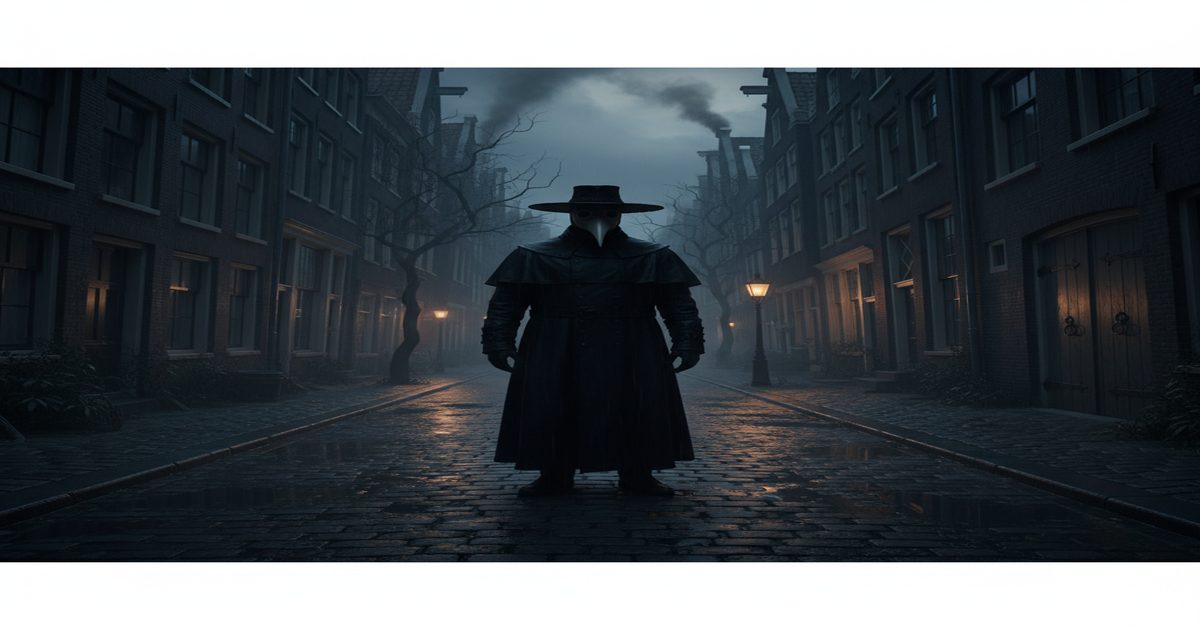
Romero and the Democratization of Contagion
In 1968, George Romero shot Night of the Living Dead for fourteen thousand dollars. It was not a zombie film. It was a film about contagion as loss of self.
The dead rose for no reason. No patient zero. No cure. The contagion was not an ending: it was a permanent transformation. Those who were bitten did not simply die. They became something else, something that still wore the familiar face.
Romero understood the deepest register of this fear. The monster outside is terrifying. But discovering that the person you love is already changing—that is unbearable. His film gave the genre its most durable metaphor: the infected who cannot know they are infected.
Critics read Vietnam into it, American racism, Cold War paranoia. The contagion metaphor absorbed all of it. That is its power: it speaks of one thing while showing another.
Amsterdam in the ’80s: The Body as Threat
The eighties produced two parallel epidemics. One was real: AIDS. The other was fictional: a wave of contagion horror that mirrored exactly that fear, that sudden dread of another person’s blood, of an accidental touch.
In the same Amsterdam where Alex, the protagonist of The Brothel of Shadows, walked the red-light canals at night, the human body had become suspicious territory. Something could pass between people—invisible, fatal, tangled up with desire itself.
Jan Willem Koster sets the novel in that precise moment not out of nostalgia. The body as vector of contagion—not viral but cosmic—is one of the book’s central obsessions. Xyl’khorrath does not infect through a bite. It transmits through the dream, through longing, through the act of wanting something forbidden.
In those years, the line between desire and terror was razor-thin. Erotic gothic horror understood this long before the rest of the culture caught up.
28 Days Later and the Rage That Spreads
In 2002, Danny Boyle rebuilt the genre from scratch. In 28 Days Later, the virus created not the walking dead but the living furious—humans burned hollow by pure, uncontrolled rage. Thirty seconds from exposure to transformation. One drop of blood in the eye.
Speed was the most terrifying detail. No incubation, no grace period. The virus moved like a chemical reaction rather than a disease. A person became a weapon faster than they could understand what was happening.
Now, in 2026, Nia DaCosta’s 28 Years Later: The Bone Temple takes the franchise to its bleakest point. The virus is no longer an acute emergency. It has become the environment, an endemic infection that has permanently reshaped what society means. The survivors are not waiting for a cure. They know none is coming.
That shift is the most unsettling thing: when contagion stops being an event and becomes the permanent condition of existence.
Cosmic Contagion: Beyond Biology
Contagion horror reaches its purest form when it abandons biology entirely. H.P. Lovecraft understood this in 1926 with The Call of Cthulhu: the encounter with the cosmic entity does not infect the body. It infects the mind.
Seeing what should not exist changes the brain irreversibly. A cognitive contagion, untreatable and permanent. Those who survive the encounter do not recover. They carry the knowledge like a wound that never closes, that breathes.
Xyl’khorrath, the cosmic entity in The Brothel of Shadows, works exactly this way. No bite, no scratch. It transmits through dreaming, through desire, through curiosity itself. Alex is not infected against his will. He is drawn in. And that difference—between a contagion you suffer and one you seek—is what makes the novel so relentlessly uncomfortable.
You can guard against bites. You cannot guard against what you want.
For readers who explore the tradition of cosmic horror and weird fiction, cognitive contagion runs through everything: from Lovecraft to Thomas Ligotti, from the fungal networks of folk horror to the transformed bodies of contemporary body horror.
What Remains After the Contagion
Contagion horror endures across every era because it voices a fear that never ages: the body you cannot control, the mind that shifts without asking your permission.
Poe knew it with the scarlet stains. Romero knew it with the dead who walked. Boyle knew it with rage. DaCosta knows it in 2026 with a world where the virus is already inside, where telling the infected from the clean has become impossible.
The question, in the end, is not whether the contagion will come. It is whether what remains will still be recognizable as you.
Italian horror literature has a new dark masterpiece. Have you read it yet?
Read the novel →