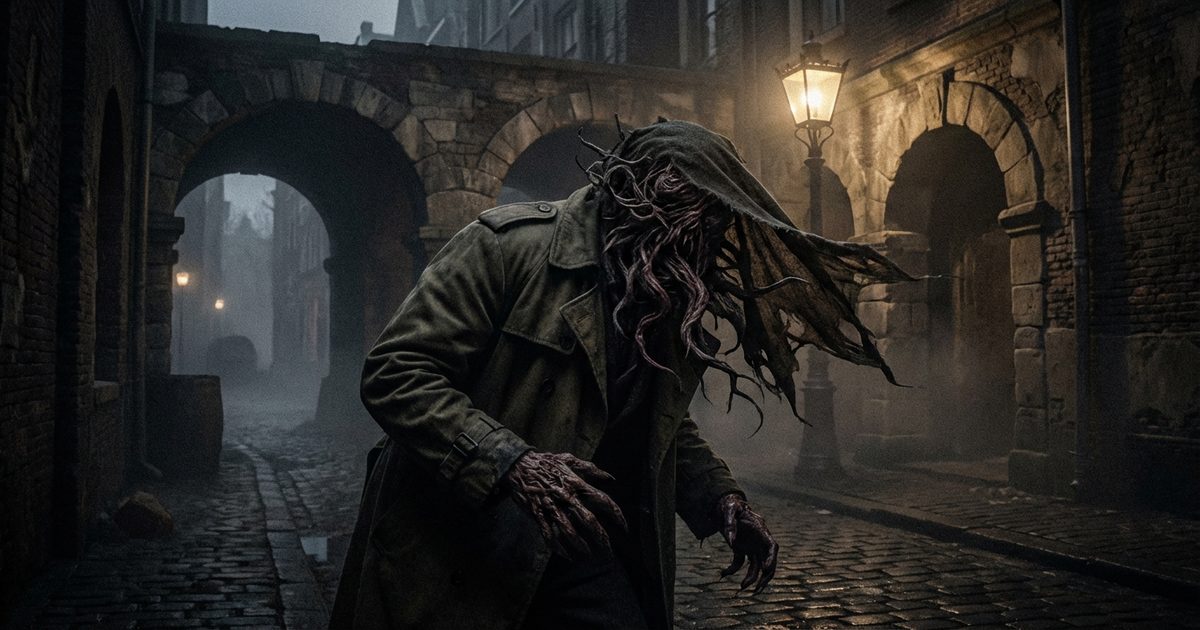
One morning, Gregor Samsa woke from uneasy dreams and found himself transformed in his bed into an enormous insect. With that single sentence, published in 1915, Franz Kafka inaugurated a tradition of literary horror that remains among the most visceral and psychologically devastating in all of fiction. Not the horror of what lurks in the shadows, but the horror of what happens when the shadows get inside you — when the threat is not out there, but in here, in the flesh you thought you knew, in the body you believed was yours.
Body horror. The term itself is relatively modern, coined to describe a specific strain of horror fiction and film that locates terror in the mutation, transformation, or violation of the human body. But the fear it names is older than literature. It is the fear that wakes you at three in the morning with your hand on a mole that was not there yesterday. It is the fear that the body you inhabit is not entirely under your control — that it has its own agenda, its own trajectory, and that trajectory may not include your continued existence as you know it.
Kafka and the horror of waking
Kafka understood something that horror fiction would take decades to fully articulate: that the most terrifying transformation is the one that happens without explanation. Gregor Samsa does not provoke his metamorphosis. He does not read a cursed text, enter a forbidden place, or transgress a moral boundary. He simply wakes up and is different. The absence of cause is the source of the horror. If a transformation can be explained, it can potentially be avoided or reversed. If it simply happens — if the body mutates according to laws that have nothing to do with justice or logic — then no one is safe. Ever.
This is the philosophical core of all body horror: the revelation that the body is not a stable thing. It is a process, constantly changing, constantly remaking itself at the cellular level. We age. We scar. Our cells divide and sometimes they divide wrong. Body horror takes this biological reality and accelerates it, exaggerates it, makes visible the transformation that is always already happening beneath our skin. It does not create a new fear. It illuminates one that was always there.
Cronenberg: the flesh made cinema
If Kafka provided the philosophical framework, David Cronenberg provided the visual vocabulary. From his early films through his masterworks of the 1980s, Cronenberg developed an aesthetic of bodily transformation that remains unmatched in its combination of clinical precision and visceral impact. His camera regards the mutating body with the detached fascination of a surgeon, refusing to look away, refusing to provide the comfort of shadow or suggestion.
What distinguishes Cronenberg from mere shock merchants is his insistence that transformation is not simply horrifying — it is also, in some profound and disturbing way, revelatory. His characters do not merely suffer their metamorphoses. They are remade by them, granted access to forms of experience that the unaltered body cannot achieve. The horror is real, but so is the transcendence. The two cannot be separated, and Cronenberg refuses to pretend otherwise.
This duality — transformation as both destruction and revelation — is the engine that drives the most powerful body horror fiction. It is what separates the genre from simple gore. The exploding head is shocking; the mind that inhabits the transforming body, still conscious, still aware, still recognizably human even as the flesh becomes something else entirely — that is where the true horror lives.
Barker: the body as gateway
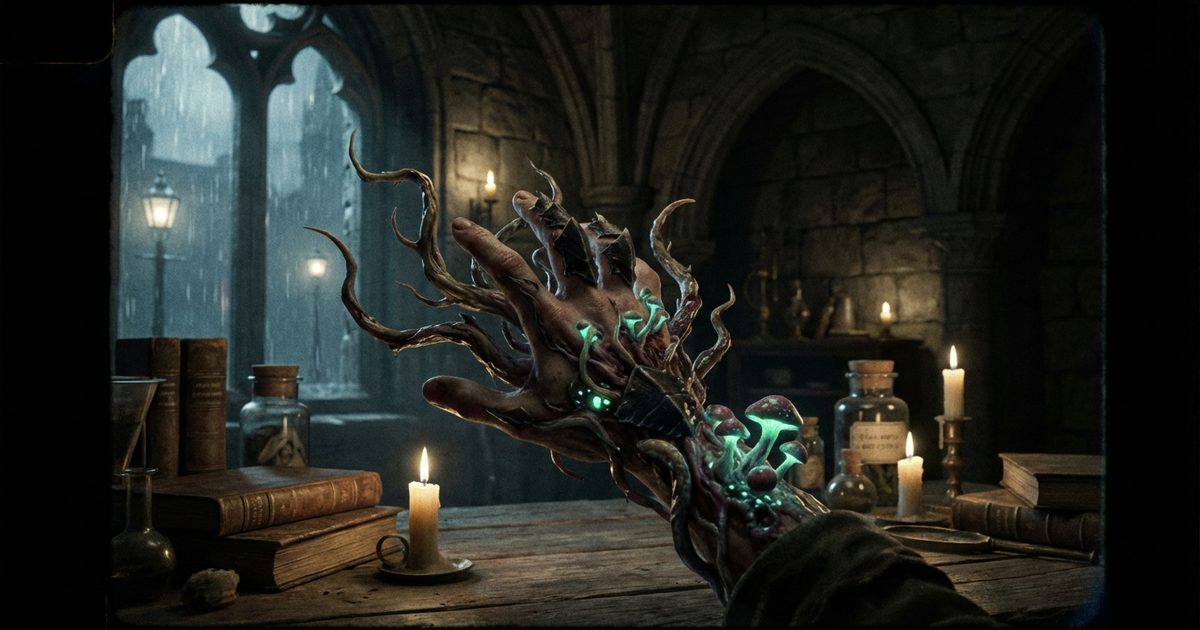
Clive Barker brought to body horror a perspective that was both darker and more ecstatic than Cronenberg's clinical gaze. In Barker's fiction, the body is not merely a thing that can be changed — it is a doorway that can be opened. His Cenobites, with their elaborately modified flesh, are not victims of transformation but its enthusiasts, beings who have pushed the body so far beyond its ordinary limits that the distinction between pleasure and pain has become meaningless.
Barker understood that body horror is inextricable from desire. We do not merely fear the transformation of our bodies; we are also, in ways we rarely admit, fascinated by it. The popularity of tattoos, piercings, cosmetic surgery, and body modification testifies to a deep human hunger to alter the body's given form. Body horror takes this hunger and follows it to its logical, terrifying conclusion: what if you could change everything? What if the body had no fixed form at all? Would that be liberation or annihilation? And would you be able to tell the difference?
The new flesh: contemporary body horror
Contemporary body horror fiction has extended these questions into new and unsettling territory. Jeff VanderMeer's Southern Reach trilogy presents transformation as an ecological phenomenon — an alien biology that absorbs and remakes terrestrial life forms according to its own inscrutable logic. In VanderMeer's Area X, the boundary between organism and environment dissolves. Bodies become landscape. Landscape becomes body. The forbidden knowledge is not a fact to be learned but a biological process to be undergone.
Paul Tremblay, in novels that sit at the intersection of psychological and body horror, explores how transformation can be as much mental as physical — how the body's mutation reflects and amplifies the mind's disintegration. His work reminds us that the boundary between body horror and psychological horror is itself unstable, because the mind and the body are not truly separate things. What happens to one happens to the other. The transformation of flesh is always also a transformation of self.
The crow transformation: the opening of The Brothel of Shadows
Jan Willem Koster's The Brothel of Shadows announces its allegiance to the body horror tradition from its very first pages. The novel opens with a transformation scene that is among the most striking and disturbing in contemporary dark fiction: a human body becoming something avian, something caught between species, between states of being. Bones restructuring. Skin splitting to reveal not blood but feathers. The geometry of the human form collapsing and reassembling according to a blueprint that has nothing to do with human anatomy.
This crow transformation serves as the novel's overture, establishing the central theme that will echo through every subsequent chapter: the body is not a fixed thing. It is a territory that can be invaded, colonized, remade. In the world of The Brothel of Shadows, the supernatural brothel at the heart of the narrative is a place where this remaking happens not by accident but by design — where the transaction between client and establishment involves not merely the body's pleasures but its fundamental structure.
What makes Koster's body horror so effective is its marriage of the physical and the metaphysical. The transformations in the novel are not random mutations. They are revelations — the body's flesh rewritten to express truths that language cannot contain. Each physical change corresponds to a deepening of the protagonist's understanding of the cosmic reality that the brothel conceals. To change shape is to change perception. To lose the human form is to gain access to forms of knowledge that the human body was designed — or evolved, or was mercifully limited — to exclude.
Why we fear the mirror
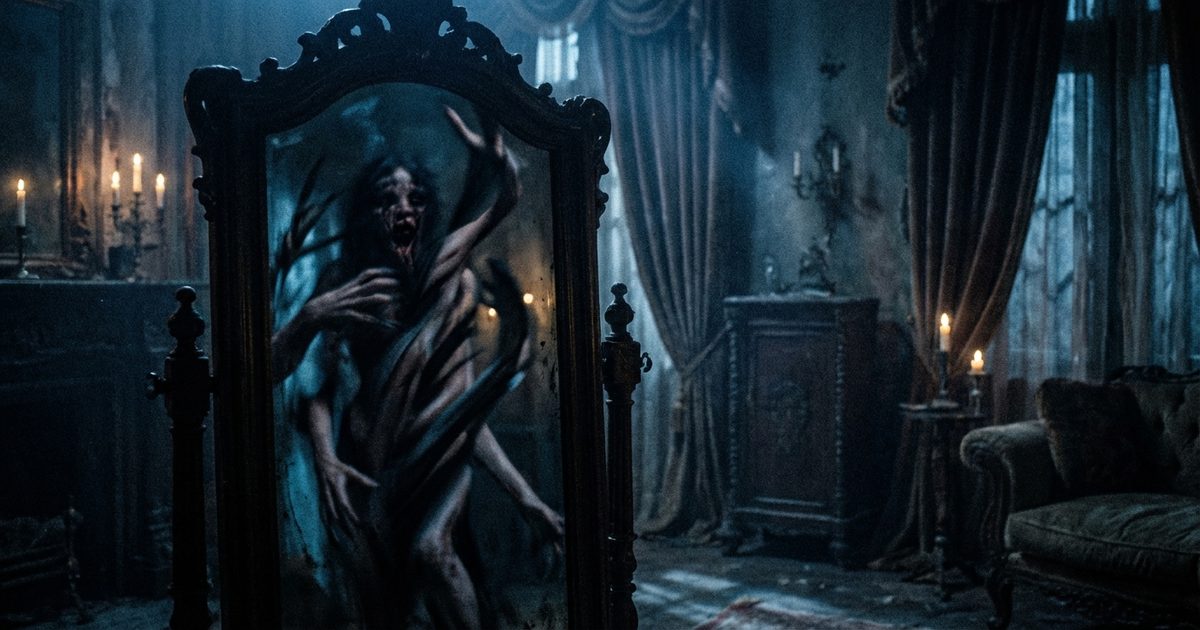
The enduring power of body horror lies in its proximity to our most intimate anxieties. We live inside our bodies. We have no escape from them. Every morning we look in the mirror and perform an act of recognition: that is me. Body horror asks the most terrifying question a mirror can pose: what if one morning, it isn't?
This is not an abstract fear. Aging is body horror in slow motion. Illness is body horror that the doctor explains with charts and statistics. Pregnancy is body horror that society wraps in pastel colors and congratulations. The body is always changing, always becoming something other than what it was, and the self that inhabits it is always scrambling to keep up, to maintain the fiction of continuity, to insist that the face in today's mirror is the same face that was there yesterday.
Body horror fiction strips away this comfortable fiction. It shows us the transformation we are always already undergoing, accelerated to a speed that makes denial impossible. It holds the mirror up and says: look. Really look. The thing looking back at you has never been as stable as you pretended it was. It is changing right now, this very second, in ways you cannot see and cannot stop.
In the works of Kafka, Cronenberg, Barker, VanderMeer, and Koster, the body horror is never only about revulsion. It is about the strange, terrible beauty of a form in flux — the recognition that transformation, however horrifying, is also the most fundamental characteristic of being alive. We are all metamorphosing, all the time. The only question is whether we will recognize what we are becoming.
Witness the transformation. See what lies beneath the skin of reality.
Read the Novel →