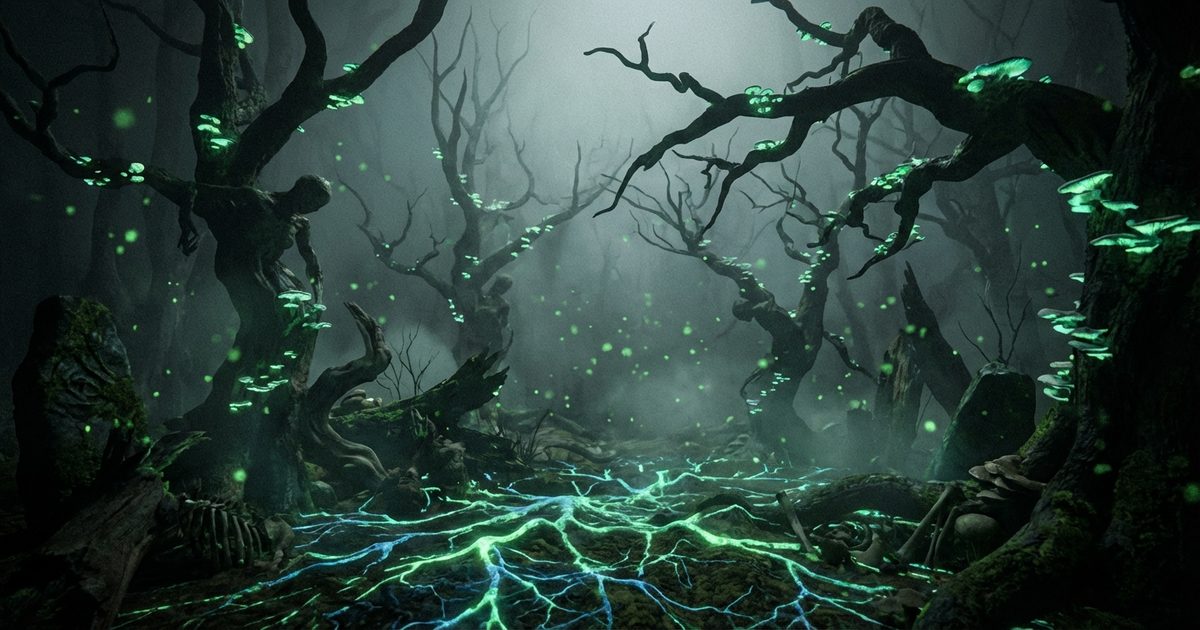
The forest isn’t silent. It breathes. The problem starts when it begins to listen.
Ecological folk horror is 2026’s most unsettling subgenre. Not because it invents new monsters — but because it transforms what you already know: roots, spores, humus, fungi. Nature not as backdrop but as predator. These seven novels do exactly that.
1. The Midnight Muse — Jo Kaplan (2026)
A metal band disappears in the forests of the Pacific Northwest. Their instruments are found covered in mycelium. Their bodies are not.
Kaplan almost single-handedly coined the label “mycelium-metal horror”: a fusion of folk horror, body horror, and ecological dread. Her March 2026 novel sparked a genuine BookTok debate about what it means to be “consumed” by nature rather than killed by it. The difference is subtle. It’s everything.
The most disturbing thing isn’t what happens to the band. It’s that by the final page, the reader isn’t entirely sure their ending is a punishment.
2. Annihilation — Jeff VanderMeer (2014)
Area X has no monsters in the conventional sense. It has an ecosystem that has decided to include human beings in its cycle the way it would any other organic matter.
VanderMeer wrote Annihilation in six weeks, in what he described as a “creative trance.” The result is a book that smells of salt and wet earth, where every page transmits the dampness of something growing beyond control. The biologist-narrator doesn’t fight Area X. She is absorbed.
“There is no enemy in ecological horror. There is only a process that has no need to wish you harm in order to destroy you.”
3. The Troop — Nick Cutter (2014)
A skeletal man arrives on an isolated island where a boy scout troop is spending the weekend. He carries something living inside him. Something hungry.
Cutter is the master of contemporary body horror, and The Troop is his peak. The island’s nature — forest, water, isolation — becomes complicit with the parasite. The horror is biological and environmental simultaneously. The central terror isn’t death but the progressive loss of self as the body is colonized from within.
4. Harvest Home — Thomas Tryon (1973)
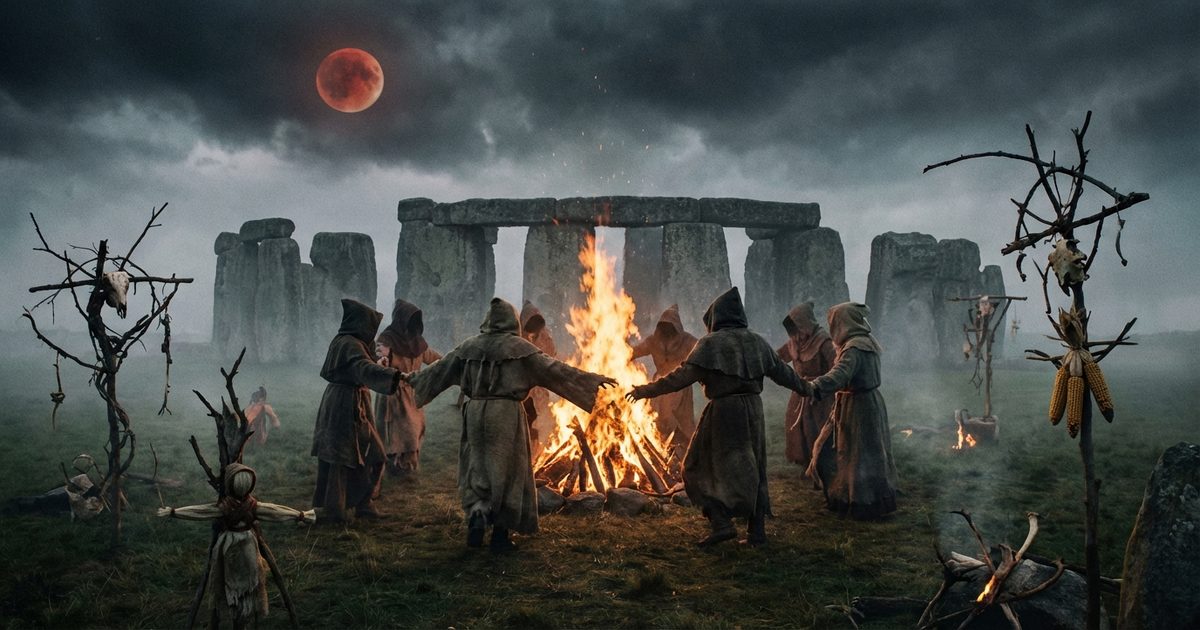
A rural New England village. Harvest rituals. An agricultural tradition with roots deeper than any local church.
Tryon wrote the novel that defined American agrarian folk horror before the genre had a name. The grain, the cycle of seasons, the soil that must be fed: all of it becomes threatening not because it’s supernatural, but because the community treats these things as normal. The horror is in collective consent, not in the monster.
Ari Aster’s Midsommar is unthinkable without Harvest Home. The connection is direct.
5. Mexican Gothic — Silvia Moreno-Garcia (2020)
The Doyle house breathes. It secretes. The mycelium grows through the walls and through the protagonist’s dreams simultaneously.
Moreno-Garcia’s novel is the founding text of mycelium gothic in Spanish-language fiction. The female body as territory of fungal colonization is its central theme. It’s also the most direct bridge between folk horror and body horror in contemporary literature. The fungus doesn’t ask permission. It enters, grows, transforms.
6. The Grip of It — Jac Jemc (2017)
A couple moves into an isolated house. The walls weep something dark. The low sound no one else hears grows until it becomes physical pressure on the chest, the taste of earth in the mouth.
Jemc uses the house as a living organism in the most visceral way in recent folk horror. It’s not a conventional ghost story. It’s a story of gradual biological invasion, where the house — its mold, its damp, its rotting wood — slowly penetrates both protagonists until the question of who is the intruder becomes genuinely unclear.
7. In the Woods — Tana French (2007)
Two children disappear in an Irish wood. One returns. He remembers nothing. Decades later, the same forest yields another case.
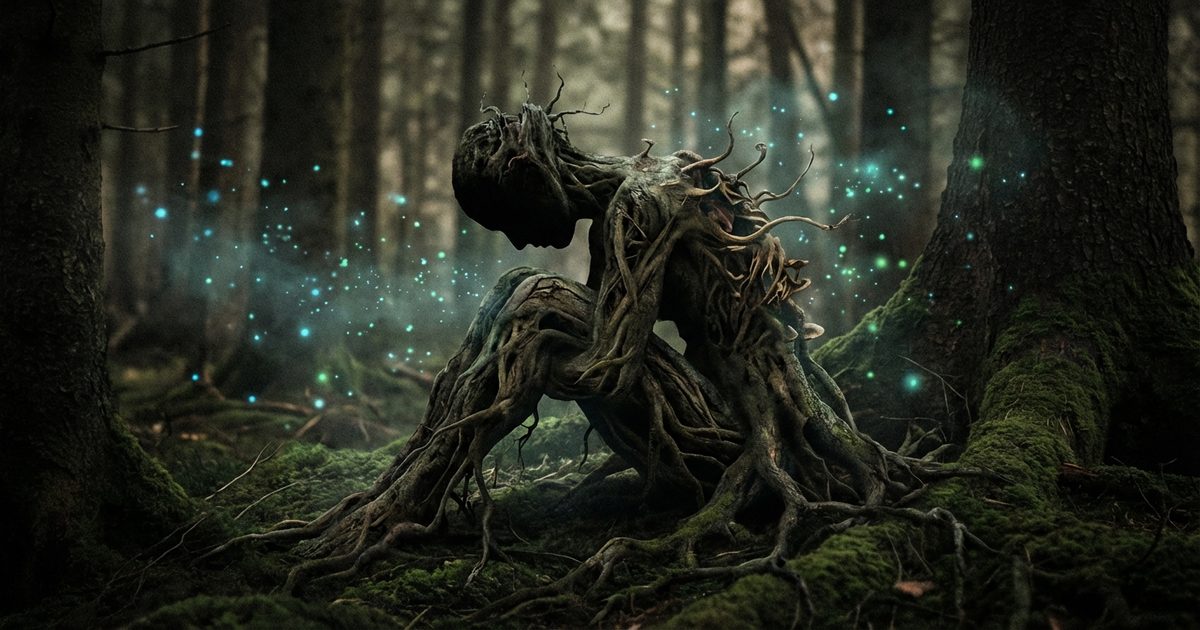
French doesn’t write conventional horror, but In the Woods is folk horror at its deepest structural level: the forest as an entity with memory, one that collects what enters and decides what to return. The Irish landscape — foggy, deep green, saturated with Celtic folklore — is never decorative. It’s a character with opaque intentions.
The detective-narrator doesn’t solve the first case. Not from incompetence. Because the forest doesn’t want it solved.
What All Seven Share: Nature as Hungry Entity
Every novel on this list operates from the same premise: nature is not indifferent to humans. It needs them. It uses them. The romantic version of the forest as sanctuary, as healer, is inverted: it’s out there, and the fact that you’re not suffering yet doesn’t mean it hasn’t noticed you.
This is the same logic that governs The Brothel of Shadows. Xyl’khorrath, the cosmic entity inhabiting the brothel, is not unlike Kaplan’s mycelium or VanderMeer’s Area X: a hunger without hatred, an absorption without conscious intent. Alex is not chosen. He is consumed. The distinction — as in all the best cosmic horror — is everything.
The forest breathes. Now that you know, try not to think about it the next time you walk into the trees at dusk.
Something moves behind reality. Jan Willem Koster saw it and wrote it down.
Read the novel →