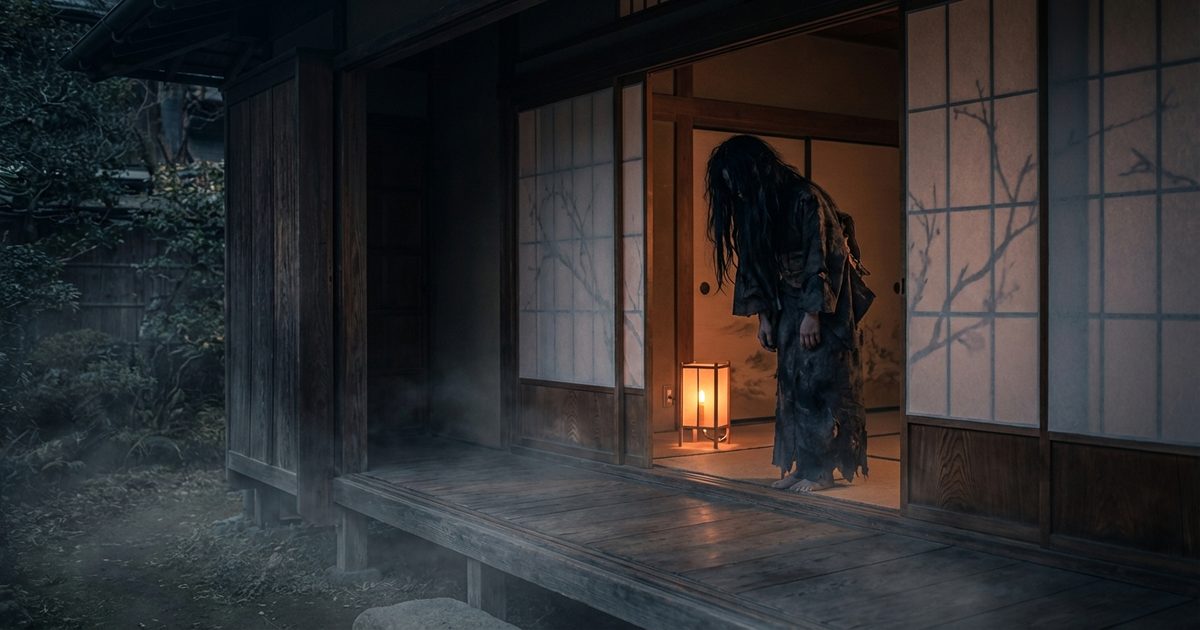
Nobody screams. Japanese ghosts move in silence, black hair across their faces, and they wait. The terror arrives like rising water — slow, cold, inevitable.
In 2026, Japanese horror literature dominates English-language bestseller lists. From Yoko Ogawa to Kylie Lee Baker, from Edo ghost scrolls to BookTok feeds, the East has rewritten fear’s grammar. The West is finally paying attention.
Japanese Ghosts Don’t Scream
The difference is fundamental. Western horror targets shock: blood, monsters, sudden loud noises. Japanese horror targets discomfort. Something wrong that you can’t name. A cold that has nothing to do with temperature. The smell of wet soil in a sealed room.
Yūrei — the ghosts of Japanese tradition — don’t appear in lightning flashes. They surface at the edge of your vision, in still water, in the mirror behind you. They don’t come to kill. They come because something keeps them here. And that question doesn’t leave you: what?
The terror isn’t the presence. It’s the reason for the presence. And it’s always, without exception, an unfinished story.
Kaidan: The Art of Fear in the Edo Era
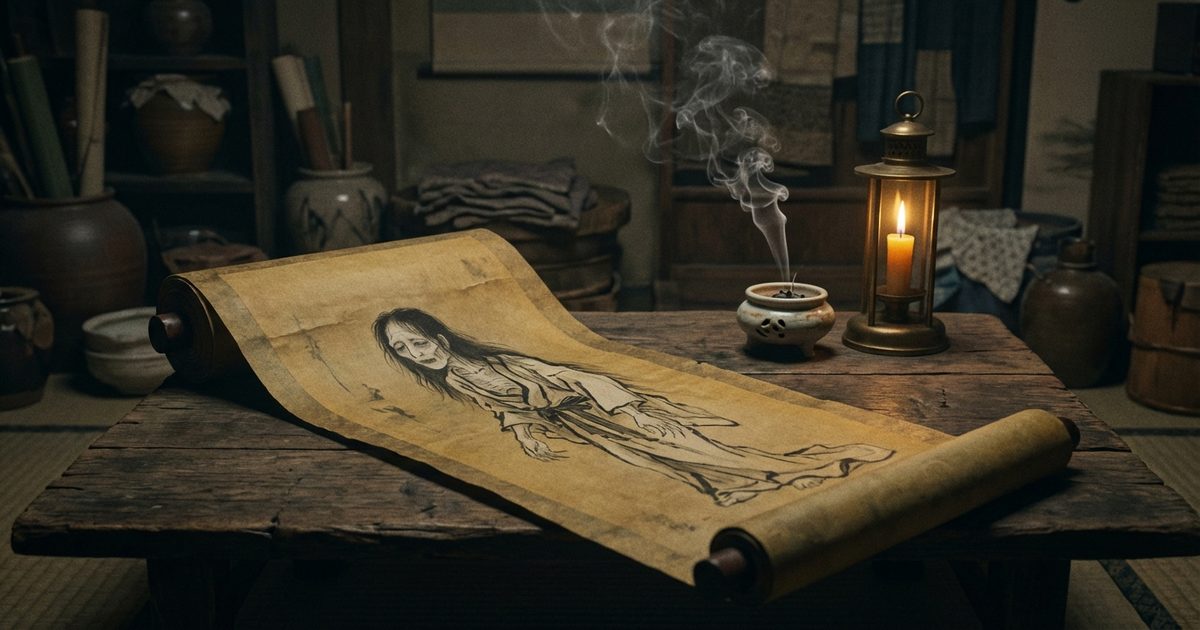
The kaidan tradition — literally “strange and disturbing tales” — took root in the Edo period (1603–1868). This wasn’t entertainment for children. It was philosophy.
Kaidan were performed in summer, at night, with a hundred candles lit in a circle. Each story extinguished one candle. With every flame snuffed out, the room grew darker, the air colder. With every degree of cold gained, the dread deepened. Edo-era Japanese writers understood pacing before the word existed in any language.
Lafcadio Hearn, a Greek-Irish writer who settled in Japan in 1890, gathered these stories into Kwaidan (1904). Still in print. The most famous tale, “Yuki-Onna,” features a snow spirit who either kills you with her frozen breath or lets you live — on the condition you never speak of her to anyone. Silence as a survival clause. The horror doesn’t end with the story. It moves into your life.
“There is no more effective monster than one you cannot describe — because describing it is your undoing.”
This structure — terror as a secret that cannot be shared — runs through the entire Japanese tradition to the present day. You find it in weird fiction, in Lovecraft, in every work where knowledge itself is the real danger.
The Betraying Body: Kobo Abe and Koji Suzuki
In the second half of the twentieth century, Japanese horror turns urban and corporeal. Kobo Abe’s The Woman in the Dunes (1962) traps a man in a sand pit with a stranger. The sand descends slowly, suffocates steadily, regenerates without end. This is body horror before the term existed — the body as prison, matter as destiny.
Koji Suzuki arrives in 1991 with Ring. The premise is brutal in its simplicity: a cursed videotape kills whoever watches it within seven days. Suzuki doesn’t describe the demon. He describes the sound of the phone ringing after you’ve watched. The fear isn’t death. It’s the wait.
This is the foundational lesson of J-Horror literature. The monster isn’t the real danger. Knowing it exists is.
The 1990s Epidemic: When the Book Becomes a Screen
Hideo Nakata’s Ring (1998) brought Japanese horror to world cinema. But the film owes everything to Suzuki’s novel. Nakata understood that real fear can’t be seen — it can only be anticipated.
Nakata’s Sadako climbs out of the television in mechanical, unnatural movements. She doesn’t run. She doesn’t scream. She advances, slow and certain. That slowness — that absolute certainty of arrival — is what paralyzes. The same principle as the kaidan: not the sudden scream, but the footstep in the hallway at three in the morning.
Those years also produced Ju-On (1998) and Suzuki’s Dark Water. An entire genre took shape with codified rules: female spirits with black hair, stagnant water, abandoned houses, technology as vector of contagion. The nightmare transmitted through a machine anticipated digital anxieties that wouldn’t become universal for another twenty years.
The New Gothic Wave: 2020–2026
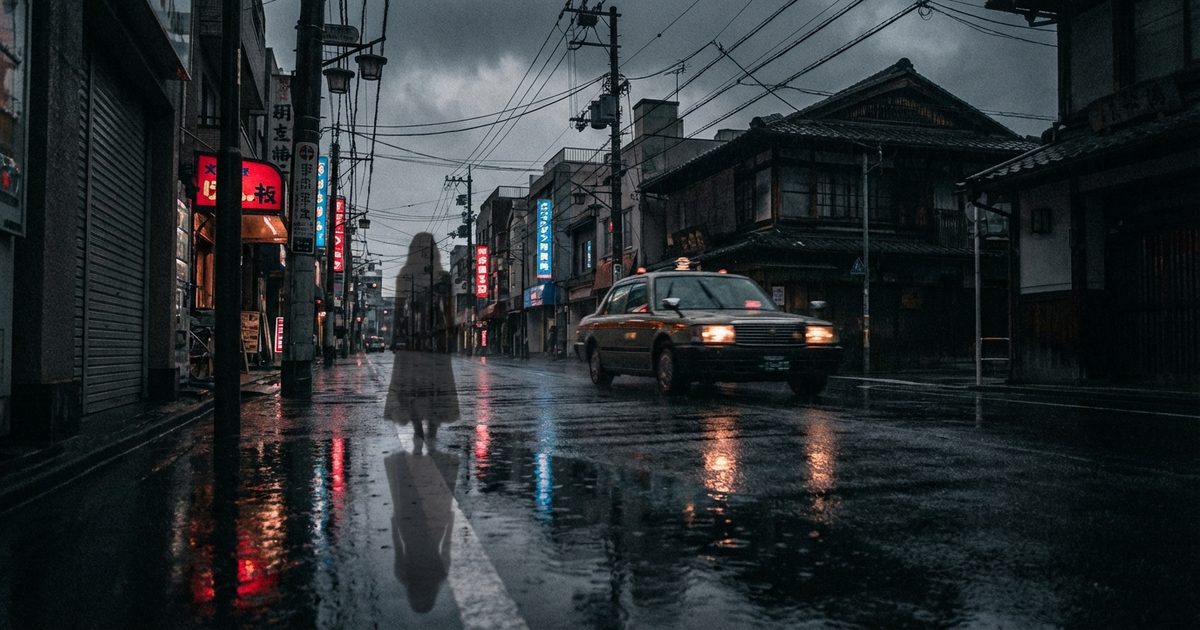
In the 2020s, something stirs again. Translated Japanese horror explodes on English-language shelves. Kylie Lee Baker carries Japanese gothic sensibility to Western readers, setting her fiction between Meiji-era Japan and Yomi — the realm of the dead — with an eerie precision that readers of cosmic horror will recognize immediately.
Yoko Ogawa, an award-winning novelist for decades, writes psychological horror with surgical precision. The Memory Police (1994, translated 2019) depicts an island where objects disappear — and those who remember them vanish too. No monsters. Just the progressive erasure of reality. Which is the purest form of terror there is.
2026 marks a turning point: for the first time, Asian horror titles share the top of English-language charts alongside American and British releases. Fear has no native tongue anymore.
What the East Understood That the West Keeps Forgetting
Japanese horror emerges from a fundamentally different philosophical premise. In Shinto animism, every object holds spirit. Every place holds memory. Every death leaves an echo that settles into space like dust.
The West built hard walls between the living and the dead: cemeteries outside cities, quick funerals, grief therapists. Japan never built those walls. The dead stay. They share the house. They require that their story be remembered.
This is J-Horror’s true terror: not the invasion of something external, but the permeability of the border. Ghosts don’t come from outside — they were already inside. Like the demons of forbidden knowledge, like Lovecraft’s cosmic entities sleeping beneath reality’s foundations, Japanese ghosts don’t arrive. They surface.
The Brothel Is a Dutch Kaidan
The Brothel of Shadows: Cosmic Intercept belongs to this tradition — even though it was born in the Netherlands, not Japan.
Alex enters in a dream a place that shouldn’t exist. The brothel doesn’t threaten. It waits. Like Yuki-Onna who doesn’t kill immediately, like Sadako who doesn’t run, the entity Xyl’khorrath doesn’t attack. It seduces. Transforms. Consumes from within, slow and certain as Kobo Abe’s sand.
The permeability between worlds, the slowness of horror that seeps through desire, knowledge as a door that won’t close again — these are the same laws as the kaidan. Jan Willem Koster wrote, unknowingly, a kaidan set in 1980s Amsterdam. To read it is to understand that terror has no latitude. Only direction: inward.
Like every great psychological horror novel, Alex’s story doesn’t describe a monster. It describes the distance between who you are and who you become.
Something moves behind reality. Jan Willem Koster saw it and wrote it down.
Read the novel →