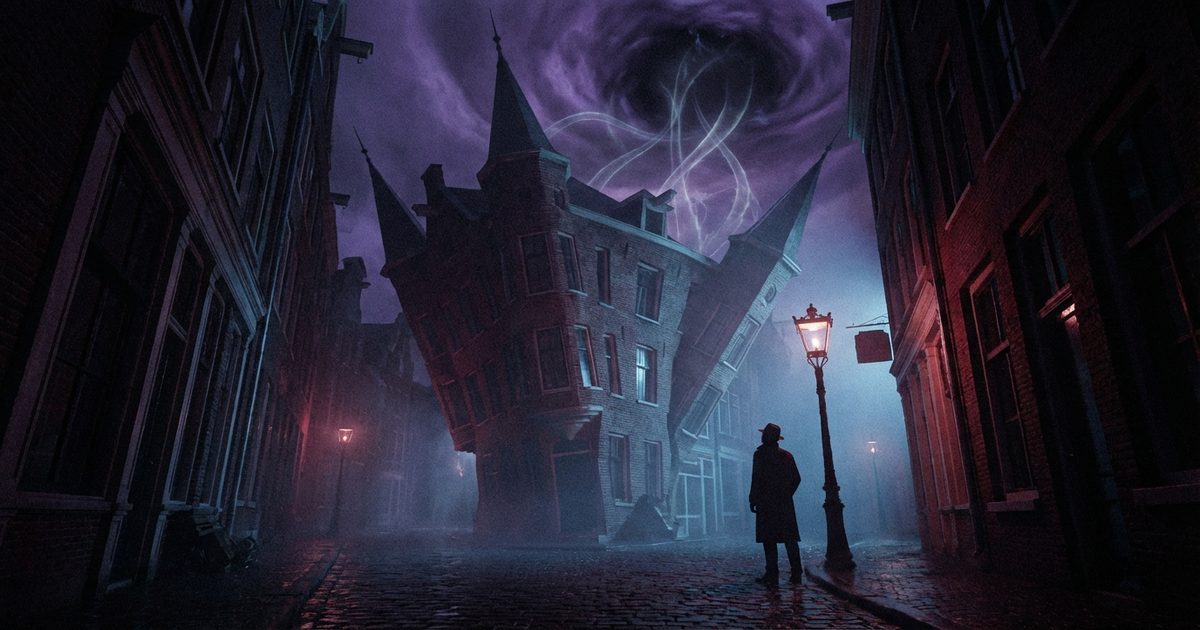
Something is wrong with the geometry. Not obviously, not catastrophically — just a door frame that leans the wrong way, a shadow that falls at an angle no light source can explain, a sound from the cellar that is almost familiar but not quite. This is where weird fiction begins: at the moment when the ordinarily reliable structure of reality develops a crack, and something from the other side looks through.
Weird fiction is not horror, though it uses horror's tools. It is not fantasy, though it contains impossible things. It occupies a precise position in the literary ecosystem: the genre of ontological discomfort, the literature of wrongness.
Origins: from Machen to Lovecraft
The term was Lovecraft's own, articulated in his 1927 essay Supernatural Horror in Literature, where he defined the weird tale as fiction whose central effect is "a certain atmosphere of breathless and unexplainable dread of outer, unknown forces." But the tradition he was systematizing was older. Arthur Machen's The Great God Pan (1894) is its founding text: a story in which something from outside the fabric of comprehensible reality enters the human world through a woman's body and leaves wreckage behind it that no Victorian rationalism can account for.
Algernon Blackwood's The Willows (1907) — which Lovecraft considered the finest weird tale in English — does something different: it uses landscape as the carrier of wrongness. Two men canoe down the Danube into a stretch of river where the willows move against the wind, where their campsite feels observed, where the ordinary physical world begins to exhibit properties it should not have. Nothing arrives to attack them. The horror is the growing certainty that something is present which exists by different rules.
“The weird tale does not ask you to be afraid of a monster. It asks you to suspect that the framework holding reality together has a gap in it.”
Weird versus horror: the crucial difference
Traditional horror posits a threat that, however supernatural, operates within the logic of cause and effect. The vampire can be killed with a stake. The haunted house can be exorcised. The monster can be defeated, escaped, or at least understood. Its rules, however brutal, are rules.
Weird fiction removes this consolation. The entities and forces in weird fiction do not operate by rules that human intelligence can map. They are not malevolent in any purposeful sense — malevolence requires a kind of attention that these presences do not extend to human beings. They are simply other, operating according to principles that human cognition is not equipped to process. The forbidden knowledge at the center of cosmic horror is forbidden not by decree but by the architecture of the human mind itself.
This is why the protagonists of weird fiction so often end in madness. Not as a dramatic device but as the logical outcome: a mind that genuinely encounters something outside its processing capacity breaks along the seams.
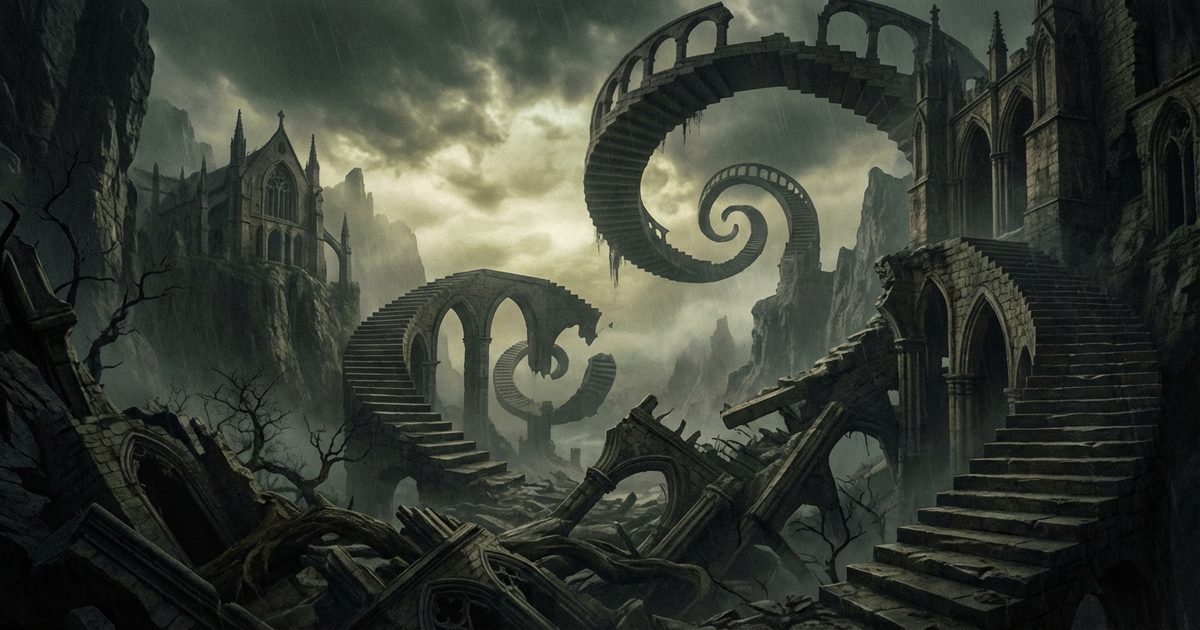
The modern masters: Ligotti to VanderMeer
Thomas Ligotti is the philosopher of the genre. His stories — collected in Songs of a Dead Dreamer, Grimscribe, and Teatro Grottesco — are less narratives than sustained arguments. The wrongness in Ligotti's work is not localized to a specific entity or place. It pervades everything. His protagonists move through a world in which the ordinary texture of reality has become visibly, terribly thin, and beneath it — not evil, not threatening, just there — is an absence so total it has a presence. His philosophical essay The Conspiracy Against the Human Race makes the argument explicitly that Ligotti's fiction makes atmospherically: consciousness itself is the horror.
Jeff VanderMeer's Southern Reach Trilogy, beginning with Annihilation (2014), brought weird fiction to mainstream attention with a locked-room mystery in which the room is an entire territory and the mystery is ontological rather than criminal. Area X is a place where the rules of biology, identity, and narrative coherence have been replaced by something else. The biologist who narrates the first novel begins to change — physically, cognitively — and the horror is that the change feels, from the inside, like clarity.
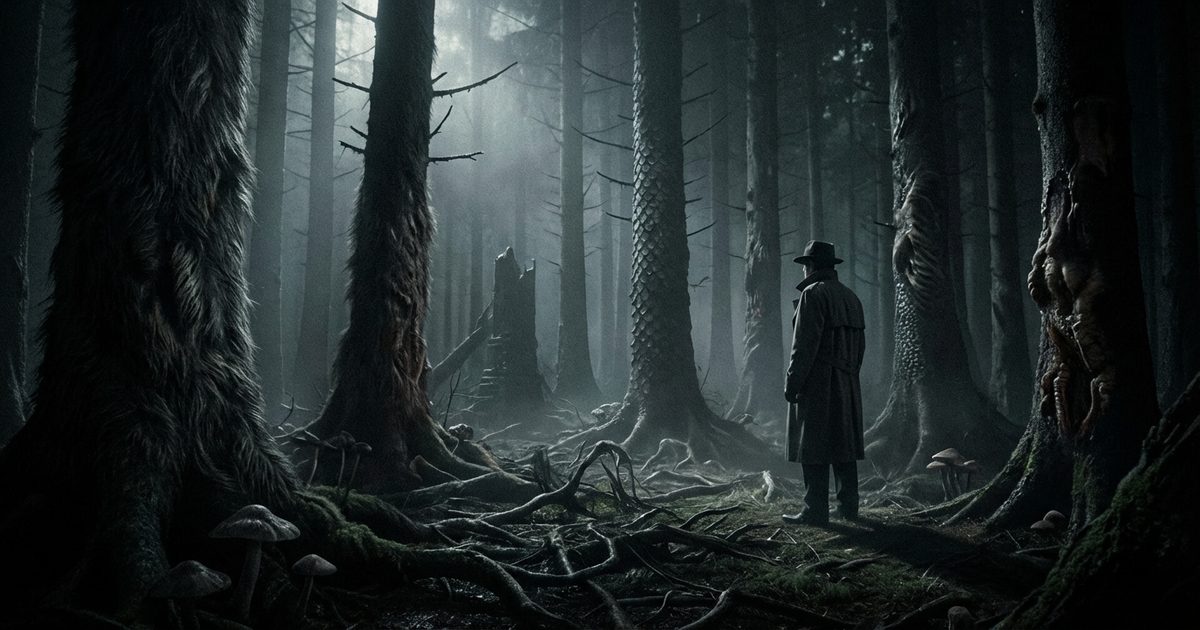
The New Weird: genre fiction reclaimed
In the early 2000s, a loose movement of writers began applying weird fiction's sensibility to genre fiction — to fantasy, to science fiction, to the kind of adventure narrative that weird fiction's literary predecessors had largely avoided. China Miéville's Perdido Street Station (2000) is the touchstone: a secondary world fantasy built on weird fiction's logic, where the impossible and the horrifying coexist with political realism and genuine warmth for its characters.
The New Weird understands something Lovecraft did not: that the feeling of ontological wrongness is not incompatible with character, with politics, with the full complexity of human social life. It does not require isolation and a protagonist who experiences horror as pure intellectual sensation. The wrongness can arrive in a city, in a community, in a body that is loved by other bodies.
This insight connects weird fiction to the most interesting contemporary horror writing — the kind that refuses to separate cosmic dread from human intimacy, that understands that the most unsettling horrors are the ones that arrive in familiar rooms.
How to approach weird fiction: practical entry points
If you are new to the genre, Blackwood's The Willows is the cleanest entry: short, perfectly constructed, available for free online, and possessed of an atmosphere that lingers for days. Follow it with Ligotti's The Conspiracy Against the Human Race for the philosophical framework, and VanderMeer's Annihilation for the contemporary application.
For readers who want weird fiction fused with other registers: Annihilation fuses it with ecological horror and detective fiction. Miéville's The City & The City fuses it with noir procedural. Carmen Maria Machado's Her Body and Other Parties fuses it with feminist erotic gothic. And Jan Willem Koster's The Brothel of Shadows fuses it with cosmic horror, atmospheric gothic, and erotic intensity in a combination that is genuinely difficult to place in any single category — which is precisely the sign that weird fiction has done its job.
The best entry point is always the same: find the book that makes the geometry feel wrong. The one where a door frame leans at an impossible angle and you keep reading not because you expect an explanation, but because the wrongness has a quality you cannot name and need to examine more closely. That discomfort is the genre's gift. It means something outside the ordinary has looked through the crack.
The Brothel of Shadows exists between dimensions, between genres, between the explicable and the merely wrong.
Read the Novel →