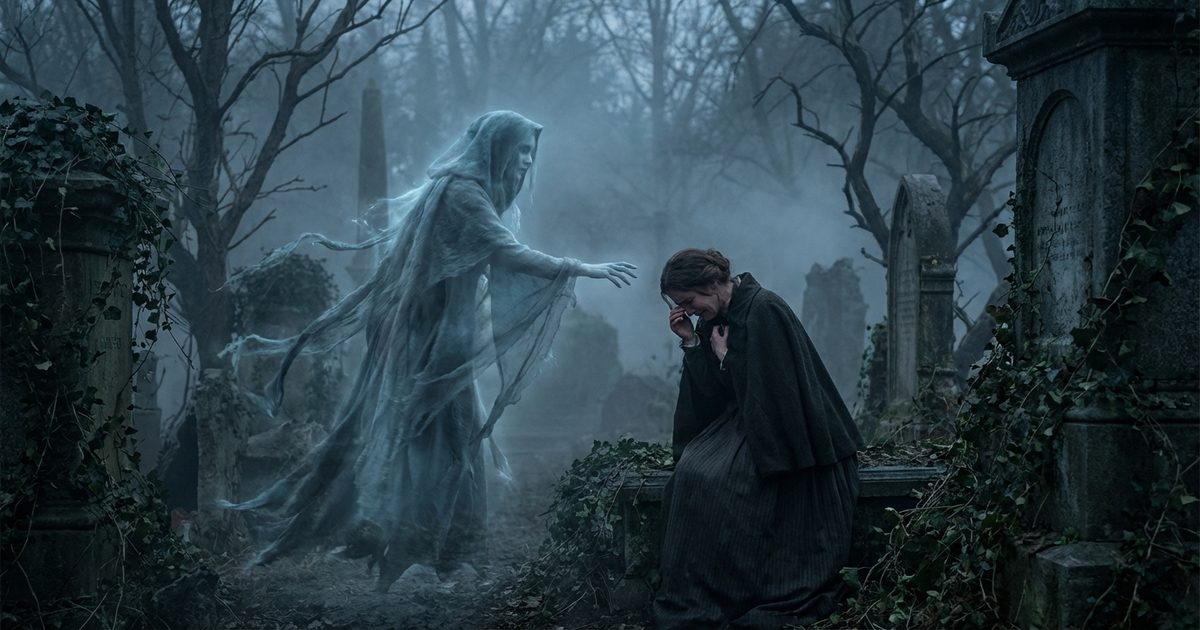
Something is wrong with the house. You feel it before you see it — a cold pocket at the top of the stairs, the smell of a perfume that stopped being purchased years ago. Horror has always known this. It knows that grief does not stay where we bury it.
The genre has a strange gift: it gives shape to things that have no shape. Loss sits in the body like a stone, wordless and heavy. Horror hands it a face, a voice, a set of footsteps moving through the dark. Suddenly the unbearable has a form you can look at — even if looking at it is the last thing you want to do.
This is grief horror. Not a subgenre tagged onto a shelf between Gothic and psychological fiction. A mode of reckoning with what the living cannot put down. It stretches from Poe's candlelit chambers to the literary shockwave of 2026, and it has never been more alive than right now.
The Nineteenth Century: When the Dead Refused to Stay Dead
Edgar Allan Poe built his entire architecture on one unshakeable premise: the beloved will die, and her dying will destroy you. In Ligeia, the narrator watches his first wife fade and return — her dark eyes burning in another woman's face. The supernatural here is not decoration. It is grief refusing to accept its own verdict.
Morella works the same mechanism with surgical cruelty. The dead wife reappears in the voice and face of the daughter who inherits her name. Poe understood something that took psychologists another century to formalize: grief resists linear time. The lost beloved does not stay in the past. She colonizes the present.
And then there is The Raven. No haunted house, no reanimated corpse — just a bird, a fireplace, and a man coming apart at the seams. The horror is entirely interior. The raven does not speak; the bereaved man hears what he already knows. The poem is a grief spiral dressed in Gothic plumage, and it has never been surpassed as a portrait of obsessive mourning.
Victorian mourning culture fed this literary obsession with the rituals of death made visible. Post-mortem photography — daguerreotypes of the newly dead posed in chairs, in beds, held upright by invisible wire — was not macabre indulgence. It was an attempt to extend presence past the moment of severance. The photograph said: this person was real, and I am not ready for them not to be. Horror fiction said the same thing, louder and with teeth.
Emily Brontë's Wuthering Heights deserves its place in this lineage, though it is seldom called horror outright. Heathcliff begs the dead Catherine to haunt him. She does — not in the floorboards but in his own face, which ages into hers, and in the moors that swallow both their stories. The supernatural is sparse and ambiguous. The grief is absolute. The novel ends with a ghost sighting reported secondhand by a child, which is almost unbearably precise: grief passes down. It does not end with the one who first felt it. For more on how the psychological horror novel inherits this tradition, the lineage is longer than most readers suspect.
The Twentieth Century: From Ghost to Psychic Wound
Shirley Jackson changed everything. When Hill House was published in 1959, readers understood it as a haunted house novel. It is, of course, something stranger: a portrait of Eleanor Vance arriving at a house that reflects her own interior damage back at her. The house is cold. It tilts slightly off-true. It writes on walls in what might be blood.
But Eleanor is not being attacked. She is being recognized. The house knows her grief — the years spent nursing a mother who gave nothing back, the absence of any space that has ever felt like hers. Jackson's genius was understanding that the most terrifying haunting is the one that feels like coming home. Eleanor does not flee the house. She drives into a tree rather than leave.
Stephen King took this architecture and broke it open with a sledgehammer. Pet Sematary — published in 1983 and still King's most viscerally disturbing novel — strips grief horror to its raw nerve. Louis Creed buries his son in a place where the ground brings things back. What returns is not his son. It is grief's most deranged logic made physical: the wish that the loss had not happened, granted in the worst possible form.
The novel works because King understands that grief's darkest current is not sadness but refusal. The mourner does not only miss the dead; they refuse the world's right to have taken them. Pet Sematary follows that refusal to its conclusion. It is a horror novel about what happens when you get exactly what you wanted. The literature of nightmare and dread has few more precise examples of desire curdling into catastrophe.
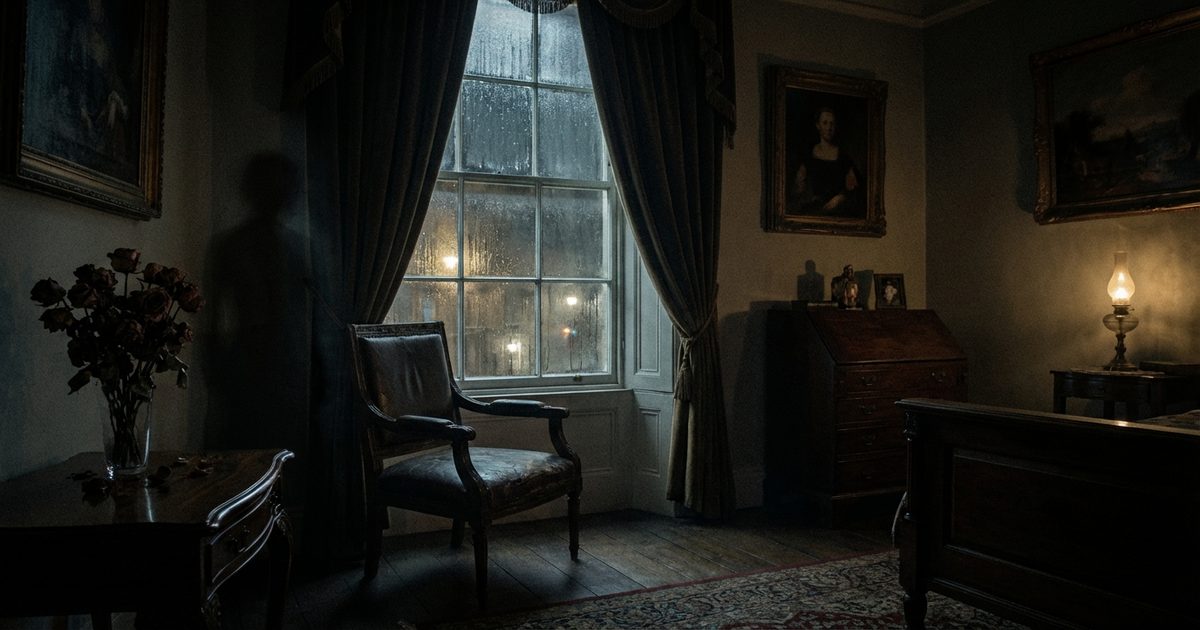
"The ghost is not the dead person. The ghost is the shape grief carves into the air where they used to stand."
Eric LaRocca and the 2026 Grief Wave
Something crystallized in literary horror around 2025 and 2026. The critics noticed a pattern: the novels getting traction were not about monsters in the classical sense. They were about people who had lost something, and the terrible price of refusing to let go.
Eric LaRocca had already mapped this territory with This Thing Between Us — a novel structured as a widower's letters to his dead wife, in which grief manifests as an object in the house that will not stop sending packages neither of them ordered. The horror accretes slowly, like sediment. It is not the packages that unsettle. It is the prose: raw, intimate, a man talking to someone who cannot answer, surrounded by the ordinary debris of a shared life.
Wretch: or, The Unbecoming pushed further into the territory where grief becomes physical transformation. LaRocca's characters do not just mourn; they come apart at the cellular level. The body itself becomes the site of haunting. Skin that no longer feels quite right. A voice that answers before the thought is finished. LaRocca writes grief as a biological process — something that rewires you whether you consent or not.
Why 2026? There is a cultural logic here. A generation that processed collective loss — pandemic years, the particular grief of interrupted ordinariness — found in horror the only genre that did not ask them to resolve it. Horror does not demand closure. It holds space for the wound to stay open, which is often the most honest position available. The cosmic horror tradition understood indifference to human pain; grief horror goes one step further, making that indifference personal.
How Grief Horror Works: Three Pillars
Strip back the imagery and the mechanics of grief horror reduce to three recurring engines. Understanding them makes the genre's power legible — and harder to shake off in the dark afterward.
The impossible return. The dead come back, but wrongly. Poe's Ligeia inhabits Rowena's body. King's Gage comes back with a blade and none of the light in his eyes. The return is not comfort; it is punishment for wishing. Horror uses this structure to dramatize what grief counselors have always known: you cannot get the person back. You can only get a version of your longing made dangerous. The impossible return is grief's wish-engine running until it destroys the house.
Haunting as wish fulfillment. The ghost does not terrorize — not at first. It lingers. It keeps company. Eleanor at Hill House does not want to leave because the house is the first thing that has ever paid her full attention. The haunting offers what the grieving person was denied in life: presence, recognition, contact. Horror understands this is more terrifying than violence. Violence ends. Presence does not.
The monster as grief made flesh. In the most psychologically complex examples of the genre, the supernatural entity is not separate from the mourner. It grows out of them. Thomas Ligotti — whose philosophical horror maps the edges of this territory — writes creatures that are less threats than externalizations of interior states. For a deeper look at that tradition, Ligotti's cosmic pessimism and its literary implications repay careful attention. The monster says: this is what you look like from the inside. You recognize it. That is why you cannot kill it.
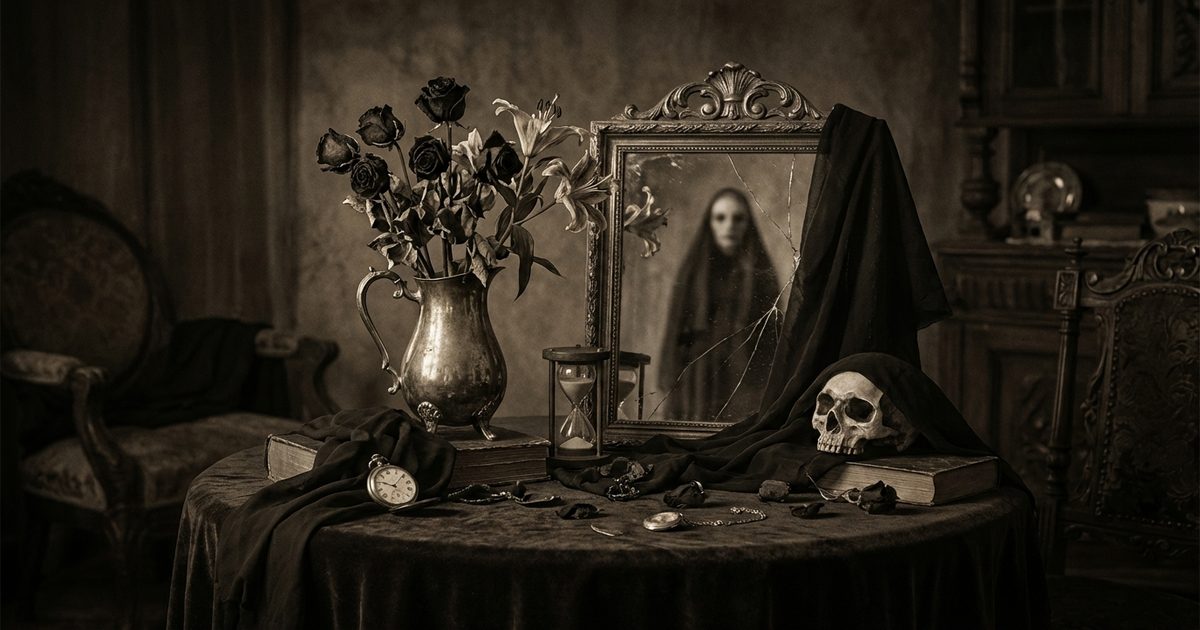
The Cosmic Loss at the Heart of The Brothel of Shadows
There is a particular horror in being known by something that means you harm. Xyl'khorrath — the entity at the center of The Brothel of Shadows — does not attack blindly. It feeds on unresolved longing with the patience of something that has watched human hearts fail for longer than civilization has kept records. It reads grief the way a locksmith reads a lock.
Alex's central wound is not a person but a concept. He grieves a world that makes sense — cause and effect, decency rewarded, the basic expectation that reality is not hostile. That grief is harder to name than the loss of a loved one, which is precisely why it is more exploitable. The brothel operates as a grief-extraction machine: it finds the longing you have not been able to articulate, and it offers you a room where that longing has a face, a warmth, a smell of something almost like home.
The horror of being seen in your loss. That is the precise mechanism. When you are grieving badly, visibility feels like a gift. Someone — something — that understands what you are carrying. The brothel makes that offer. What it wants in return is the grief itself: not to heal it, not to resolve it, but to consume it while you watch. This connects directly to the tradition of forbidden knowledge in cosmic horror — the revelation that transforms by destroying. To understand what the brothel is, you must give it what it needs to show you.
The novel asks something uncomfortable: what would you give to be truly known in your loss? Horror has always asked this question in different costumes. The raven says nevermore and the mourner keeps asking anyway. Eleanor chooses the house over the living world. Louis Creed drives to the burial ground a second time. Grief horror does not judge these choices. It traces them with terrifying care, all the way to the end of the road where the road runs out.
What you are left with is not an answer. It is a window facing a direction windows are not supposed to face. You look through it anyway. You recognize the view.
Italian horror literature has a new dark masterpiece. Have you read it yet?
Read the novel →