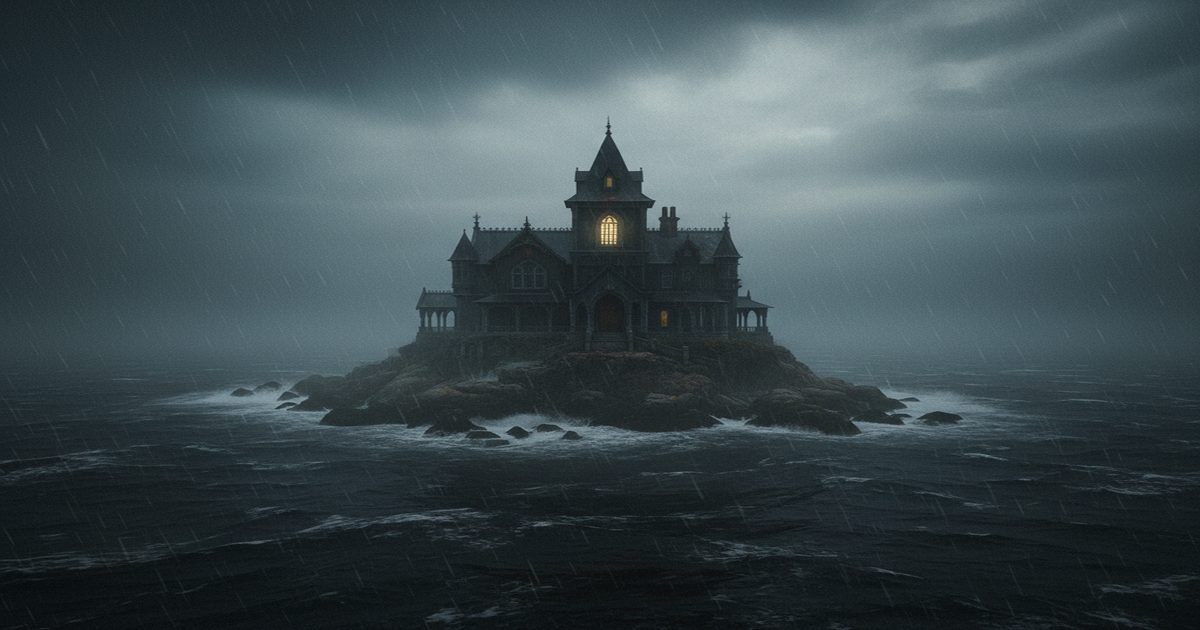
The most effective horror doesn’t come from outside. It arrives the moment you realize there’s no way out.
Great gothic novels share a precise spatial logic: a place that severs the protagonist from the ordinary world. The manor beyond the drawbridge. The school enclosed by forest. The island the fog erases from every map. Isolation isn’t the backdrop of the genre — it’s the mechanism of terror. Five places, five traps. Here they are.
1. Manderley — The House That Consumes the Living
Daphne du Maurier opens Rebecca (1938) with one of the most famous first lines in English literature: “Last night I dreamt I went to Manderley again.” It isn’t a beginning. It’s an admission of defeat. The narrator has already escaped. She keeps dreaming about the place she fled.
Manderley isn’t simply a house. It’s a living organism that metabolizes people. The corridors still carry Rebecca’s perfume, months after her death. The flowers Mrs. Danvers arranges each morning are always the same ones Rebecca loved. The house has released no one. Its isolation works because Manderley is accessible only through a mile-long drive bordered by rhododendrons that block the light.
“Manderley no longer exists. Yet when I close my eyes, I can still smell the sea and the pine resin.” — Daphne du Maurier, Rebecca, 1938
Du Maurier’s innovation: the monster is an absence. Rebecca never appears. Her presence is built entirely from others’ silence, from objects left undisturbed, from a house that continues to honor her.
2. Hill House — Where the Walls Remember
Shirley Jackson published The Haunting of Hill House in 1959 with an architectural premise: the house was built wrong. Not wrong in the sense of poor construction. Wrong in the sense of intentionally so. The angles aren’t ninety degrees. Doors left open swing shut on their own. No room is symmetrical with any adjacent one.
Eleanor arrives at Hill House already fractured, barely out of years of family confinement. The house recognizes her. Messages written on walls appear in her handwriting. The voice she hears in the dark calls her by name. Jackson understands something most horror writers miss: the house doesn’t frighten everyone equally. It frightens most the ones already vulnerable, those who’ve never had a safe place.
Hill House is isolated by forest, reachable only by a road local residents avoid. But the most terrifying isolation is Eleanor’s own.
3. Hanging Rock — Nature That Doesn’t Answer
Joan Lindsay wrote Picnic at Hanging Rock (1967) as if it were a true story. She said so explicitly. It wasn’t. The effect is devastating: three girls from a Victorian boarding school climb a rock formation during a Valentine’s Day excursion in 1900 and never return.
Hanging Rock isn’t a house. It has no doors, no rooms. But it isolates more definitively than any wall. The rock is four hundred and fifty million years old: it absorbs the girls as if they’d always been part of it. Nature in Lindsay’s Australian gothic isn’t neutral. It’s deaf, indifferent, and that indifference is more frightening than any malicious intent.
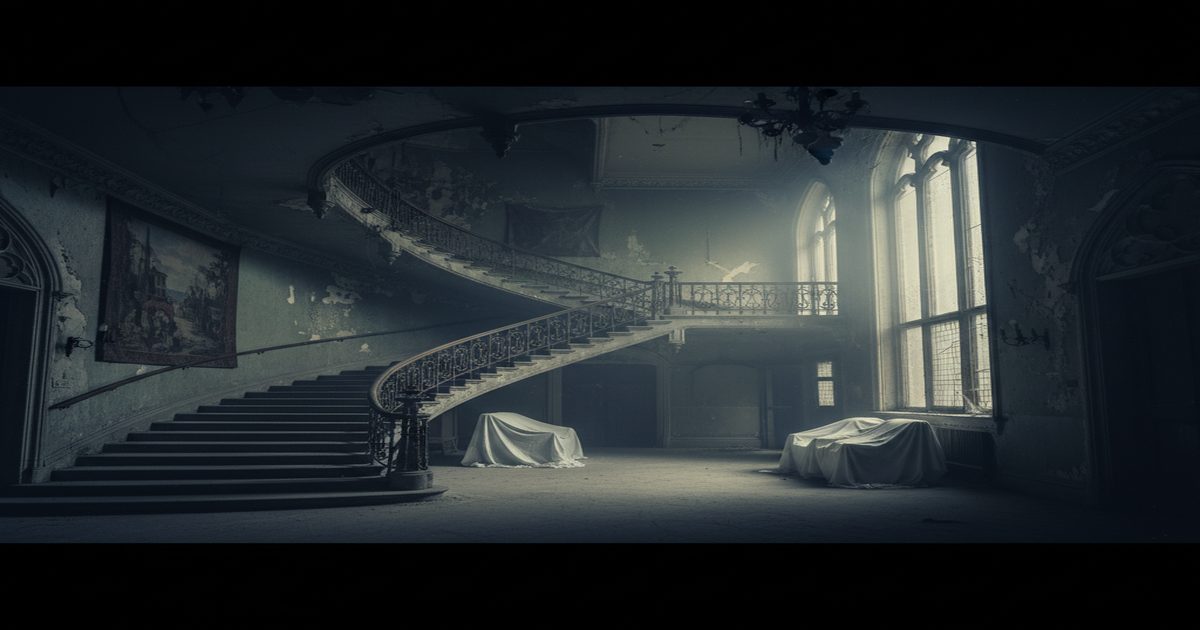
Peter Weir’s 1975 film amplified the sensory dimension of the isolation: the heat, the insect drone, the unnatural silence that descends before the disappearance. The senses fill to capacity — then, suddenly, empty.
4. Briarley School — The Boarding School as Forbidden Mirror
Spoiled Milk (2026) by Nico Bell came out in January and has quietly built its reputation, the kind of fame that spreads reader to reader without marketing campaigns. Set in a 1928 British girls’ school, it follows a new teacher who discovers something wrong with the institutional structure of the school — and something more wrong within herself.
Bell uses the boarding school with surgical precision: rigid rules create psychological isolation, physical walls create geographical confinement. The girls cannot leave. The teacher doesn’t want to. And the house, like Hill House, recognizes those willing to listen to it.
The atmosphere has been compared to Picnic at Hanging Rock, but the erotic charge is more explicit, more unsettling. Desire as a form of possession: in the final pages, it becomes genuinely difficult to tell who is controlling whom.
5. The Brothel Between Dimensions — The Most Isolated Place of All
Every place on this list exists at a point of rupture between the normal world and something else. Manderley stands between the past and the present. Hill House between sanity and madness. Hanging Rock between human nature and geological time. Briarley School between institution and forbidden desire.
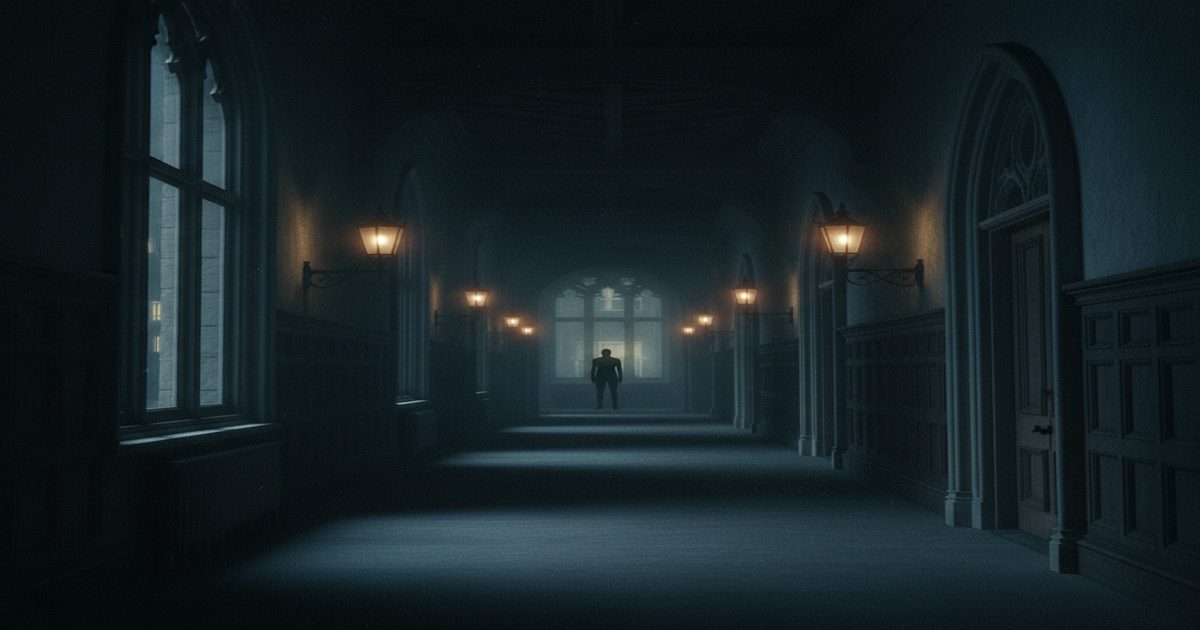
Xyl’khorrath’s brothel in The Brothel of Shadows takes this logic to its endpoint. It exists literally between dimensions: unreachable on foot, accessible only through dreams. Alex doesn’t choose to go there. He’s called. And once the dream has carried him inside, the problem is no longer how to leave. The problem is that he isn’t sure he wants to.
The tradition of dreams as portals in horror is as old as the genre. But the brothel’s specificity is that the isolation isn’t externally imposed: it grows from within. The place traps because it responds to something already present in the visitor. Like Hill House choosing Eleanor. Like Manderley preserving Rebecca.
The Hidden Pattern: Isolation That Heals and Isolation That Kills
There’s a recurring irony in gothic isolation. Protagonists typically arrive at these places already wounded. Rebecca’s narrator is insecure, without her own identity. Eleanor has spent years in forced confinement. Lindsay’s girls are trapped inside the rigidity of the Victorian system.
The isolated place offers something paradoxical: a form of freedom. Outside the boundaries of the normal world, the rules change. Repressed desires find room. Identity liquefies and can reconstitute itself in new forms. The trap and the liberation are the same thing, seen from different angles.
The forbidden place in gothic fiction is always also a place of possibility. The question the genre never tires of asking is this: are you willing to pay the price of admission? And the price, usually, is not being able to return quite as you were before.
Among Amsterdam’s red lights, a door leads where no man should go.
Open the door →To explore more spaces of gothic horror, read also Catacombs and Ossuaries: Liminal Spaces, Dark Academia and Horror, The Great Horror Settings, and Gothic Horror in Amsterdam.