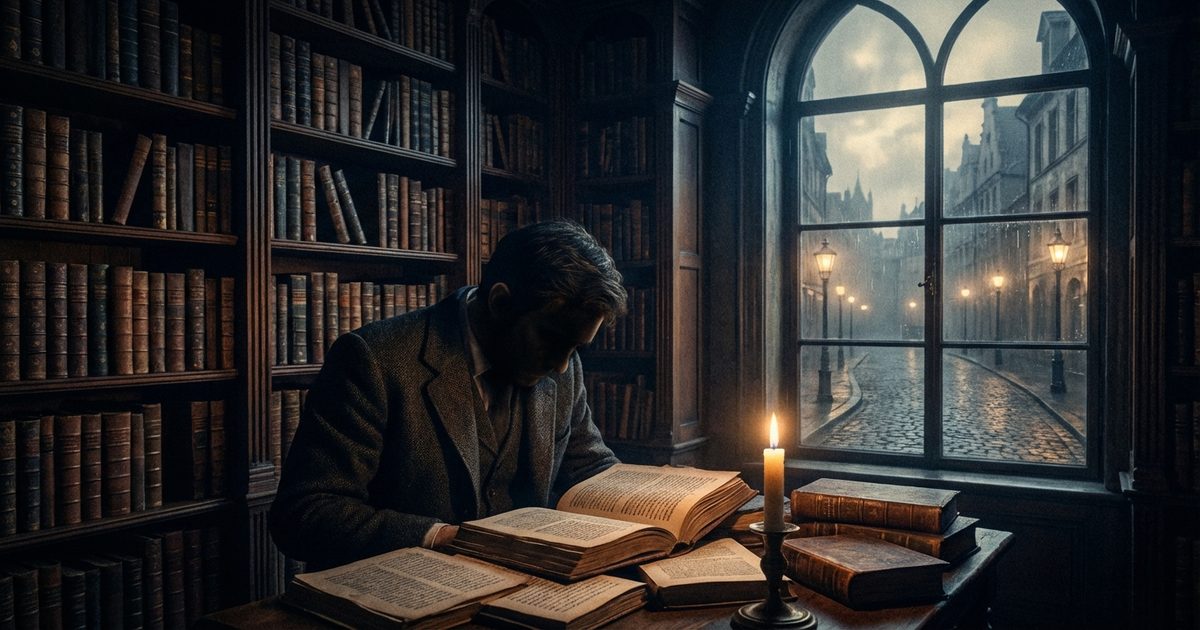
Somewhere between the musty shelves of a forgotten university library and the candlelit chambers of a secret society, a literary phenomenon has been quietly growing teeth. Dark academia — once a gentle aesthetic of tweed jackets, autumn leaves, and dog-eared copies of Donna Tartt — has taken a sharp turn into far more unsettling territory. In 2026, the genre's collision with genuine horror fiction has produced some of the most compelling and disturbing novels in recent memory.
The signs have been visible for years. BookTok, the literary corner of social media that has single-handedly resurrected entire publishing categories, began shifting its dark academia recommendations away from melancholic campus romances and toward books that leave readers genuinely afraid to turn out the lights. The candlelit reading nook became a confessional. The ivy-covered hall became a trap.
The allure of forbidden knowledge
At the heart of every dark academia story lies a question that horror has been asking since the days of the Greek myths: what happens when you learn something you were never meant to know? Prometheus stole fire and was chained to a rock for eternity. Faust traded his soul for understanding. The scholars of dark academia fiction pursue knowledge with the same reckless hunger — and in 2026, the consequences have grown far darker than academic probation.
This is the thread that connects the aesthetic movement to the horror genre at a fundamental level. Dark academia romanticizes the pursuit of knowledge. Horror reveals the price. When the two merge, the result is a kind of fiction that seduces you with beautiful prose and atmospheric settings before pulling the floor out from beneath your feet. You wanted to know. Now you cannot unknow.
The archetype of the forbidden book or forbidden truth runs through both traditions. In dark academia, it is the suppressed thesis, the banned text, the professor's private collection. In horror, it is the Necronomicon, the cursed scroll, the knowledge that drives you mad. The overlap is not coincidental — it is inevitable.
The university as haunted house
Consider the architecture of the traditional university. Long corridors that echo. Underground tunnels connecting buildings that were old when your grandparents were young. Libraries with locked sections. Laboratories where things are done behind closed doors. Clock towers. Chapels. Basements that smell of damp stone and something older than damp stone.
Now consider the architecture of the traditional haunted house. The parallels are not subtle. Both are institutions built on accumulated history, layered with the residue of everyone who passed through them. Both contain rooms that are officially off-limits. Both have a way of making you feel watched.
The 2026 wave of dark academia horror has exploited this architectural kinship with devastating effectiveness. These novels understand that a university is already halfway to being a horror setting. It requires only a slight shift in perspective — a door that should not be there, a lecture that continues after the professor has left the room, a library book that was checked out by someone who died in 1923 and never returned it — to complete the transformation.
BookTok and the democratization of dread
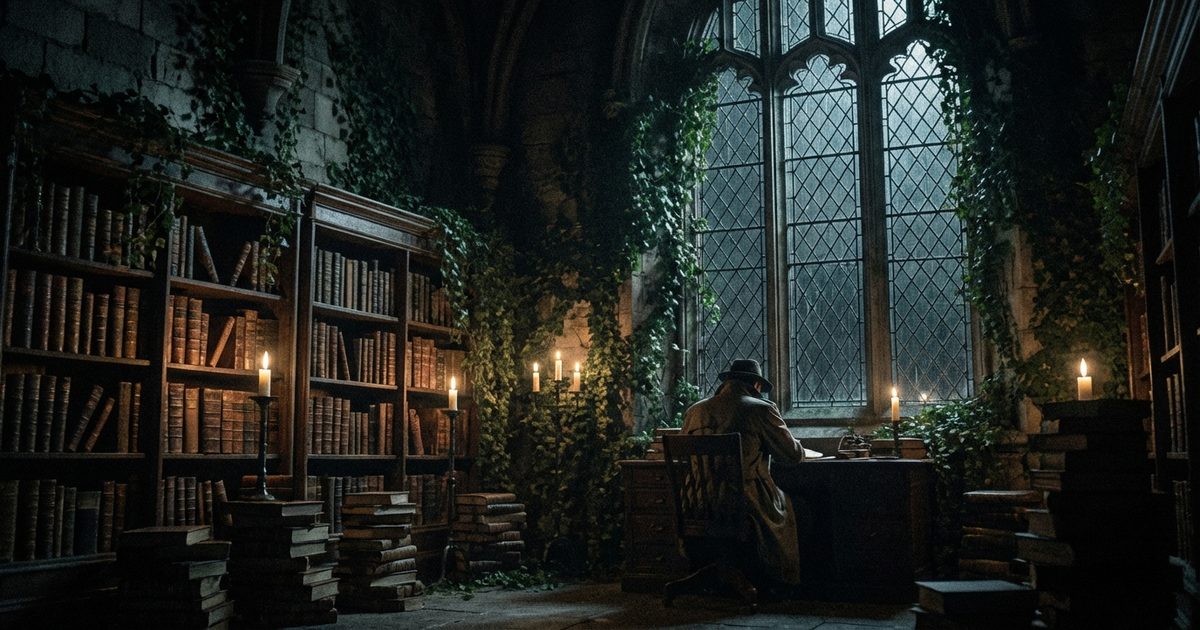
The role of BookTok in this genre fusion cannot be overstated. The platform's algorithm, which rewards emotional intensity and visual atmosphere, has proven to be the perfect incubator for dark academia horror. Videos of readers reacting to devastating plot twists, filmed in carefully curated settings of candlelight and antique books, have turned obscure horror novels into bestsellers overnight.
What BookTok understood before traditional publishing did is that the audience for dark academia and the audience for horror share a crucial trait: they are drawn to intensity. They want fiction that takes itself seriously, that commits fully to its world, that does not flinch. The aesthetic beauty of dark academia — its velvet and its Latin and its rain-streaked windows — becomes not a softening of horror but an amplification of it. Terror is more terrible when it arrives in beautiful packaging.
The readers who once curated their shelves by spine color now curate them by the depth of existential dread contained within. And they are hungry for more.
The secret society as cult
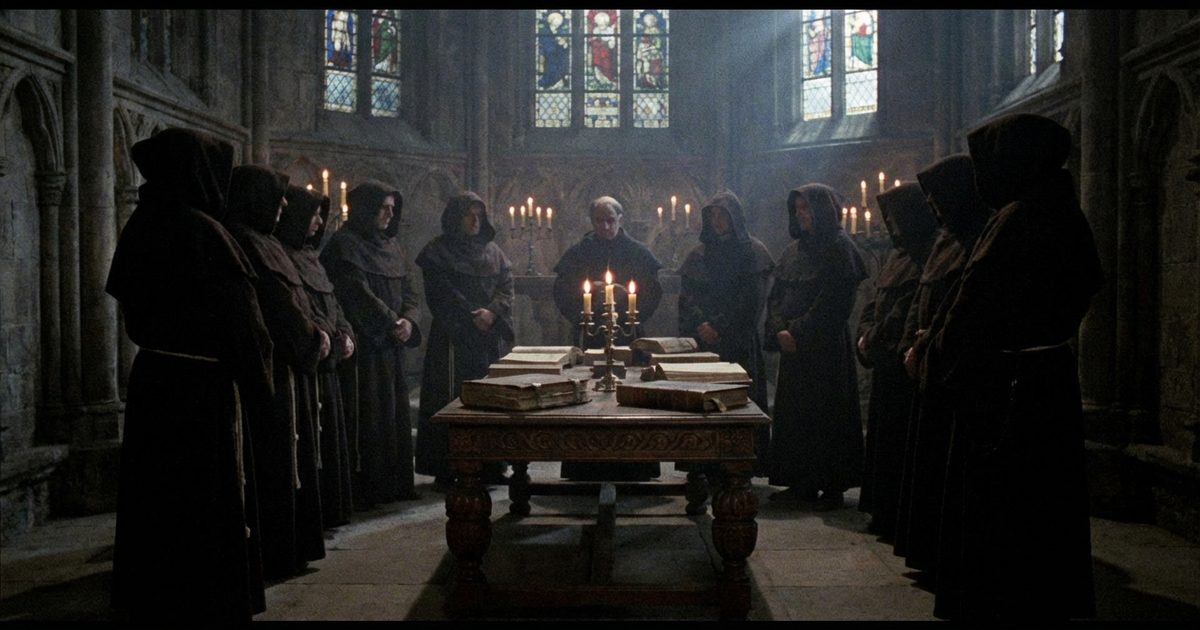
Dark academia has always been fascinated by secret societies — exclusive groups with their own rituals, hierarchies, and hidden knowledge. Horror has always been fascinated by cults. In 2026, the two have merged so thoroughly that it is difficult to tell where the debating society ends and the blood ritual begins.
This merger works because both secret societies and cults operate on the same psychological principle: belonging through exclusion. You are special because you have been chosen. You know things others do not. You have crossed a line that separates you from the ordinary world. In dark academia, this separation is intellectual. In horror, it is existential. When combined, the initiation ceremony becomes something from which there is no return — not because you are forbidden to leave, but because you have been changed into something that can no longer survive in the world you left behind.
Where desire meets the abyss
The erotic undercurrent of dark academia — the charged tutorials, the forbidden attractions across academic hierarchies, the intensity of young minds discovering both knowledge and desire simultaneously — has found a natural partner in the tradition of erotic horror fiction. The 2026 novels that have most captured the BookTok imagination are those that refuse to separate intellectual pursuit from physical desire from genuine terror. The three are woven together so tightly that pulling on one thread unravels the others.
This is territory that Jan Willem Koster's The Brothel of Shadows navigates with particular skill. Set in 1980s Amsterdam rather than a university campus, the novel transposes the dark academia structure — a young man drawn into a world of forbidden knowledge, secret hierarchies, and transformative initiation — into the setting of a supernatural brothel that exists outside the boundaries of normal reality. The knowledge Alex seeks is not academic but cosmic, and the price is not his career but his humanity.
What makes The Brothel of Shadows resonate so powerfully with the dark academia horror audience is its treatment of desire as a form of inquiry. Alex does not stumble into the brothel by accident. He is drawn there by the same hunger that drives every dark academia protagonist: the need to know, to see, to understand what lies behind the locked door. That the door opens onto body horror and cosmic transformation rather than a forbidden library only makes the parallel more unsettling.
The aesthetic of ruin
Dark academia in 2026 has embraced what might be called the aesthetic of ruin — the recognition that the beautiful institutions it fetishizes are also decaying ones. The crumbling stone, the water-stained ceiling, the portrait whose paint is flaking away: these are not imperfections but revelations. They show you what lies beneath the surface. And in the horror version of this aesthetic, what lies beneath is never benign.
The best dark academia horror of this year understands that decay is not the opposite of beauty but its most honest expression. Everything beautiful is in the process of dying. Every institution built on the accumulation of knowledge is also an accumulation of secrets, compromises, and buried transgressions. The horror is not that the university is haunted. The horror is that it was always haunted, from the very first stone laid in the foundation.
Reading list for the brave
For those ready to descend into the darkest corners of this genre convergence, the landscape of 2026 offers rich and treacherous ground. Begin with the campus-set novels that have dominated BookTok's horror recommendations, then allow yourself to be drawn further afield — into the cosmic territory where dark academia's obsession with knowledge meets horror's insistence that some knowledge destroys.
The Brothel of Shadows by Jan Willem Koster belongs on this reading list not as a campus novel but as something rarer: a dark academia horror novel in spirit, built on the same architecture of forbidden knowledge and irreversible initiation, but set in a world where the stakes are not grades or tenure but the fundamental nature of reality itself. For readers who have exhausted the university setting and hunger for darker ground, it is a necessary next step.
The shelves of the forbidden library are open. The question, as always, is whether you can afford the price of admission.
The forbidden knowledge awaits. Are you willing to pay the price?
Read the Novel →