
The knife falls. The camera finds her. Not to show her dying — to show her not dying.
Something has shifted in horror. Not a quiet revolution: a loud reversal, documented in sales data, in millions of BookTok posts, in a new term that entered critical vocabulary. Femgore. The name matters. It changes how you look at an entire genre.
Origins: The Body as Territory
Classic horror used the female body in one specific way. As a target. As a surface on which to inscribe the male viewer’s fear. As a decorative victim whose purpose was to justify the protagonist’s intervention — or to prove the monster’s lethality.
In 1975, Robin Wood published the essay that would reshape horror criticism: “An Introduction to the American Horror Film.” Wood identified the mechanism: the monster is the social repressed. And what 1970s American society repressed included autonomous female sexuality, uncontrolled desire, the woman who needs no saving.
The films punished her for it. The girl who has sex dies. The one who stays chaste survives. The logic was explicit as a signature.
Carol Clover and the Final Girl: the First Reversal
In 1992, Carol Clover published Men, Women, and Chain Saws — the book that coined “Final Girl.” The slasher’s surviving protagonist is not passive: she fights, runs, improvises. Clover argued that male audiences identify with her more than with the killer.
It was a revolutionary reading. But it had a limit. The Final Girl survived on the genre’s masculine terms. She had to be virginal, or close enough. She had to be traumatized. She could only win after being reduced to her last reserves. Her body remained a battlefield — even when she walked off it victorious.
“The Final Girl survives. But the price is written on every inch of her body before the film ends.”
Laurie Strode in Halloween. Sidney Prescott in Scream. Ripley — not a slasher, but the same archetype in a spacesuit. Women who resist inside spaces built to destroy them.
The 1990s–2000s: the Quiet Transition
Between the nineties and two-thousands, something began to shift. Not sharply. Gradually, like the change in light before dawn — when it is not yet day but the dark has already lost its certainty.
Women directors began entering the genre. Jennifer Lynch with Boxing Helena in 1993. Mary Harron with American Psycho in 2000 — a film about the male body punished by its own narcissism. The perspective was moving: the monster was no longer necessarily male. And the victim was no longer necessarily the point.
In parallel, horror literature saw Angela Carter and Joyce Carol Oates rewriting the rules. Carter especially — her The Bloody Chamber (1979) was femgore before the word existed. Sleeping Beauty as predator. Little Red Riding Hood who chooses the wolf. The female body as subject, not object.
Femgore: When the Term Changes Everything
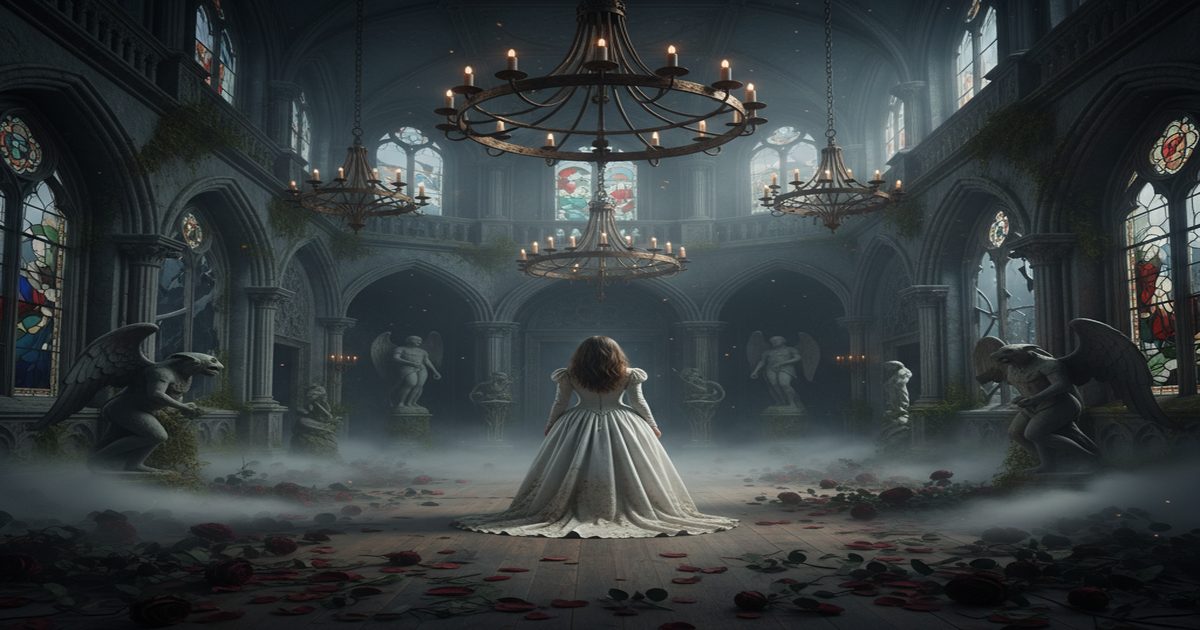
The term “femgore” surfaced in horror criticism forums around 2018–2020. It emerged to describe a specific strand: horror written by women, with female protagonists, using violence and the body in a deliberately subversive way. Not to punish, but to restore agency.
The difference is subtle but decisive. In traditional gore, blood functions as spectacle. In femgore, blood functions as narrative: it is the writing the body makes on itself to testify, resist, transform. Body horror as language — not as punishment.
Rachel Harrison, T. Kingfisher, Catriona Ward. Names that three years ago were niche and today lead bestseller lists. The same energy that dark academia brought to a certain kind of Gothic reader — interior, nocturnal, unafraid of the difficult — femgore brings to horror.
2026 and the BookTok Turning Point
In 2026, femgore has gone mainstream — and BookTok was the primary vector. The numbers speak plainly: tens of millions of views on feminist horror content. Readers filming their reactions to scenes of subversive violence, discussing agency, body, fear as shared experience.
Kiss Slay Replay by Rachel Harrison is the defining case of 2026. A time-loop slasher set during a wedding. The premise sounds classic. The execution is not: the protagonist uses each repetition of the day to systematically dismantle what made her vulnerable. This is not a survival story. It is a learning story.
That is the core of contemporary femgore: horror as laboratory. Not what the body endures, but what it learns. Not how long it holds out, but how it changes.
There is a clear parallel with Gothic eroticism — the other tradition that uses the female body as narrative space rather than target. Desire and terror intertwined not to punish whoever feels them, but to explore what they mean. The Brothel of Shadows inhabits this same territory: Xyl’khorrath does not punish Alex’s desire. It transforms it. Uses it as a doorway.
Why Femgore Works: the Psychology of Recognition
The most honest answer is this: femgore works because it tells the truth.
Traditional horror projects fear onto a body external to the female audience. You watch the screen, see someone like yourself punished for existing. The mechanism produces either distance or traumatic identification — both uncomfortable. Femgore produces something different: recognition. The feeling of seeing articulated, in the language of the genre most willing to be honest, something you already knew.
As critic Barbara Creed notes in The Monstrous-Feminine (1993), horror has always spoken what official culture cannot say. Femgore took that license and extended it: it says what even traditional horror could not articulate.
Those wanting to follow the thread further will find useful routes in the pieces on grief horror and loss and on forbidden knowledge in cosmic horror.
A Genre That Does Not Go Back
Femgore is not a trend. It is a course correction. Horror spent decades narrating half of human experience while using the other half as backdrop. Now that half has picked up the pen.
The knife still falls. But it is in different hands now. And the story it tells is entirely different.
Gothic horror, cosmic eroticism, 1980s Amsterdam. Not your usual horror novel.
Discover the Brothel →