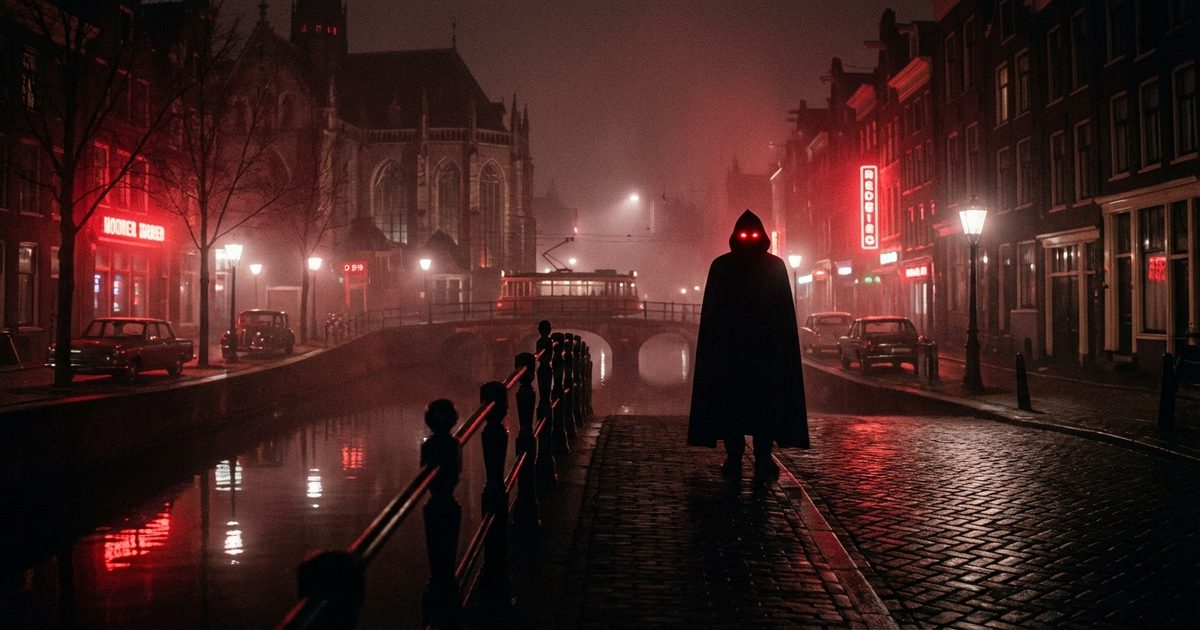
Amsterdam, 1983. The smell hits him before he sees anything — old blood and gardenias, sweet and wrong together. He stands at the mouth of a canal alley where the fog comes in thick off the water, pressing against his coat, against his skin. Amber light bleeds from a window thirty meters ahead.
He knows he should turn back. His shoes are already soaked through; the cobblestones slick and dark under a moonless sky. But the smell pulls at something beneath reason — not hunger exactly, not fear exactly. Something older than either.
He walks toward the light. The city holds its breath around him. Later, he won't remember deciding to go in.
A Hunger That Spans Centuries
The vampire is the oldest recurring figure in horror literature. Not the most ancient monster — that distinction probably belongs to something nameless and oceanic — but the most persistent. It keeps coming back, each generation remaking it in its own image.
The modern lineage begins in 1819 with John Polidori's The Vampyre. Written in the same ghost-story competition that produced Frankenstein, it introduced Lord Ruthven: aristocratic, charismatic, predatory. He was recognizably based on Byron, and readers understood the subtext immediately. The vampire, from its very first literary appearance, was about seduction weaponized. About charm as threat.
From Ruthven, the figure evolved rapidly. Varney the Vampire (1847) brought the creature to penny-dreadful readers who devoured installments by candlelight — something tactile and urgent in that reading, ink smelling of damp paper, the street noise outside fading. Then came Sheridan Le Fanu's Carmilla in 1872, which shifted the gaze. The vampire was now female, aristocratic, and unmistakably erotic in her attachment to young women. Le Fanu understood that the real horror lives in what polite society refuses to name.
Bram Stoker's Dracula arrived in 1897 and codified everything. The novel is structured as a collection of journal entries and telegrams — a found-footage horror before cinema existed. Dracula himself barely appears, yet his weight presses on every page. Stoker built the Count from Eastern European folklore, Ottoman anxiety, and Victorian sexual repression. The result was indestructible.
Anne Rice reinvented the myth in 1976 with Interview with the Vampire, giving us Louis — a vampire who mourns his own hunger, who finds consciousness itself a kind of curse. Rice's innovation was interiority. She handed the monster a voice, and the voice was melancholy and beautiful and impossible to stop reading. A whole generation grew up understanding that the most dangerous things are the ones that make you feel understood.
Since Rice, the vampire has multiplied across every register — from Buffy's postmodern irony to True Blood's political allegory to the pale ache of Twilight. Each version says something about the decade that made it. The creature is a diagnostic tool. What we fear in the vampire is always what we fear in ourselves.
2026: The Wound That Won't Close
Something shifted in late 2024, and it hasn't stopped shifting. Robert Eggers' Nosferatu remake hit theaters that December and did something unexpected: it was genuinely terrifying. Not self-conscious. Not winking at genre conventions. Just cold, and slow, and wrong in the way that stays with you for days.
Critics noted the craft. Audiences noted the dread. The film opened a door.
Now Maggie Gyllenhaal's The Bride is in production, reimagining Frankenstein's female creature through a lens that feels unmistakably contemporary. Gothic cinema is no longer a niche revival — it's becoming the dominant register of serious horror filmmaking. The Gothic has reclaimed Amsterdam as its spiritual city, those canal-cut streets lending themselves to the atmosphere that modern horror needs most: beautiful, enclosed, and faintly wrong.
The publishing world moved simultaneously. BookTok — the horror-and-dark-fiction corner of TikTok — has been recommending vampire fiction with an urgency that surprised even publishers. Print runs are expanding. Backlists are being reissued. The question isn't whether vampire fiction is back. The question is why it never really left, and what exactly it's saying this time.
What We're Really Drinking For
Nobody reads vampire fiction for vampires. That sounds like a paradox, but it isn't. The vampire is a vehicle — an image system that lets us approach things we can't otherwise examine directly.
Immortality anxiety is one. We live in a culture of radical life-extension, cryonics startups, and longevity supplements. The vampire literalizes what we already half-desire and fully dread: living forever, watching everyone you love crumble, accumulating centuries of self without ever escaping it. That's not escapism. That's a mirror.
Class tension is another. Dracula is an aristocrat feeding on his tenants. Lestat owns properties across three centuries and considers humans as assets to be managed. The vampire's power is inherited, unchosen, and fundamentally parasitic — he doesn't create wealth, he extracts it. This has never felt like metaphor. It has felt like description.
And then there's desire. The vampire's bite is intimate in a way that horror rarely allows itself to be. It requires closeness, breath, the pulse at the neck. Gothic literature has always known that desire and destruction share the same grammar — that the thing you want most is often the thing that will hollow you out. The vampire makes this literal and lets us look at it without flinching.
In 2026 specifically, something else is at work. We are exhausted by irony. A generation raised on knowing winks and genre-aware horror has quietly turned toward sincerity — toward fiction that takes the dark seriously, that doesn't step back from its own terror. Dark academia aesthetics and Gothic horror are converging because both offer the same thing: a world where things matter, where the stakes are real, where beauty and danger coexist without apology.
"The vampire doesn't just take your blood. It takes your certainty — your conviction that the world runs on the rules you were taught. After the bite, you understand that the darkness was always there. You simply weren't allowed to see it."
BookTok and the Digital Thirst
The numbers are difficult to argue with. In the twelve months ending February 2026, vampire-tagged posts on BookTok generated over two billion views. That's not a niche. That's a cultural appetite operating at scale.
What's being recommended isn't homogeneous. Alongside Le Fanu and Rice reprints, new voices are breaking through. Alexis Henderson's dark, liturgical horror. Books that approach the vampire from feminist, queer, and postcolonial angles — rewriting who the monster is, who it feeds on, who gets to survive. The overlap with weird fiction is significant: the best new vampire writing often refuses the genre's traditional consolations, leaving readers in a place of productive discomfort rather than catharsis.
Young readers, specifically, are drawn to the vulnerability within the vampire's power. A creature that is immortal and still lonely. That cannot enter a space uninvited and still craves intimacy. That feeds on others and despises itself for it. These are not obscure emotions for people in their twenties right now.
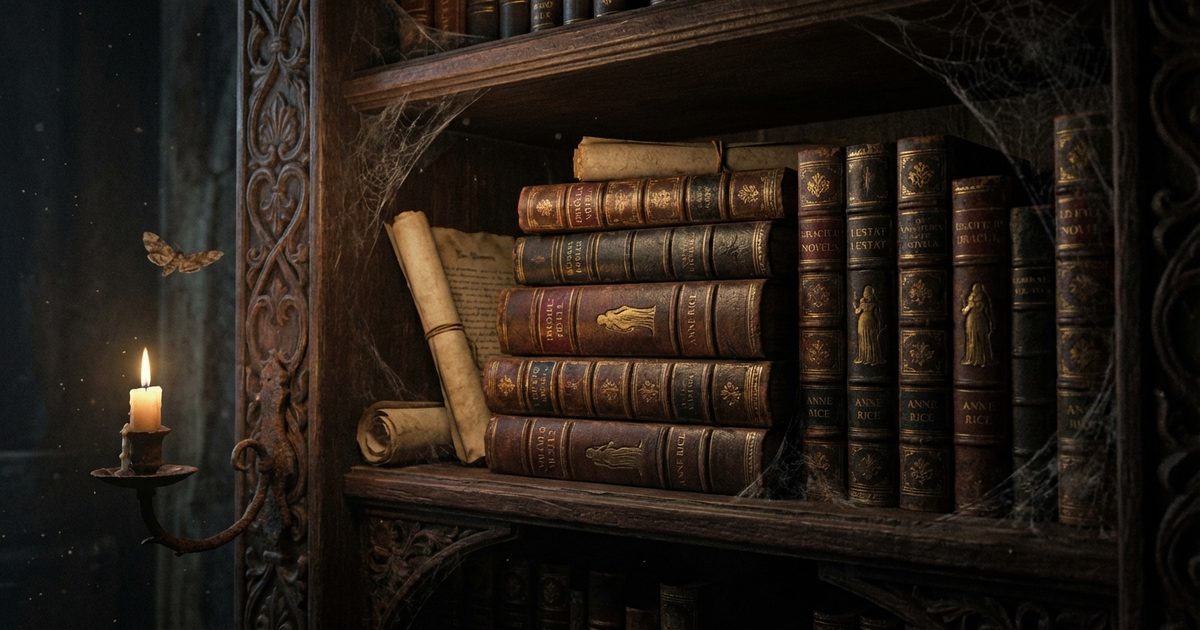
The platform amplifies discovery in interesting ways. A single video — someone reading aloud from Carmilla at midnight, voice barely above a whisper, a single candle in frame — can reach a million people. The atmosphere is the recommendation. The medium and the message collapse into one sensation: this is what reading in the dark feels like, and you want it.
Xyl'khorrath and the Hunger Beyond Blood
There is a kind of vampire that predates Polidori and will outlast every trend cycle. It doesn't need blood. It needs something closer to the self — attention, meaning, the warm core of a person's identity. Cosmic horror has always understood this: the deepest predator isn't the one that kills the body.
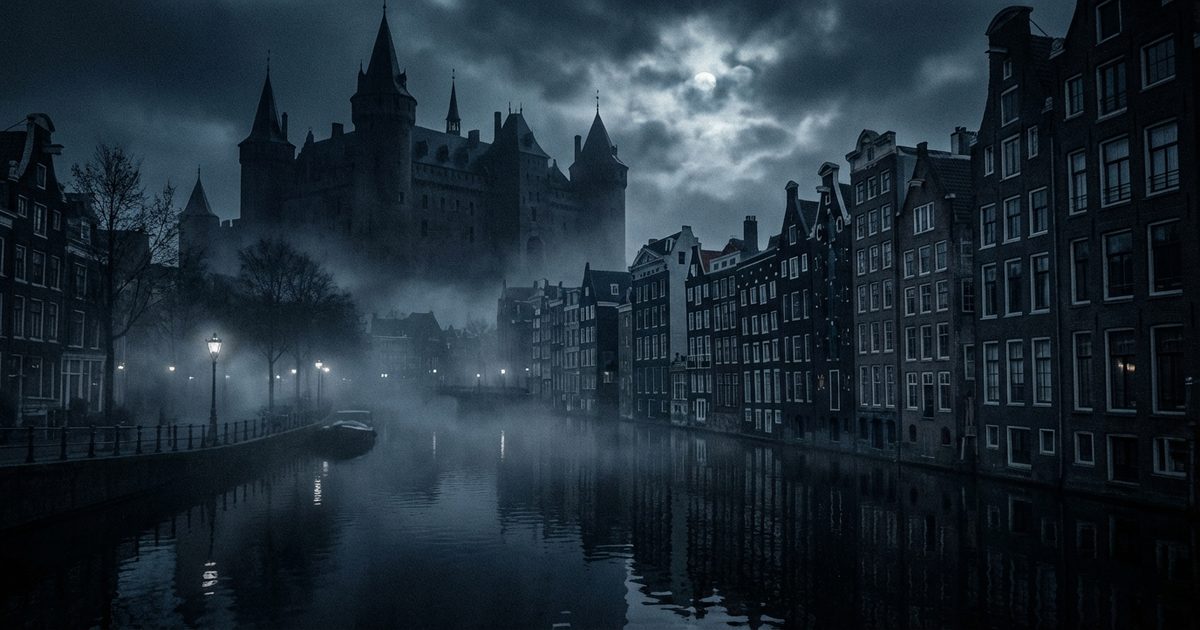
In The Brothel of Shadows, the entity called Xyl'khorrath operates in exactly this register. It doesn't lurk in castles or announce itself with a cape. It waits in the amber light at the end of a canal alley. It knows what you desire before you do. It offers nothing — and you go to it anyway, because the hunger it awakens is older than reason, older than fear.
Alex finds himself in Amsterdam's red-light district at a late hour, drawn by something he can't name. The smell of old water and something sweet underneath. A light that seems slightly warmer than it should be. He is not a reckless man. He is, in most respects, careful. But there are doors that don't wait for a decision — they simply open, and you are already crossing the threshold before the thought arrives.
This is where the vampire myth finds its real edge in 2026. Not in the fangs. Not in the immortality. In the recognition that the thing feeding on you might feel like a gift. That the surrender might feel like coming home. That the hunger you thought was yours was always, from the beginning, something else's.
The fog rolls in off the canal. The amber light holds. And somewhere beneath the city, older than the city, something exhales.
Some doors should never be opened. Alex opened the wrong one.
Read what he found →