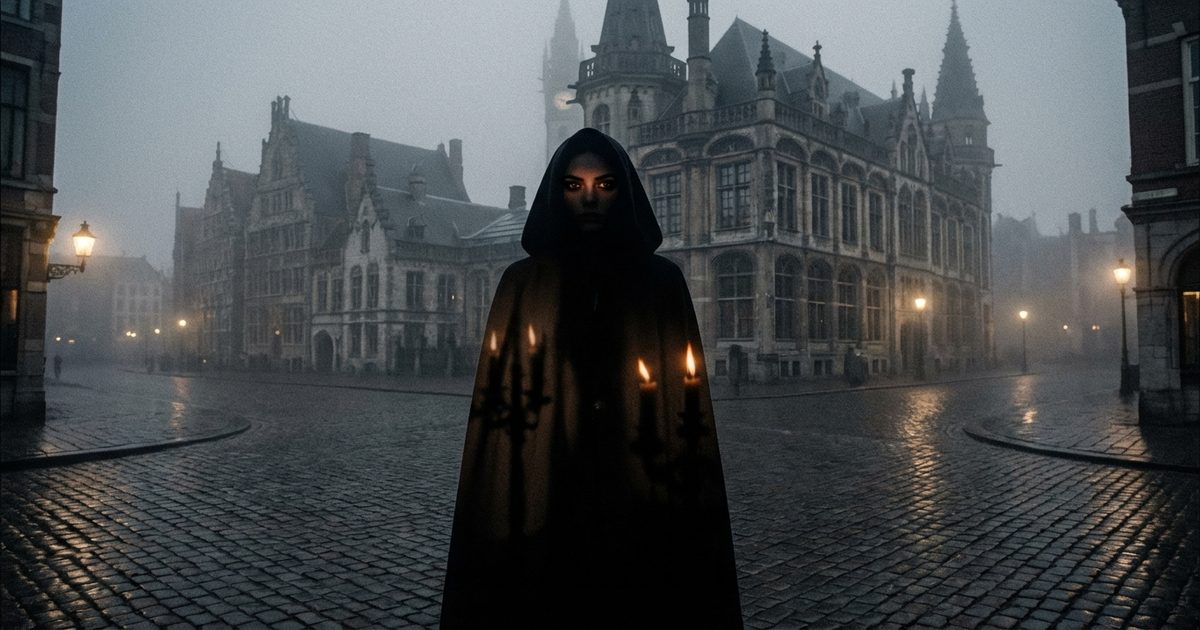
The witch was never innocent. Not even when she was burning.
In 2026, witches have returned to the center of horror — in literature, in cinema, in cultural discourse. But the archetype is double, contradictory, irreducible to a single figure. Understanding the difference between the two witches means understanding something essential about how Gothic fiction uses the female body to generate fear.
Two Women, One Fire: The Comparison
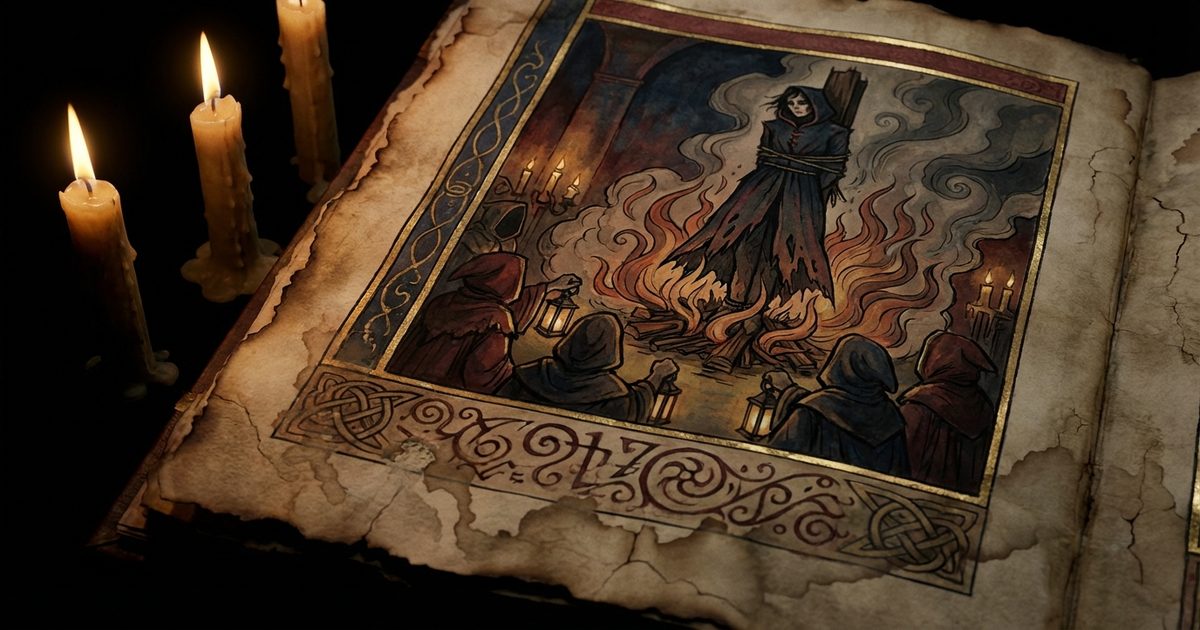
The first witch is the victim. Young or old, accused or guilty, she dies for the fears of others. She is the woman Abigail Williams accuses in Arthur Miller’s The Crucible. The fire is real. The crime is imagined.
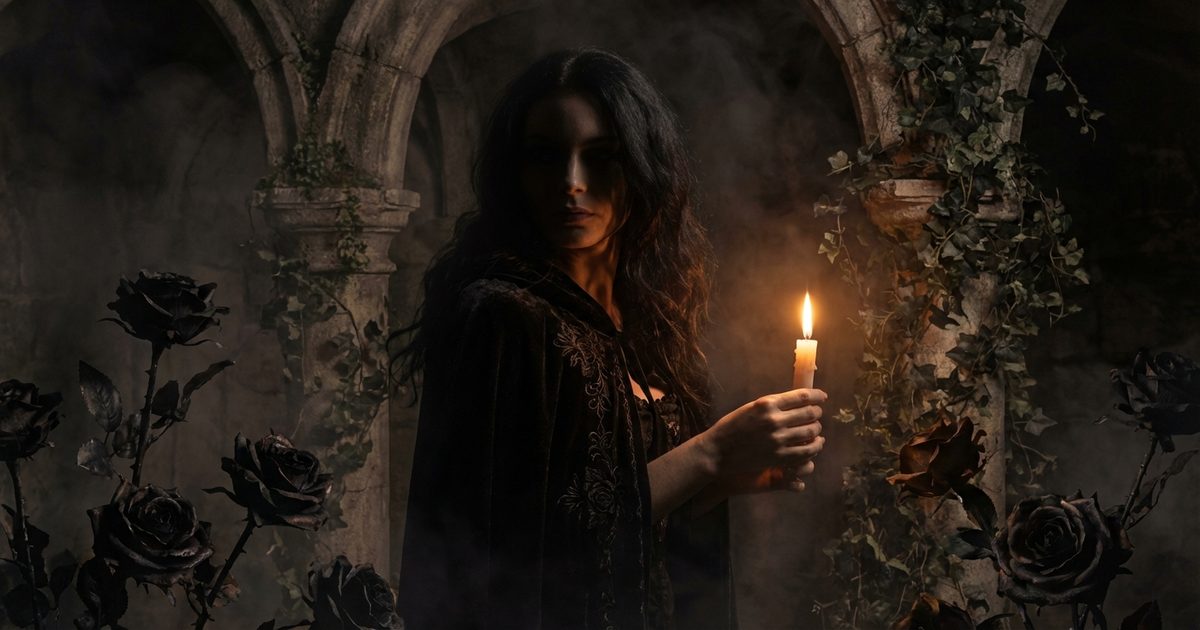
The second witch is the predator. She doesn’t wait to be judged. She seduces, transforms, selects her victims with surgical precision. She is Keats’s Lamia, abandoning her serpentine form to wear beauty as a weapon. She is Madeline Miller’s Circe, turning men into swine not out of cruelty but self-preservation.
These two figures live in constant tension in Gothic literature. They don’t cancel each other out — they often inhabit the same text, sometimes the same character. That tension is what makes the witch archetype so durable across centuries.
The comparison is never resolved. That is precisely the point. The Gothic witch is powerful because she refuses to decide: victim or predator, innocent or guilty, something to fear or something to desire.
The Witch as Victim: Fear of Unauthorized Power
The witch trials of the seventeenth century weren’t hunts for magic. They were hunts for unauthorized power. Women accused of witchcraft were often herbalists, midwives, widows with property — women who knew things men didn’t, or possessed resources men wanted.
Matthew Hopkins, England’s self-appointed “Witchfinder General,” identified over three hundred witches in two years during the 1640s. His method was simple: accuse, torture, confess. The witch-as-victim isn’t an abstract literary figure. She has a concrete, documented history made of names and dates and specific fires.
Nineteenth-century Gothic literature reclaimed this figure and amplified it. In Hawthorne’s The Scarlet Letter, Hester Prynne wears the mark of shame like an inverted crown. She isn’t a witch — but her community treats her as one. The mechanism is identical: isolate the woman who doesn’t conform, make her visible, use that visibility as punishment.
The power of this archetype is that it keeps resonating. New Gothic horror novels in 2026 return to this territory with a frequency that isn’t coincidental. The witch-as-victim speaks to something unresolved.
The Witch as Predator: Seduction and Terror
Then there’s the other witch. The one who doesn’t wait for the fire. The one who chose.
Keats’s Lamia (1820) is the turning point in English literature. A semi-divine creature who abandons her true nature to love a mortal — but who never relinquishes her power. The philosopher Apollonius will unmask her at the wedding feast, and she will dissolve. She doesn’t die by anyone’s hand. She withdraws.
Sheridan Le Fanu’s Carmilla (1872) brings this archetype to its erotic and Gothic apex. The predatory vampire who seduces Laura is also, ambiguously, genuine in her affection. Carmilla’s terror comes not from her cruelty but from her ambivalence. You never know if she’s loving you or killing you. Probably both.
“In love, the line between possession and destruction is never where we think it is.”
This ambivalence is the nucleus of Gothic horrormance. The predator-witch isn’t simply evil — that would be too simple. She is powerful, desirable, and dangerous at the same moment. The fear she generates isn’t the fear of death. It’s the fear of wanting what might destroy you.
The Body as Weapon: Eroticism and Dread
The Gothic witch uses the body as an instrument of power in both directions. In the victim version, the body is exposed and punished — the pyre is an act of physical control over a femininity that refuses to comply. In the predator version, the body becomes the weapon itself: beauty as trap, seduction as hunt.
Keats wrote Lamia’s human form as genuinely beautiful — not a deception. It’s Apollonius, the rational philosopher, who destroys her with his certainty. There’s a critique of rationalism embedded in the poem that tends to get overlooked: the scientific mind kills what it cannot classify.
Contemporary dark academia has reclaimed this tension with fierce energy. The witch-scholar who uses knowledge as power — who haunts nocturnal libraries, who knows things others don’t — has conquered BookTok and Instagram precisely because her power is intellectual before it is magical.
The witch’s body, in both archetypes, is a contested terrain. Who decides what that body can do? Who determines whether that power is legitimate or dangerous? The Gothic witch has been asking these questions for centuries. In 2026, they remain the most urgent ones.
Witches in 2026: The Conscious Return
In 2026, the witch has returned to horror with a new self-awareness. She is no longer simply victim or predator. The novels and films of this year present witches who know both roles and consciously choose which one to inhabit — or refuse to choose at all.
Lindy Ryan’s Dollface, released in early 2026, places the Gothic feminine squarely in the social media age. The witch here is maximally visible — not hidden, not persecuted, but present and dangerous in plain sight. Visibility, which was the witch-victim’s punishment, becomes her most effective weapon.
This transformation is significant. The Classic Gothic witch operated in shadow, in forests, at the margins of community. The 2026 witch operates in public, with a verified profile and a million followers. The fear she generates is different. It’s not smaller.
The new models of Gothic femininity share this quality: power no longer hidden, no longer apologized for, no longer framed as a curse endured. It’s chosen. It’s claimed. And that is precisely why it frightens us more.
Xyl’khorrath and the Witch: Cosmic Seduction
In The Brothel of Shadows, the cosmic entity Xyl’khorrath has no fixed form. It adapts. It approaches in the shape that most vulnerabilizes its victim. For Alex, in 1980s Amsterdam, that shape is often feminine, often seductive, always on the border between what he wants and what he fears.
Xyl’khorrath is the absolute predator. It has none of Carmilla’s ambivalence, none of Lamia’s regret. It has only hunger. But it uses the same instruments the Gothic witch has always used: beauty, desire, the permeable membrane between pleasure and danger.
Jan Willem Koster built the entity by consciously drawing on this tradition. The brothel is a liminal space — like the witch’s house at the village edge — where normal rules don’t apply. Those who enter, like Alex, never emerge entirely as they were before.
The Gothic witch and the cosmic entity share something essential: both force us to reckon with what we desire and shouldn’t. The line between them is thin. Koster’s brothel stands exactly on that line — and never decides which side to fall toward.
Amsterdam, 1983. A man dreams of an impossible brothel. And the brothel dreams of him.
Enter the dream →