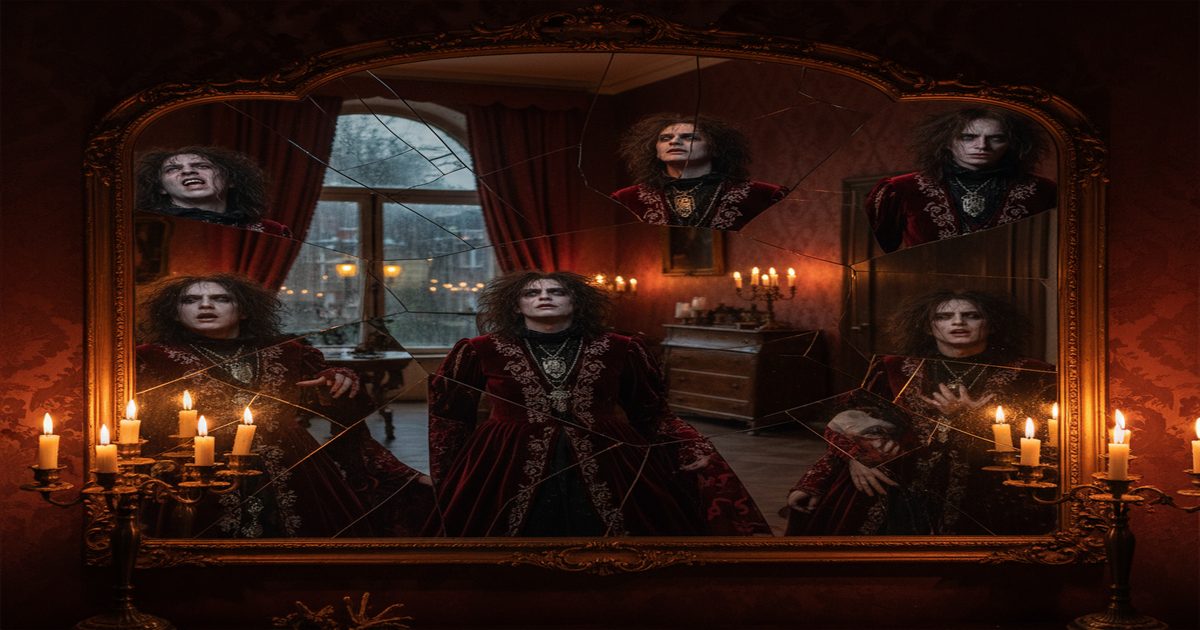
The monster is looking at you from the mirror. It didn’t come from outside. It lives within.
This is the founding premise of queer horror: terror doesn’t arrive from the exterior but from the interior of the self — from the body that fails to match expected forms, from the identity that refuses ready-made categories. In 2026, after decades of coded subtext, this strain of horror has reached genuine commercial and artistic maturity. Understanding how we got here matters.
Carmilla and the Nameless Hunger: Where It Started
Before Dracula, there was Carmilla. Sheridan Le Fanu published his novella in 1872, two decades before Stoker touched the page. And Carmilla is explicitly queer: a vampire who seduces a young woman, who drains her life with a troubling tenderness, who whispers “I am yours, and you are mine” in the dark of the bedroom.
Le Fanu’s text worked as horror for its era because it embodied the Victorian fear of autonomous female desire. Carmilla isn’t just a monster. She’s a woman who loves women, and the narrative punishes her for it. But the ending never quite convinces. The death is too quick, too clean. The text betrays a fascination it can’t quite cancel.
“Are you afraid of me? You shouldn’t be. I am like you: I know what it means to hunger for something the world refuses to name.” — Carmilla, Sheridan Le Fanu, 1872
That nameless hunger is the core of queer horror. Not the monster that arrives at night. The desire that finds no form in available language.
Oscar Wilde and the Portrait That Doesn’t Lie
The Picture of Dorian Gray (1890) gives us a body that changes while its subject stays perfectly still, an identity hidden behind a flawless mask. The painting accumulates the sins Dorian cannot show the world. The horror is in the dissociation: living one life, presenting another.
Wilde wrote the novel as a gay man in an England that would later try and imprison him. Dorian’s portrait is his hidden self, deformed under the weight of social performance. The surface moralism — vice leads to damnation — can’t cover the real message: living a double life destroys the soul more thoroughly than any crime.
Clive Barker: When the Monster Is You, and That’s Fine
The decisive shift arrives with Clive Barker, openly gay, who in the 1980s rewired the relationship between horror and identity. In Hellraiser (1986), the Cenobites aren’t evil in the conventional sense. They’re beings who’ve pushed through pain into ecstasy, who’ve transformed flesh to its extreme limits. They are, in a very precise sense, martyrs of pleasure.
Barker chose to hide nothing. The Cenobites wear flesh like a modified garment. Post-human, post-gender, post-taboo. Their violence is always simultaneously a liberation. Whoever opens the Lemarchand box isn’t simply killed. They’re transformed into something the world doesn’t know how to name.
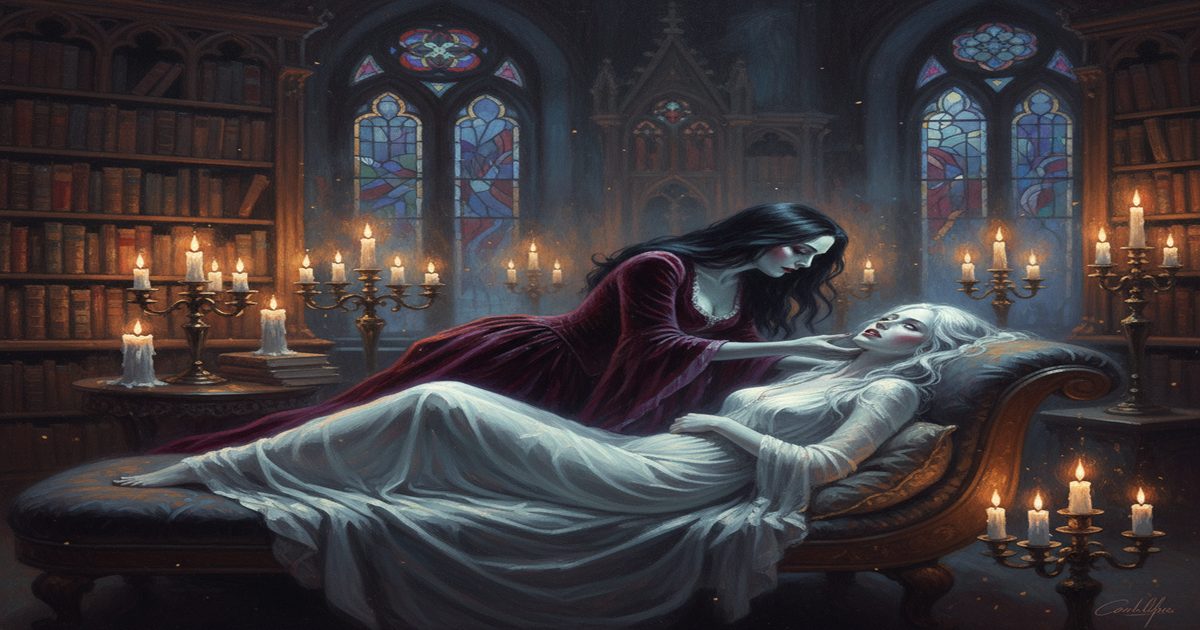
Barker opens a door that doesn’t close. After him, the queer body in horror is no longer merely punished or redeemed. It becomes the legitimate protagonist of transformation.
The Body as Battlefield: Queer Body Horror
Body horror has a natural affinity with queer experience because both are fundamentally about a body that fails to match expectations. Flesh that changes, grows wrong, refuses imposed form: it’s the most direct metaphor for dysphoria, for the sense of inhabiting a foreign shell.
David Cronenberg explored this territory without ever declaring it. Videodrome (1983) shows a body developing new openings, new organs, new vulnerabilities. The Fly (1986) charts an irreversible transformation that its protagonist first meets with horror, then with a strange acceptance. There’s always a moment in Cronenberg where the character stops fighting their new body and begins to inhabit it.
That narrative sequence is exactly what contemporary queer body horror has made its own.
2026: The Year Queer Horror Went Mainstream
The genre has broken out of its niche. Spoiled Milk by Nico Bell (2026) is set in a 1928 girls’ boarding school where desire between women and the supernatural intertwine until they’re indistinguishable. The atmosphere has been compared to Picnic at Hanging Rock, but with an erotic charge Joan Lindsay would never have allowed herself.
Persona by Aoife Josie Clements addresses dysphoria head-on: the protagonist’s body transforms each night into something non-human, and the narrative never decides whether this is curse or revelation. The reader is left suspended with her in the ambiguity. That’s precisely the point. The genre doesn’t offer easy answers. It offers more honest mirrors.
The Brothel and the Desire Without a Name
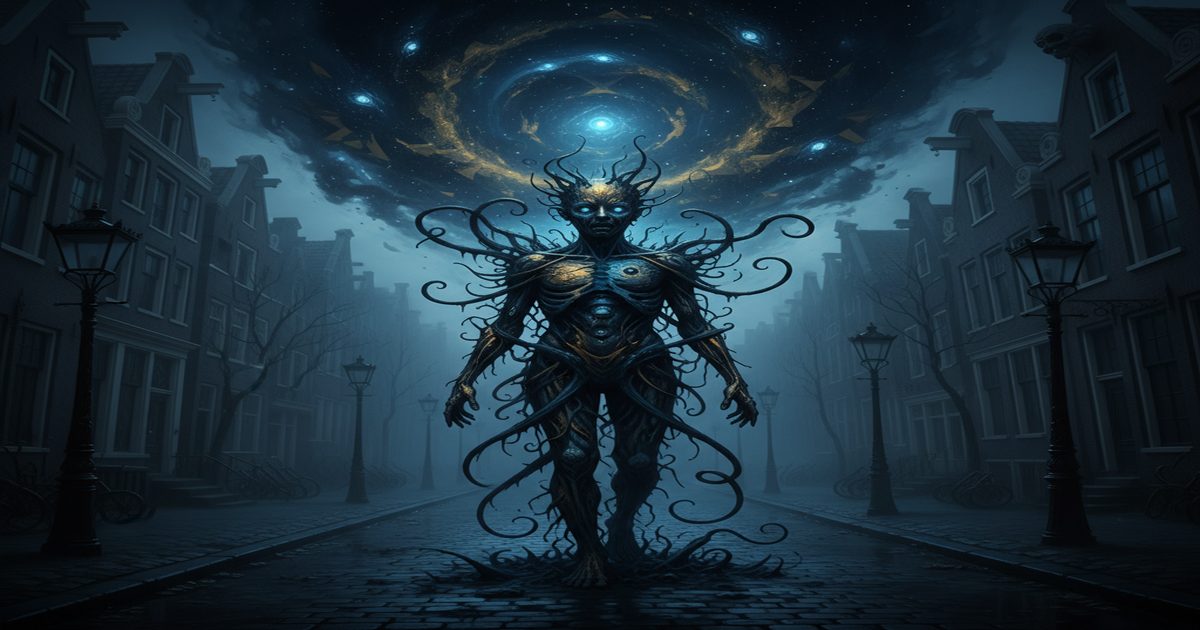
In The Brothel of Shadows, Alex enters a place that exists outside all categories. Xyl’khorrath’s brothel isn’t a place of ordinary pleasure. It’s a liminal space where the borders of body, gender, and identity dissolve together. The entities that inhabit it aren’t human in any conventional sense. They desire in ways human language cannot describe.
Jan Willem Koster sets his novel in 1980s Amsterdam, a city long open to marginal identities, subcultures, and spaces where social norms loosen. That’s not a casual choice. The Red Light District isn’t merely backdrop: it’s proof that certain desires exist and thrive beyond the boundaries society would prefer to impose.
Alex, like Dorian Gray, like the protagonist of Persona, encounters something he cannot name. And the nameless thing is always, in queer horror, the most dangerous of all. Not necessarily because it’s evil. Because it forces us to look where we didn’t want to look.
Why the Monster Is Often Right
The most interesting queer horror of recent years has stopped presenting the monster as a metaphor for deviancy to be punished. The monster has become the reliable narrator in a world that lies. Carmilla was right about desire. Dorian was right about the cost of deception. Barker’s Cenobites were right about ecstasy beyond pain.
What the genre offers, in 2026 as in 1872, is a narrative space where forbidden identities can exist without being resolved. The monster doesn’t always get defeated. Sometimes it simply lives. And the reader discovers it wasn’t quite as frightening as the narrator had suggested.
The real terror, in queer horror, isn’t the monster. It’s the mirror that doesn’t lie.
Some doors should never be opened. Alex opened the wrong one.
Read what he found →To explore identity and transformation in horror further, read also Body Horror and Transformation, Gothic Eroticism in Literature, Forbidden Knowledge and Cosmic Horror, and Horrormance: When Love Gets Dangerous.