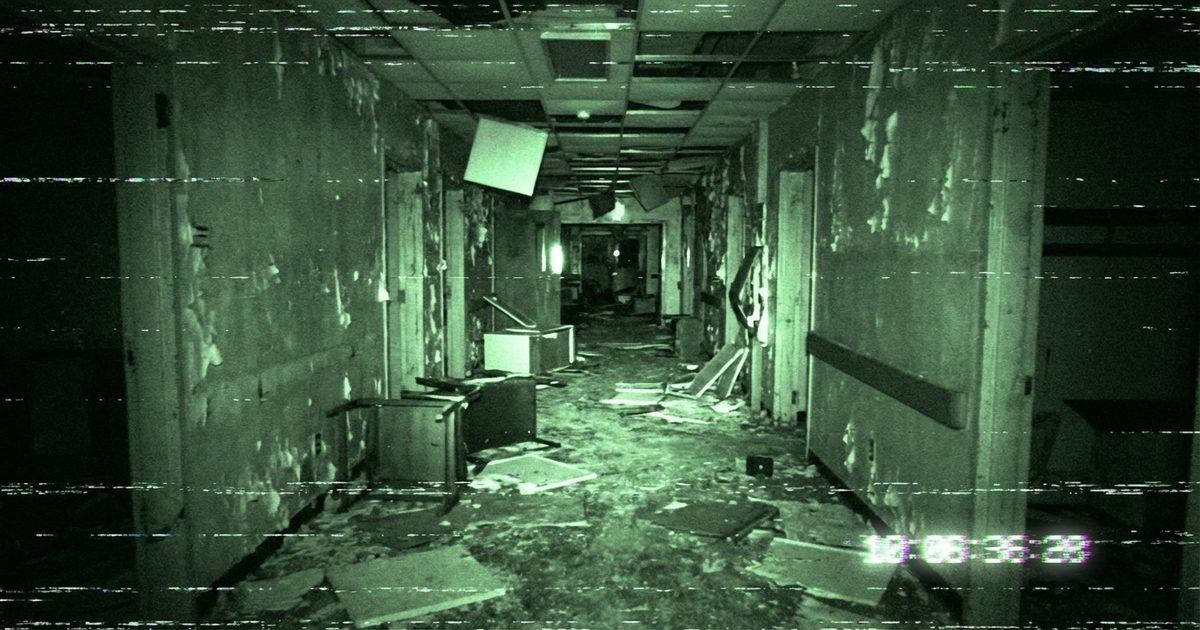
The camera lies. Not always — but often enough that you can never fully trust it. Found footage was born from this crack: the promise that what you’re seeing is real.
In 2026, thirteen new found footage films are in production or release. The genre never died. It hid — like a cameraman in a dark room, waiting for the right moment to press record.
A Camera That Shouldn’t Exist
The Blair Witch Project arrived in 1999 with one devastating idea: what if the camera was the only survivor? The wind in the trees. Heather’s fractured breathing. Her running nose in close-up as she says goodbye.
That final shot — Mike in the corner, still, back to us — worked because the camera explained nothing. Found footage is the genre of omission. What’s missing frightens more than what’s there.
The premise is always the same: someone recorded something they shouldn’t have seen. You’re watching that recording right now. You’re an accomplice. A voyeur. The genre never lets you off the hook.
This kind of viewer implication has no precedent in traditional horror cinema. In the slashers and Gothic films of the 1980s, there’s always a safe distance between screen and audience. Found footage eliminates it. The boundary between observer and victim collapses the moment you press play.
Cannibal Holocaust (1980) anticipated all of this by nearly twenty years. Director Ruggero Deodato was arrested because authorities believed his actors were genuinely dead. Found footage was literally born as evidence in a murder trial — it’s hard to imagine an origin more fitting for what the genre does to its audience.
The Eye That Doesn’t Know What It Sees
The unreliable narrator is the genre’s beating heart. There’s no omniscient director curating what we see. There’s only the lens — blind, mechanical, indifferent to the terror of whoever holds it.
[REC] (2007) pushed this logic to its limit. Pablo’s camera becomes the only eye inside the contaminated building. He dies. The camera stays. We stay with it — in the dark, in the silence, in the imagined smell of sealed rooms and fear.
Subjective horror predates cinema. Edgar Allan Poe built narrators who see without understanding in almost every story he wrote. The dreams and nightmares of horror literature have always worked with this ambiguity: the witness is never certain they’re lucid. Found footage is Poe with a dying battery.
The narrator in “The Tell-Tale Heart” hears the heartbeat under the floorboards — but no one else does. In found footage, the inverse occurs: the camera records what living eyes refuse to look at. The emotional result is the same. The witness is alone with what they know.
“The camera doesn’t lie. Only the person choosing what to film — and what to cut — does.”
Testimony in found footage is always partial. Like sleep paralysis — you see something, feel something, but can’t record the whole truth. The camera catches fragments. Leaves gaps. The gaps are where the terror lives.
The Invisible Monster: a Grammar of Fear
Cloverfield (2008) understood something essential. The monster is almost beside the point. What matters is the sound of its breath getting closer. The hand that shakes while pressing REC. The smell of pulverized concrete you can almost taste through the screen.
In found footage you’re afraid first. The monster arrives later — maybe. This reversal is the genre’s secret: anticipation kills more efficiently than revelation.
Blair Witch’s monster never fully appears. Host (2020) — shot entirely over Zoom during lockdown, actors never physically together — deploys only pixelated fragments and off-screen noise. Paranormal Activity works almost entirely through shadows and night sounds. Found footage horror is always partial, always unfinished, like a dream that stops remembering itself the moment you wake up.
Paranormal Activity cost fifteen thousand dollars and grossed a hundred and ninety-four million worldwide. Not because it showed something extraordinary. Because it showed almost nothing — and let the audience complete the picture with their own fears, their own night sounds, their own dark rooms.
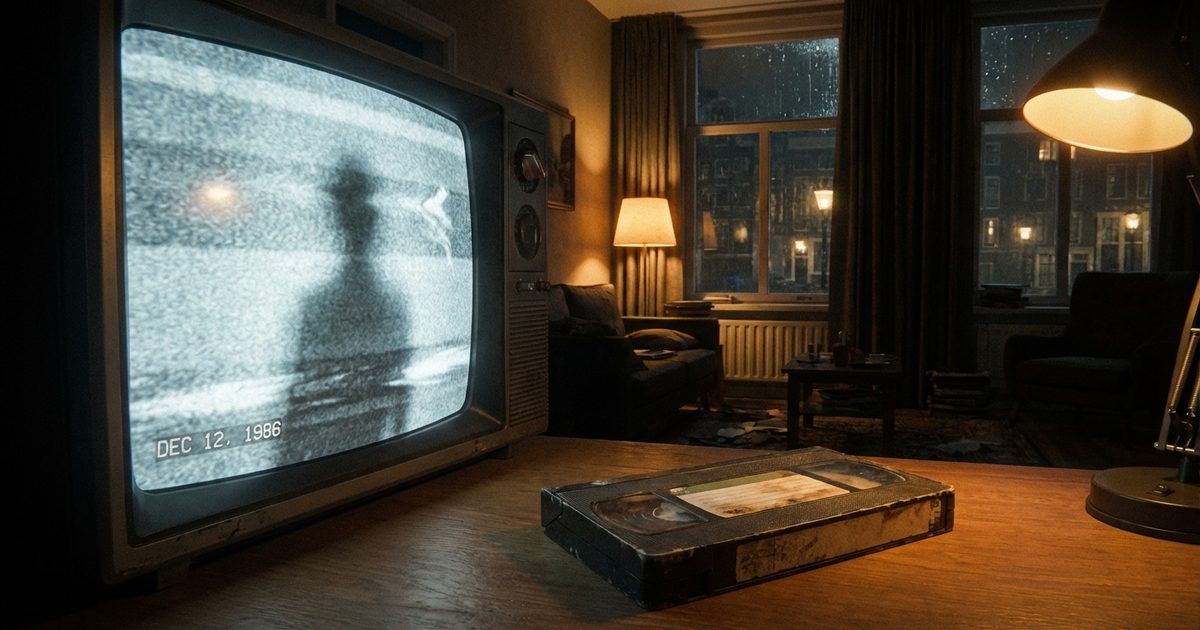
From VHS to Digital: How the Language Shifted
VHS transformed how we perceive visual authenticity. The grain of magnetic tape, image distortion, the beep of a dying battery — these technical imperfections became the vocabulary of genuine horror. The scratchy sound of the tape meant: this actually happened.
The digital revolution should have killed found footage. Cameras grew steadier, images sharper. Instead the genre survived by reinventing its own glitches — buffering, corrupted pixels, compression artifacts. Distortion stopped being a technical flaw. It became a code.
Between 2007 and 2012, found footage dominated horror box offices on both sides of the Atlantic. [REC] and its sequels arrived from Spain with near-documentary ferocity. Chronicle (2012) applied the formula to superhero cinema. The genre seemed unstoppable — until audiences tired of sequels and imitation.
But like every vital narrative form, it didn’t die. It transformed. It waited.
The lesson VHS taught the genre is this: technical quality was never the goal. The goal is the feeling of watching something you shouldn’t see. Visual noise is the carrier of that feeling — not a defect to be corrected.
The 2026 Revival: Thirteen Films, One Question
Thirteen found footage films in production or release in 2026. The number reveals something: this format taps into something we need — or dread — in the age of social media and deepfakes.
In an era when any video can be fabricated, found footage has acquired a new philosophical weight. It’s no longer just a filmmaking technique. It’s a question: how do you know what’s real?
Deepfakes have made that question urgent. A video showing someone doing something they never did. A voice saying words never spoken. Found footage horror in 2026 was born in this context — and uses it as narrative fuel. The fiction camouflages itself as disinformation.
The genre has always mirrored its moment. Blair Witch emerged in the early internet era — the legend spread online before the film released, in what was cinema’s first viral marketing campaign. Found footage in 2026 arrives in the era when seeing no longer means believing.
There’s something peculiar about this return. Audiences know these films are fiction. They believe anyway. The camera shakes. The breath quickens. The heart accelerates. Found footage doesn’t deceive us — it invites us to deceive ourselves, deliberately, and with pleasure.
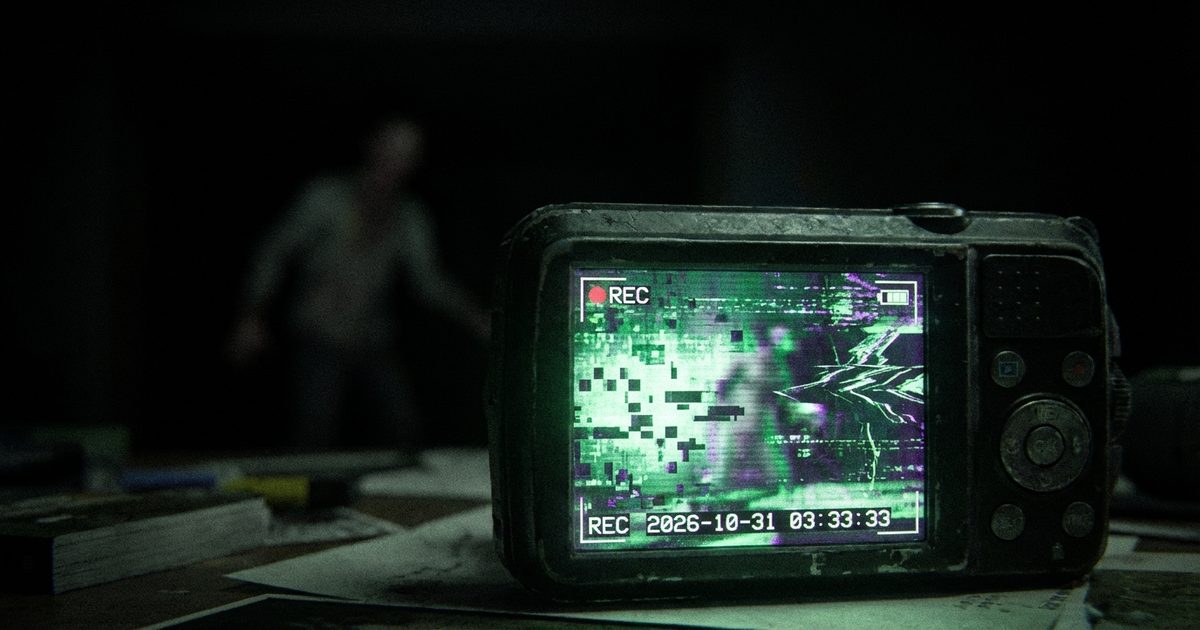
The Brothel of Shadows as Cosmic Found Footage
Alex, the protagonist of The Brothel of Shadows, has no camera. He has something more insidious: memory. It records everything — the voices at night, the smell of mold and incense, the sensation of a hand on his shoulder in the dark.
Jan Willem Koster built the novel as an act of cosmic voyeurism. The reader watches Alex watching the brothel watching him in return. Three levels of gaze. None innocent. None certain of what they’re actually seeing.
Like the best found footage, the cosmic horror novel doesn’t explain everything. Xyl’khorrath isn’t described — it’s perceived. A weight in the air. A sound at three in the morning. The certainty of not being alone in the room, even when every door is locked.
Like the psychological survival horror tradition, the novel works through what isn’t shown. Alex’s “camera” is his mind — and the mind, like every camera in found footage, only shows what it can bear to look at.
Next time you watch a found footage film, remember this: the camera only sees what falls within its field of view. Exactly like you. Exactly like Alex — in the wrong room, at the wrong door, at the most wrong hour of the night.
Some doors should never be opened. Alex opened the wrong one.
Read what he found →