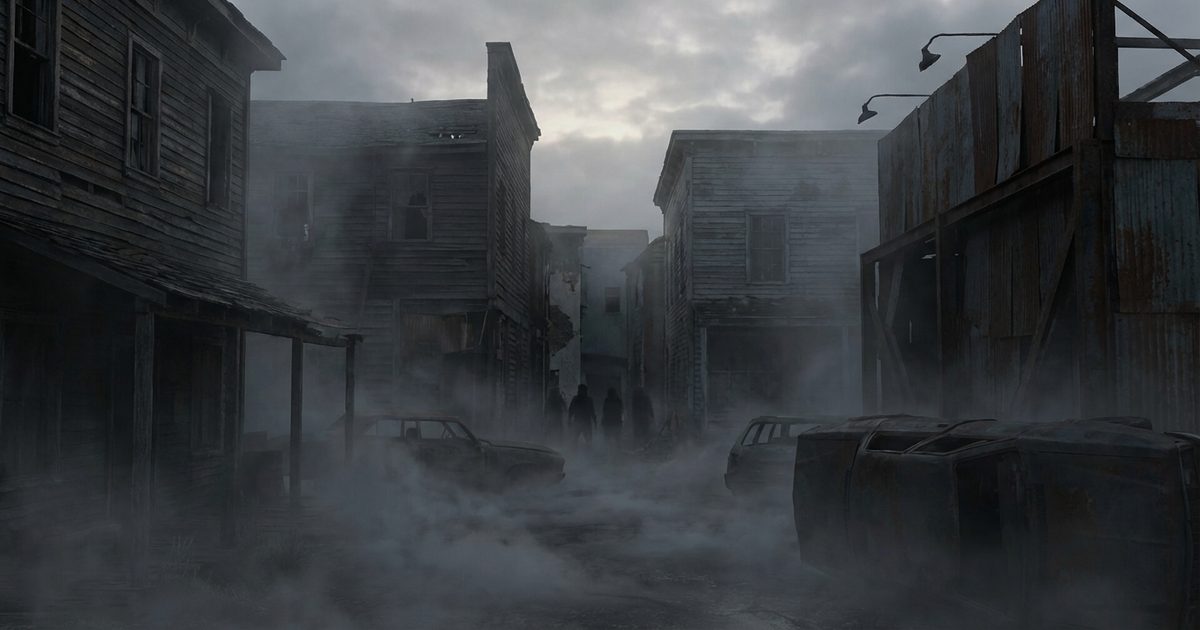
The fog covers everything. You hear the radio — that white static that means something is close — but you can’t see anything. The cold metal of the controller in your hands, the smell of overheated plastic. You’re in a town that doesn’t exist, and what you’re about to meet is yourself.
Silent Hill is not a horror game in the conventional sense. It doesn’t use physical danger as its primary lever. It uses guilt, regret, shame — the psychological structures every player carries inside them — and turns them into habitable geometry. The town is your unconscious. The monsters are your mistakes.
A Fog That Comes From Within
The first Silent Hill released in 1999 for PlayStation. Konami’s Team Silent didn’t have the budget to render the town in full detail — the fog was a technical solution, a way to hide the limits of draw distance. But the fog became the semantic heart of the entire series.
Concealment is more terrifying than revelation. A dark corridor with no visible end is more frightening than any visible monster, because the human brain fills empty space with its worst fears. Silent Hill exploits this mechanism with surgical precision: the fog isn’t a graphical limitation turned aesthetic — it’s an embodied metaphor. Harry Mason searches for his daughter in a town that may not be real. Doubt is the game’s first weapon.
Resident Evil, released three years earlier, used survival horror as pure adrenaline: limited resources, fast zombies, tension through inventory management. Silent Hill used survival horror as forced introspection. The difference isn’t of genre — it’s of target. Resident Evil shoots at your body. Silent Hill shoots at your history.
Pyramid Head and the Logic of Punishment
Silent Hill 2 (2001) is the series’ masterpiece and one of the most sophisticated texts the video game medium has produced. James Sunderland arrives in Silent Hill after receiving a letter from his wife — dead three years prior. The letter says she’s waiting for him “in their special place.”
Pyramid Head appears for the first time in a narrow corridor. Well over two metres tall, a triangular metal cage where a head should be, a blade dragging across the floor with a sound of metal on concrete that resonates in the walls of the stomach. It moves slowly. It never runs.
It doesn’t need to.
Pyramid Head is not an enemy to defeat. It’s a punishment to endure. Its existence answers a question the player hasn’t yet asked: what did James actually do to his wife?
The answer arrives ninety minutes before the credits roll. And when it does, Pyramid Head stops being terrifying. It becomes sadder than any creature the medium has ever produced — because its function was always this: not to frighten James, but to remind him of what he already knew.
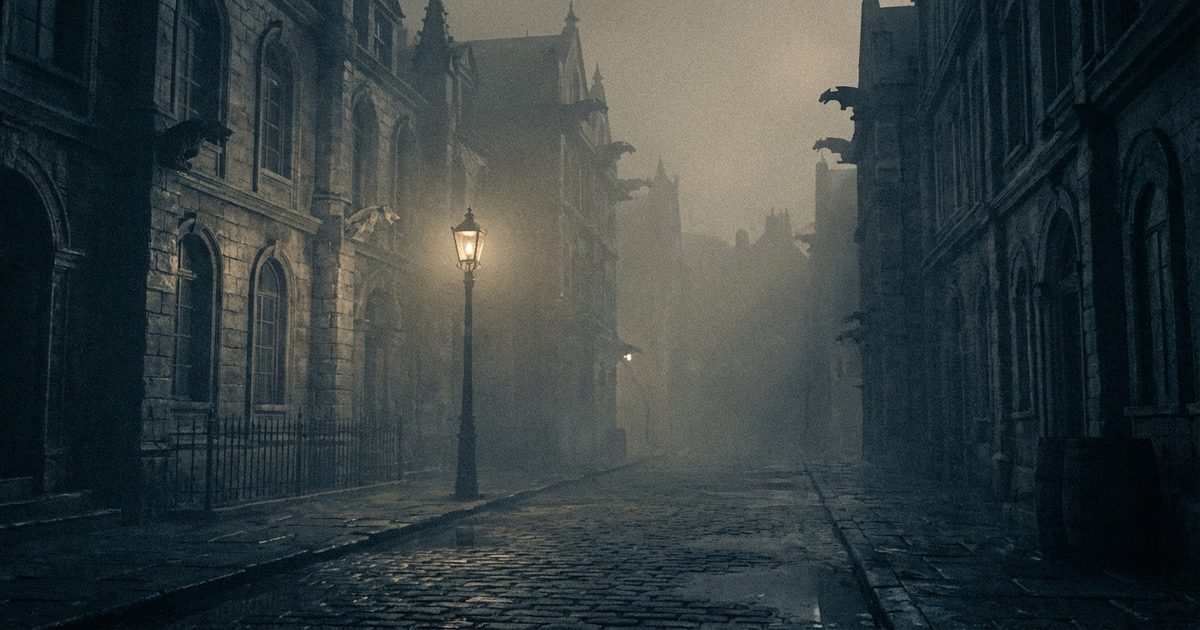
Sound as Weapon: Akira Yamaoka
Akira Yamaoka’s score is inseparable from the Silent Hill experience. But “score” is too modest a term for what Yamaoka did: he composed the game’s unconscious.
The ambient tracks — industrial loops, scraping metal, low frequencies you feel more in the body than with the ears — build a state of constant alertness that never resolves. There is no “safe music moment” as in traditional horror films where the score calms between scares. The tension never drops. The player’s body remains in a state of prolonged activation that produces genuine fatigue.
Then, without warning, comes a song: acoustic guitar and female vocals — Promise, Theme of Laura, Letter — From the Lost Days. Beauty in contrast with the preceding horror produces something more complex than simple emotion: the physical sensation of something that had been torn and is being resewn, badly, with the wrong thread.
- Sub-bass frequencies for unconscious somatic activation
- Silence as tension — absence of sound is more unsettling than noise
- Brutal melodic contrast between industrial ambient and acoustic ballad
- Radio static as alarm system that conditions the player into fear responses
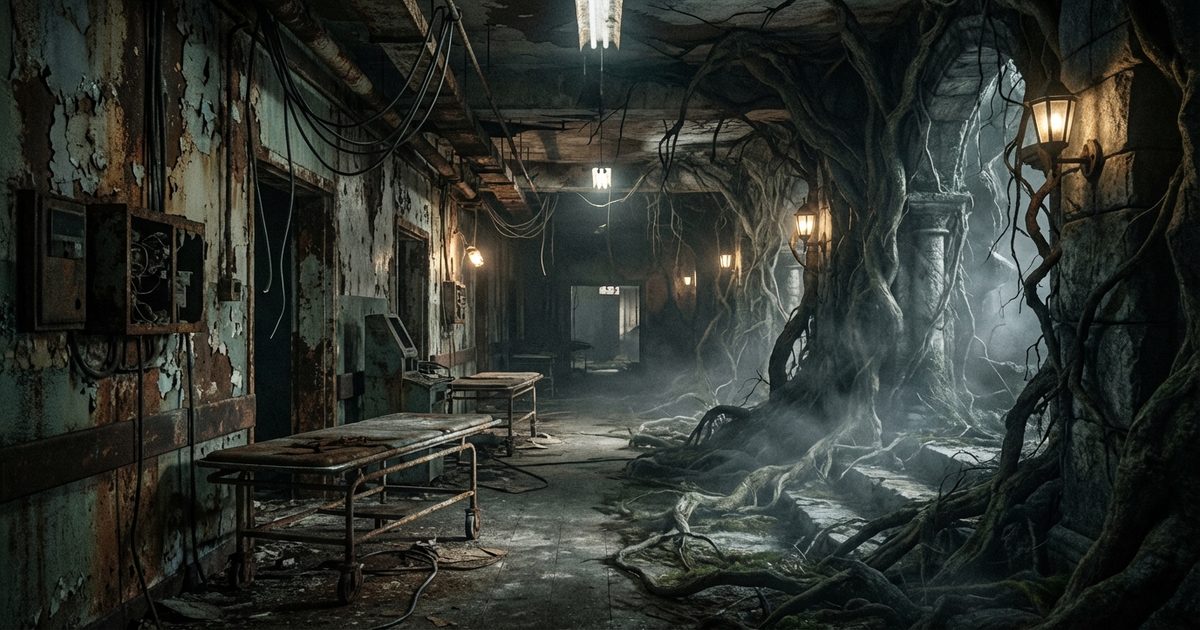
What Separates Survival Horror from Pure Horror
In classical survival horror, you survive. You manage resources, avoid danger, find the exit. Agency is everything: you are the agent of your own salvation or death.
Silent Hill 2 deconstructs this structure. James is armed but incompetent — the combat is clumsy, slow, deliberately unsatisfying. You’re not playing a hero. You’re playing a man who isn’t sure he wants to survive. The struggle with creatures isn’t adrenaline-fueled: it’s squalid. The iron pipe coming down repeatedly on a body that has already stopped moving — until you stop, not the game.
This boundary between player and character, between the player’s choices and James’s psychology, is where Silent Hill 2 achieves something few media have ever touched: narrative co-responsibility. You’re not watching someone do terrible things. You’re doing them yourself, with your own hands, with your own controller. And the game makes sure you know it.
Silent Hill 2 and the Literature of Unreliability
Silent Hill 2 belongs to the same literary tradition as psychological horror fiction with unreliable narrators: Henry James in The Turn of the Screw, Shirley Jackson in The Haunting of Hill House, Thomas Ligotti’s stories. The narrator doesn’t lie intentionally — he’s convinced he’s telling the truth. But the reader — and the player — accumulates evidence that this truth is incomplete.
The difference between the literary medium and the video game medium here is crucial: in a novel, you read someone else’s lies. In Silent Hill 2, you commit them.
This structure connects directly to The Brothel of Shadows: Cosmic Interception. Alex, Jan Willem Koster’s protagonist, also passes through places that seem physical but are equally psychological — encountering creatures that aren’t separate from him but projections of his own fascination and terror. The brothel between dimensions operates like Silent Hill: the space responds to its visitor, reshaping itself around what he cannot admit to himself.
To explore further the body horror of transformation or how dreams in horror literature function as portals into the unconscious, those pieces extend the territory.
The fog is still there. The radio is still crackling. Somewhere, at a distance impossible to measure, something is dragging a blade across a concrete floor.
You’re already inside.
Some doors should never be opened. Alex opened the wrong one.
Read what he found →