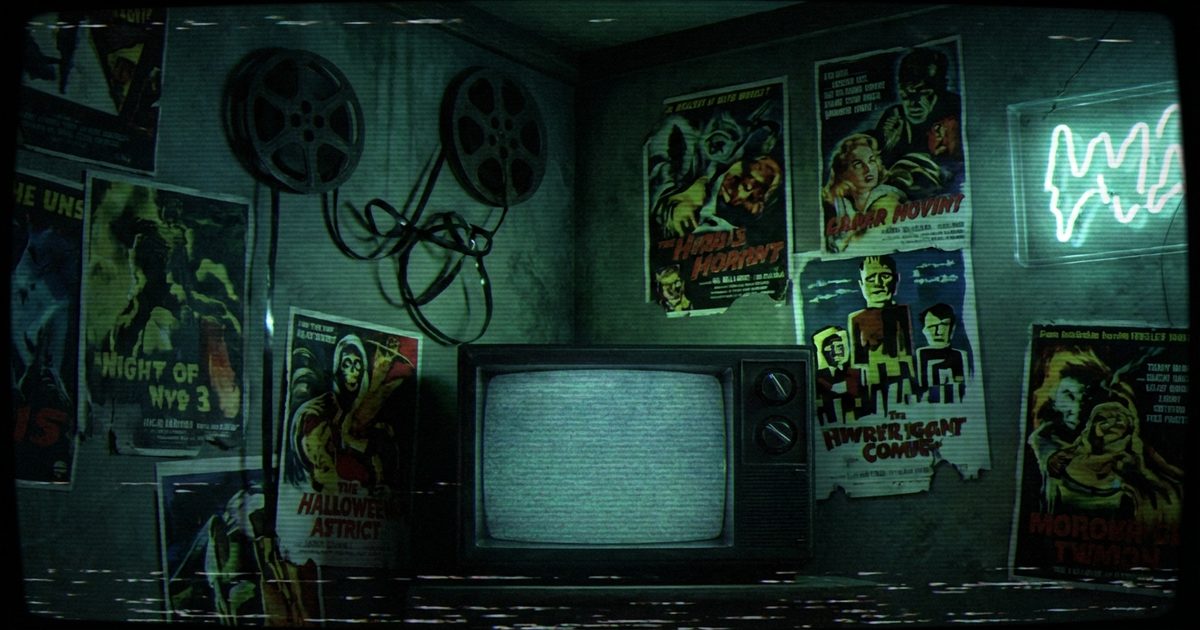
Plastic and fear. That was the smell at ten PM. VHS tapes lined the shelves like forbidden books — black-sheathed covers showing things children should never see.
That decade — the same years The Brothel of Shadows descends into lawless Amsterdam — was the most fertile era in horror cinema. The masterworks, the subgenres, the visual brutality: nothing since has matched it.
Ten films redefined the modern nightmare. Here they are.
1. The Thing — paranoia that melts flesh (Carpenter, 1982)
No list starts anywhere else. An alien entity with no fixed form imitates, absorbs, transforms. The Antarctic base becomes a prison. Nobody knows who is still human. The answer, as in all great horror, is that maybe no one is.
Rob Bottin’s practical effects remain unsurpassed. The body horror of each transformation — tendons stretching, heads detaching and walking — carries the visceral weight of a waking nightmare. The film ends without resolution. The horror persists.
Why it matters
Carpenter proved that the most effective terror isn’t what you see. It’s what stays suspended. The entity shares something with Lovecraftian creatures and with Xyl’khorrath in The Brothel of Shadows: a radically alien intelligence that treats the human body as raw material.
2. A Nightmare on Elm Street — dying in your sleep (Craven, 1984)
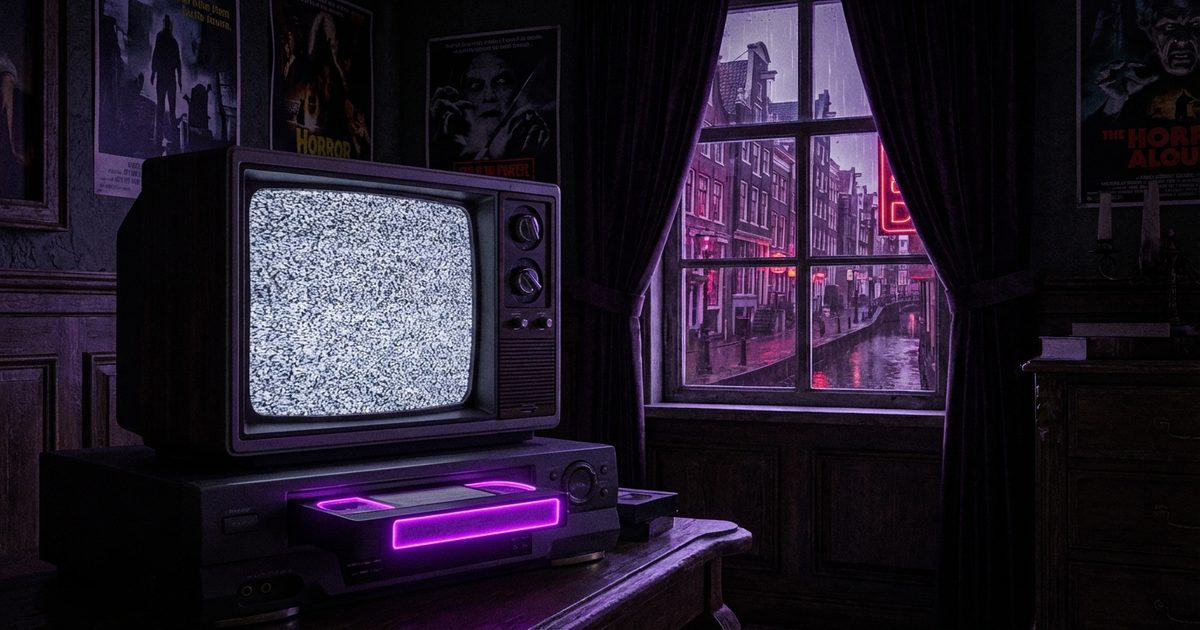
Freddy Krueger arrived as a genuinely terrifying figure. He kills in dreams. Sleep — the one state where the body has no defense — becomes the battlefield. Craven grasped something profound: the dream as absolute vulnerability.
The dream sequences follow a surrealist logic that anticipated much of later psychological horror. Death in the dream becomes death in reality. What you fear enough to dream about ends up killing you.
3. Videodrome — the flesh is the new screen (Cronenberg, 1983)
A television channel broadcasts real torture. The protagonist grows a slit in his abdomen for inserting cassettes. Television becomes a technology of bodily transformation. Cronenberg predicted the internet, media addiction, the fusion of flesh and pixel.
That film sounds prophetic now. Look at your phone. Count the hours you give it. Then tell me Cronenberg exaggerated.
4. The Shining — the hotel that eats you (Kubrick, 1980)
Kubrick took King’s novel and broke it apart. He built an exploration of isolation, dissolving reality, the unreliable narrator pushed to its limit. Jack Torrance didn’t fall to an outside force. He became the monster he always carried.
The Overlook Hotel is a liminal space in the strictest sense. A place outside time, where causality doesn’t apply. Room 237 still terrifies. Not for its monsters. For what you see there that shouldn’t be seen.
“The carpet swallows your footsteps. The echo never arrives. In a hotel like that, even your voice belongs to someone else.”
5. An American Werewolf in London — laughing before the scream (Landis, 1981)
The film that reinvented the werewolf. Rick Baker pushed practical effects past every frontier. But the heart is tragicomic: the protagonist knows his fate. The dead he meets keep reminding him. He can do nothing about it.
The transformation sequence remains unequaled — bones snapping, skin stretching under cold light. The dreams-within-dreams preceding it, Nazi-monster officers invading a normal home, compress decades of unconscious theory into five minutes.
6. Suspiria — color as a blade (Argento, 1977/’80s)
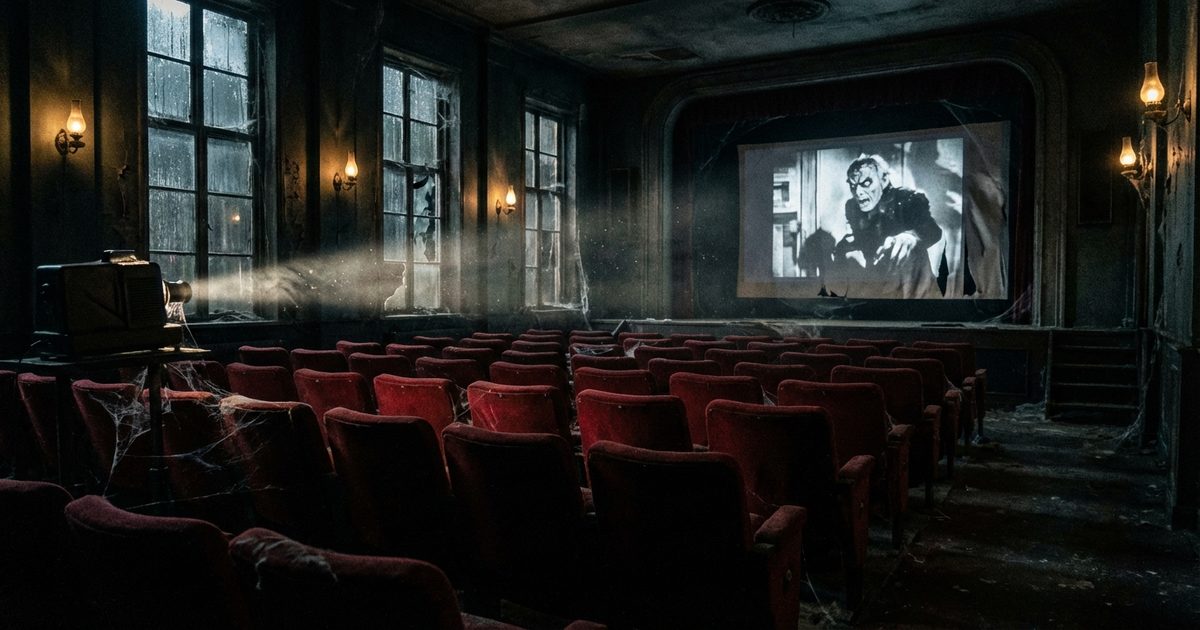
Released in 1977, it became cult through ’80s VHS distribution. Argento built pure visual horror: saturated red, dream-logic architecture, the hypnotic Goblin score. The dance school defies physics. Doors stand too tall. The blood runs too red to believe — and feels more real for it.
Italian giallo — Argento, Bava, Fulci — privileged the visual over the efficient. The uncanny over the rational. One of world cinema’s most original genre traditions, echoing through European gothic horror.
7. Hellraiser — pain as transcendence (Barker, 1987)
Barker brought pain-as-ecstasy to the screen. The Cenobites aren’t monsters. They are priests of the limit — beings who explored pleasure and pain until both dissolved. The Lemarchand box opens doors onto dimensions where human categories fail.
Forbidden knowledge as seduction. The body as territory of transformation. Desire becoming terror, terror becoming desire. Themes central to The Brothel of Shadows as well.
8. Re-Animator — Lovecraft in technicolor (Gordon, 1985)
Adapted from Lovecraft. More splatter than cosmic, more grotesque than sublime. But it captures something essential: the scientist who pushes past nature’s limits doesn’t find answers. He finds new questions. Those questions destroy him.
The syringe full of green reagent, the corpse rising with still-empty eyes — Gordon turned Lovecraft’s obsession with death into visceral splatter and pitch-black comedy.
9. Poltergeist — the TV watches you (Hooper/Spielberg, 1982)
The film that made television an object of domestic terror. The daughter taken by spirits through the screen. The house built on a cemetery. American normalcy torn open by the supernatural. Poltergeist had everything it needed to become a classic.
That child facing the static — white noise filling the living room, cold light on her face — remains an image you cannot unsee.
10. The Fly — love that rots (Cronenberg, 1986)
Cronenberg returns to close the list. If Videodrome was his most cerebral film, The Fly is his most emotional. A love story doubled as meditation on illness, on the body’s betrayal. Goldblum plays the degradation with total commitment, unmatched in ’80s genre cinema.
Chris Walas’s effects won the Oscar — the first for a body horror film. Brundle’s metamorphosis generates repulsion and compassion at once. Nobody has matched it since.
Why those nightmares still speak
’80s horror works when it dares metaphor. The Thing speaks to political paranoia. Videodrome to media addiction. The Fly to how love survives a body’s dissolution. Terror always carries something deeper.
The 1980s Amsterdam of The Brothel of Shadows belongs to the same world. A decade that stopped believing in progress. The rental stores stayed open late. Behind every door, for those brave enough to open it, something waited.
Gothic horror, cosmic eroticism, 1980s Amsterdam. Not your usual horror novel.
Discover the Brothel →