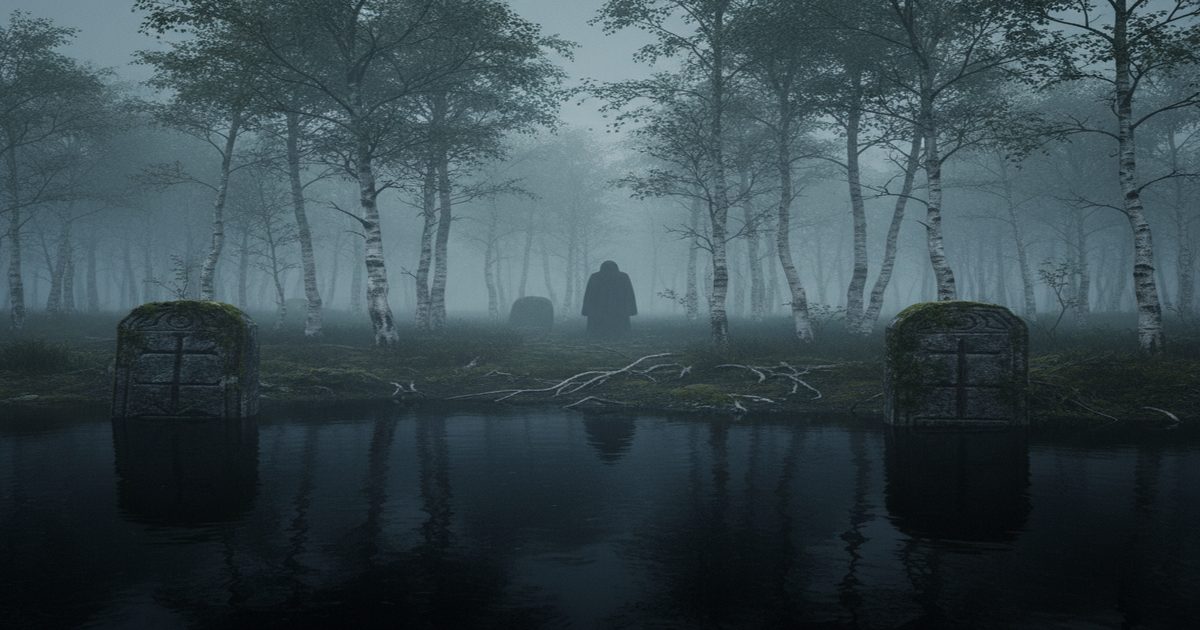
Scandinavian lakes hide something. Not a romantic legend — a fear encoded in centuries of stories passed down in the dark, in the snow, in hushed voices.
Nordic folk horror is one of the oldest genres in the world. No authors, no name. Just darkness, cold, and creatures waiting for you to step too close to the water.
Why Does Nordic Folklore Generate a Different Kind of Terror?
Scandinavian folklore grew from a relationship with nature that southern Europe never knew. The Nordic forest isn’t an enchanted wood from a fairy tale — it’s a place that thinks. The lake isn’t a mirror. It’s a mouth.
Before Christianity arrived, every natural element had a corresponding entity — not benevolent, not malevolent, simply other. The Vættir were land spirits living in stones, trees, and springs. Disturbing them had consequences. Not supernatural ones. Natural ones, in their most brutal form.
This is the first fundamental difference from Irish folk horror or Dutch folklore: in the North there’s no clean boundary between the human world and the creature’s world. No doors that only open at midnight. The creature is already there, hidden inside the landscape you think you know.
Modern Nordic folk horror — from Midsommar to Lamb, to Robert Eggers’ forthcoming Werwulf — draws directly from this pagan substrate. It doesn’t interpret it. It shows it. You feel the difference in your bones.
“In Scandinavian folklore, nature isn’t background — it’s the antagonist. It doesn’t threaten because it’s evil. It threatens because you entered its territory.”
Lords of the Water: The Nøkken, Näcken, and the Deadly Seduction
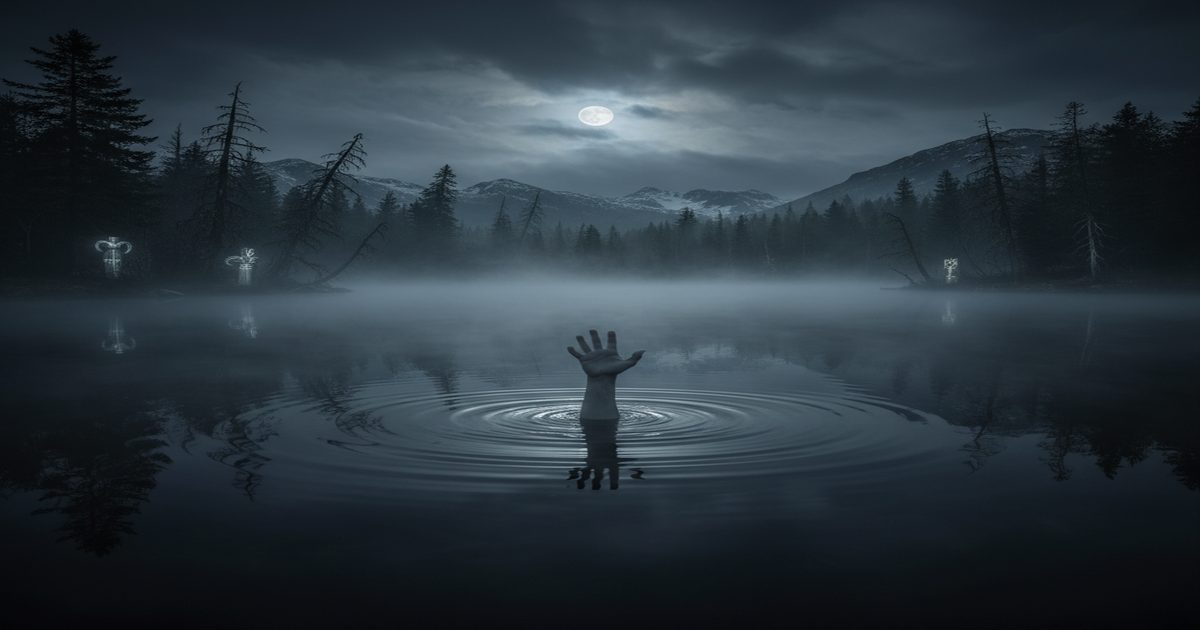
Every deep lake in the North hides a Nøkken. In Norwegian it’s Nøkken; in Swedish, Näcken; in German, Nixie. These are regional variants of the same creature: a water spirit that takes different forms to lure victims to their drowning.
The preferred form is an extraordinary musician. The Näcken plays the violin on the lakeshore at dusk. The music is so beautiful it feels supernatural, because it is. Those who approach to hear it better slip into the water as if in a dream. The cold comes after.
It can also take the form of a white horse — the Bäckahästen, the “brook horse” — that willingly lets itself be ridden before plunging into the lake. Or that of a beautiful man who always has wet feet, even far from water. That detail is the tell: wet feet in a dry place. Don’t look away.
The difference from Greek sirens is subtle but crucial. Sirens sing for anyone who passes. The Nøkken knows your specific desire — your favorite melody, your particular melancholy — and uses it against you. It isn’t a generic trap. It’s personalized. Like every horror that actually works.
Creatures of the Forest: The Huldra and the Seduction That Kills
The Huldra is a woman of impossible beauty who lives in Norwegian forests. Golden hair, a voice you can hear through the trees like wind. She also has, on her back, a hollow cavity like a rotted-out log — or a cow’s tail she tucks beneath her skirt. Those who face her see nothing wrong. Those who see her from behind understand too late.
The Swedish Skogsrå is the forest variant: a huntress, mistress of wild animals, capable of guiding woodsmen deeper into the forest until they’re hopelessly lost. Not out of cruelty — out of possession. The forest is hers. You’re the intruder.
What separates these creatures from vampires or demons is the absence of pure malevolence. The Huldra doesn’t hate humans. She uses them. That distinction doesn’t make her less dangerous — it makes her more unsettling. Nature as predatory force requires no intention. It works like an ecosystem: it absorbs.
In cinema, the May Queen in Midsommar descends directly from this tradition. The blinding whiteness, the flowers in her hair, the smile that never stops: this is the Huldra socialized into a pagan communion. The creature is no longer alone in the forest. She has an entire community that serves her.
The Dead Who Don’t Stay Dead: The Draugr and the Norse Undead
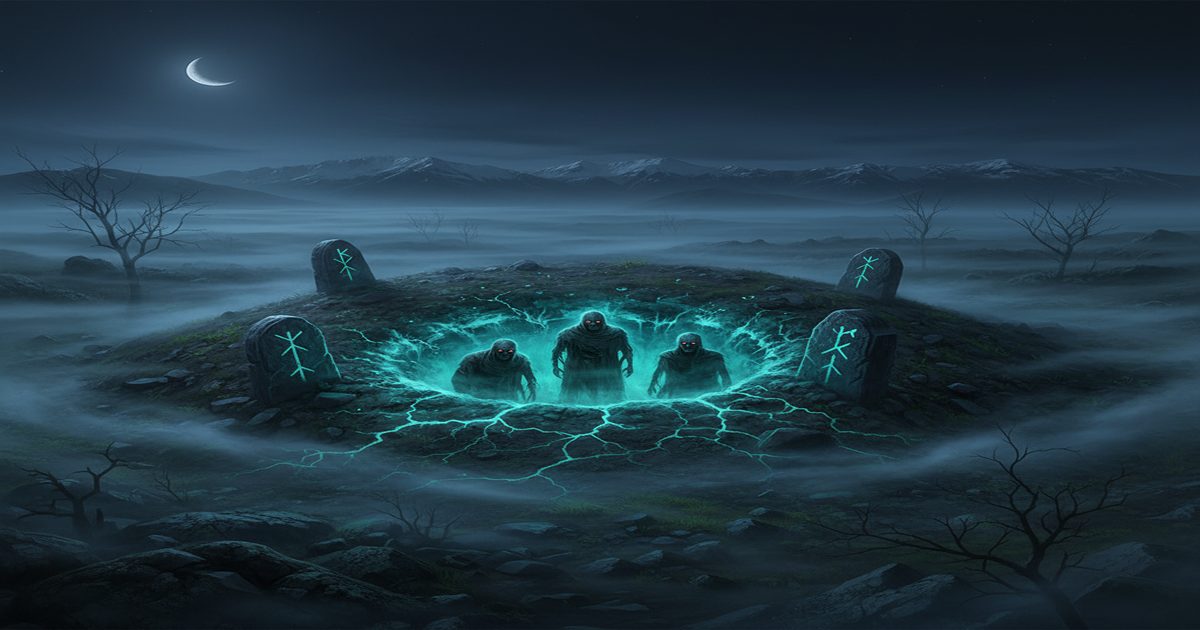
The Draugr is the undead of Norse mythology. It inhabits burial mounds — the haugar — and resembles no vampire or zombie that cinema has ever represented with sufficient accuracy. The Draugr retains its intelligence. Retains its will. Retains, above all, its memory.
In the Norse sagas, the Draugr attacks those who disturb its tomb with superhuman strength, can pass through solid rock, and brings the stench of rot alongside an aura of plague. But what separates it from the undead of other traditions is its motivation: it doesn’t want blood or brains. It wants its tomb left undisturbed. It wants to be left alone.
That demand — a demand that can seem entirely reasonable — is the Draugr’s unsettling core. It isn’t a predator. It’s a guardian. Whether it’s the villain or the victim depends entirely on who started it.
Compared to the medieval Nordic werewolf and the broader vampire tradition, the Draugr occupies a unique space: death that refuses its own terms. Not transformation, not contagion. Just refusal. The burial mound as the last space of resistance.
From Folklore to Cinema: The Pagan Return of Nordic Folk Horror
Midsommar (2019, Ari Aster) is the film that returned Nordic folk horror to global attention. The film’s Hårga community is clearly inspired by real Scandinavian pagan cults: the solstice sacrifice, the wheel of the year, the relationship with the land as something alive and demanding. Aster invents nothing. He amplifies.
Lamb (2021, Válk Egill Sigurðsson) takes Icelandic folklore in another direction entirely. A farming couple finds a half-human, half-lamb creature and raises it as their daughter. The film offers no explanation. No redemption. Nature takes back what is hers, with the calm of something that has all the time in the world.
Werwulf (Robert Eggers, 2026) promises to do for the medieval Nordic werewolf what The Witch did for American Puritanism: trace it back to its folkloric roots, before Hollywood standardized it. The werewolf as Nordic spirit. As nature’s punishment for those who break its covenants.
The common pattern is significant. In all these films, the landscape is not backdrop. The fjord, the birch forest, the frozen lake are the threat. They don’t contain it — they are it. This is what sets Nordic folk horror apart from nearly every other subgenre.
Why Does Nordic Folk Horror Return in 2026?
It’s no coincidence. The rediscovery of Nordic folk horror weaves together very contemporary anxieties: climate change as nature’s revenge, the crisis of our bond with the land, nostalgia for a world where the gods were still present in things.
In an era where nature seems to respond — with droughts, fires, species proliferation — stories from a time when the earth was alive and demanded respect find new resonance. Ecological folk horror and the mycelium share this structure with Nordic roots: nature isn’t benevolent. It’s indifferent. And indifference, over time, frightens more than malevolence.
The Scandinavian sleep paralysis demon — the Mara that sits on the sleeper’s chest — belongs to the same tradition: Nordic creatures don’t wait for you to cross a threshold. They come to you. While you sleep.
The North and The Brothel of Shadows: When Two Darknesses Meet
Amsterdam faces the North Sea. Beyond the Frisian coast and Denmark lies Scandinavia — geographically close, culturally linked by centuries of trade, invasions, and shared stories. Dutch folklore and Nordic folklore share more creatures than the textbooks admit.
There’s something in how Xyl’khorrath operates that echoes the Nøkken: the ability to identify a victim’s specific desire and use it as bait. Not generic desire — the precise one, personal, the one you’re most ashamed of. The brothel between dimensions doesn’t lure at random. It knows exactly what you can’t resist.
Nordic folk horror and The Brothel of Shadows belong to the same family of horrors: those that don’t knock. Those that were already inside before you opened the door.
The lake is still there. The music comes when darkness falls. More beautiful than anything you’ve ever heard.
Don’t go near the shore. But you already know you will.
Gothic horror, cosmic eroticism, 1980s Amsterdam. Not your usual horror novel.
Discover the Brothel →