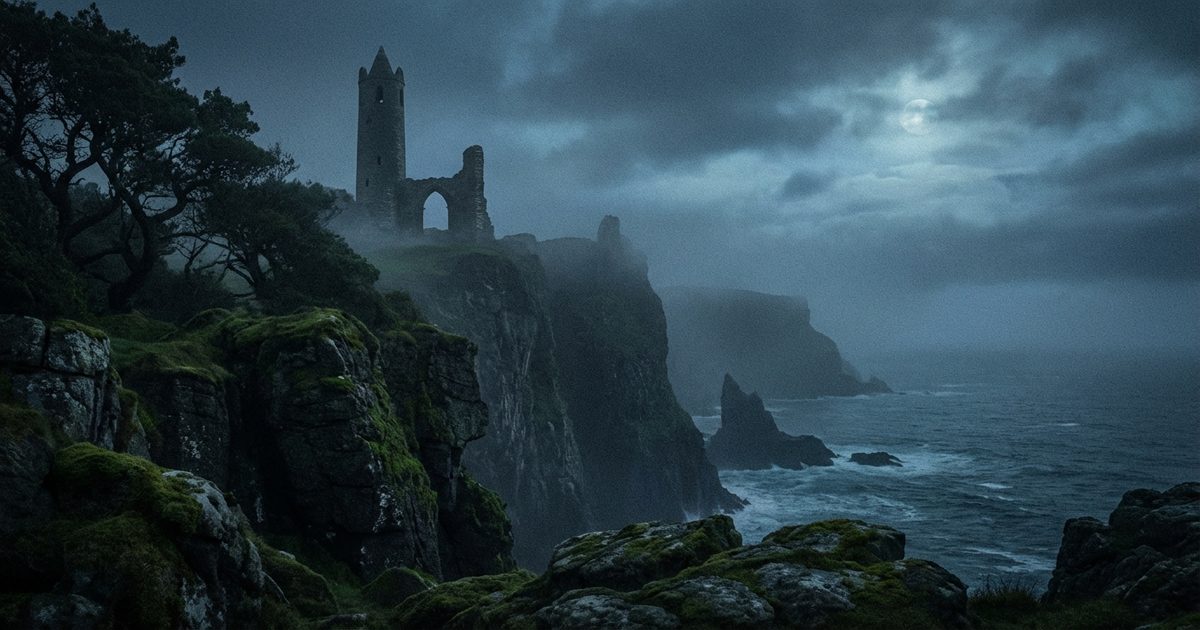
The fog arrives before the sound. Then the sound — a breath, maybe, or the creak of a floorboard somewhere down the corridor. You turn. No one there.
The room smells of peat smoke and something older — a smell you recognize without knowing where from. Like home. Like something that was home, before. Wind presses against single-pane windows. The sea, somewhere below, breaks against rock.
Then you hear your name. In your mother’s voice. Your mother has been dead six months.
This is Irish folk horror: not the monster that chases you, but the voice that calls you by the right name. It’s a tradition far older than cinema. And Hokum, Damian McCarthy’s new film premiered at SXSW in March 2026, brings it to the screen with rare precision.
Hokum: an American in Ireland’s dead country
Hokum opens in the US on May 1, 2026 via Neon. Adam Scott plays Ohm Bauman, an American horror writer who travels to a remote Irish hotel to scatter his parents’ ashes near a tree that appears in an old photo of his mother. The premise is simple. The execution is not.
McCarthy already demonstrated with Caveat (2020) that he knows how to build dread through isolation and silence. Hokum expands that grammar: the empty hotel, the rooms that seem to know the protagonist, the dead who return through the most vulnerable senses — not sight, but smell, voice, touch. Critics at SXSW called it “the most effective ghost story in years.”
Casting Adam Scott is deliberate. Scott brings a specific quality: the ordinary man who refuses to believe what he’s experiencing. His character is a horror writer — someone who knows the genre’s mechanics and uses that knowledge as a shield. When the shield breaks, everything breaks together.
The film arrives at a moment when Ireland is rediscovering its own horror folklore and the mythology of the dead as genuine cultural capital. Not by accident: English-language folk horror owes an enormous debt to the British Isles, but it’s the Celtic substrate that gives the subgenre its specific quality — dead who don’t leave, who have rights, who remember.
Celtic folklore doesn’t lie: the dead come back
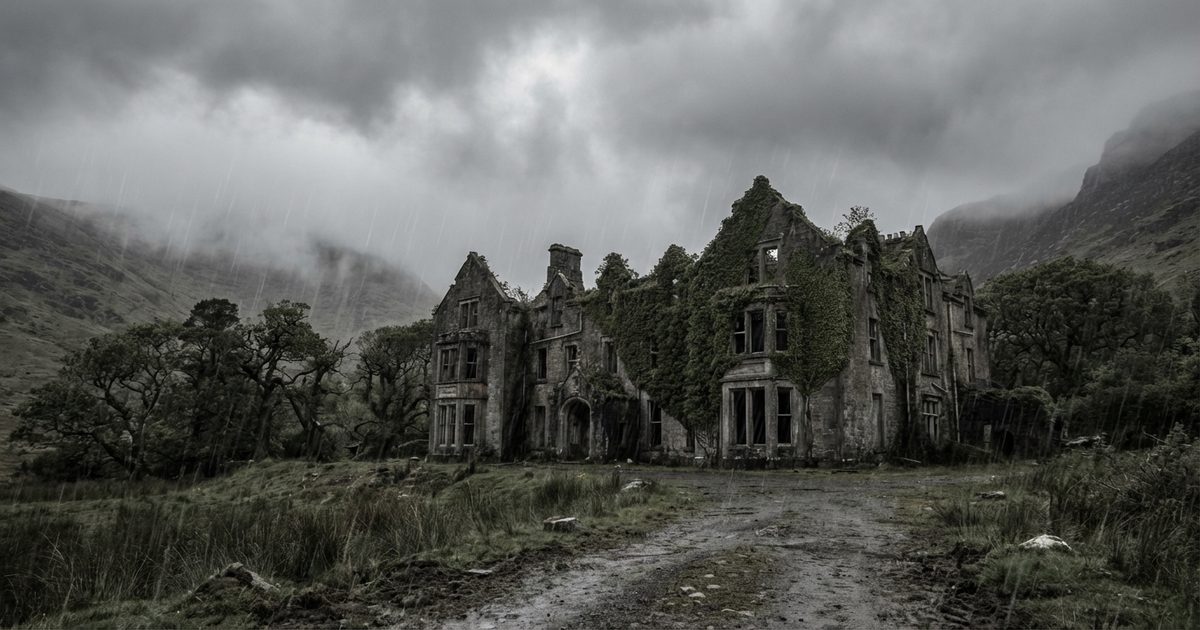
In Irish and Scottish Celtic traditions, the dead never fully departed. A boundary existed — in Irish Gaelic, an tairseach, the threshold — that was never entirely sealed. Samhain, at the end of October, was when that threshold thinned. The dead could return. And they weren’t always kind about it.
This isn’t superstition: it’s cosmology. The Celtic world wasn’t divided between the living and the dead, but between this world and the Other World — Tír na nÓg, the isle beyond the sea. A real place, accessible, dangerous. Not a vertical afterlife (up/down) as in Christian cosmology — a horizontal one, reachable through forests, caves, islands, or simply through the threshold of a door in the wrong place at the wrong hour.
European folklore is full of these thresholds. But the Celtic tradition has a quality that sets it apart: its dead aren’t generically spectral. They’re specific. They know your names, your debts, your secrets. They come for you, not for just anyone.
Banshee, fetch, selkie: the figures of island darkness
The banshee — in Irish bean sídhe, “woman of the fairy mound” — doesn’t kill. She announces. Her nocturnal wail, the keening, signals that someone in the family will soon die. She’s one of the few figures in folklore that doesn’t persecute — she warns. Which, in a certain sense, makes her more disturbing. If you hear her cry, there’s nothing to be done. It’s already decided.
The fetch is even more precise: the living person’s double, appearing before the person’s own eyes at the moment of their future death. You see your fetch? You’re condemned. The concept predates the German Döppelgänger by centuries, but with a key difference: the fetch isn’t your dark side. It’s simply you. Running a little ahead of your death.
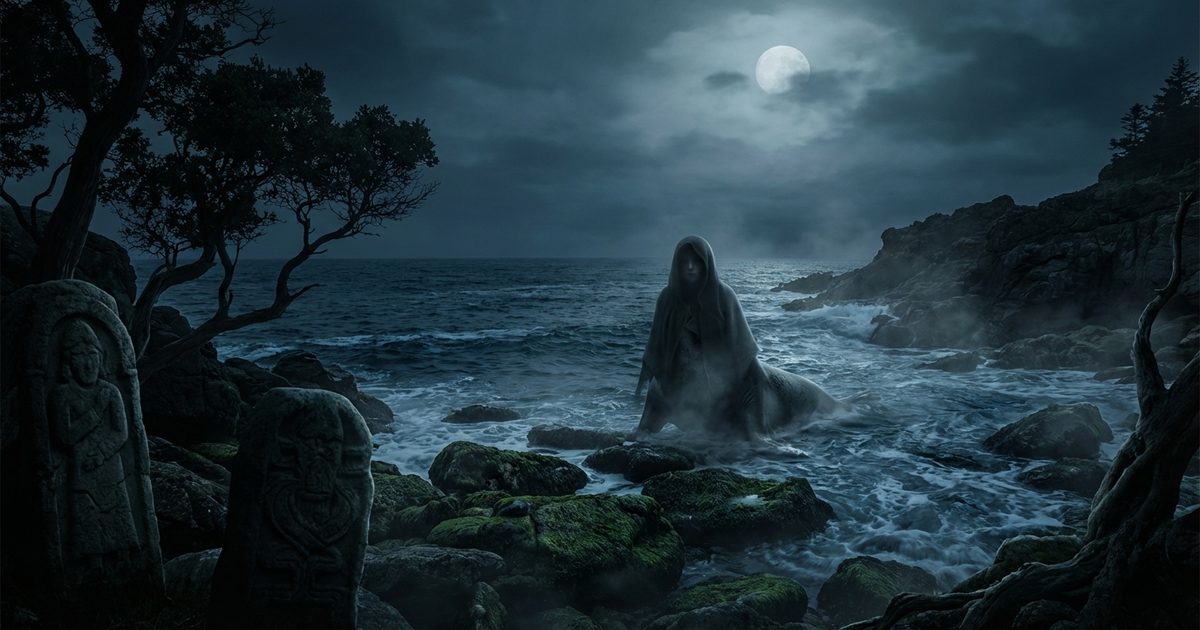
The selkie — the seal who removes her skin to become a woman — belongs more to Scotland and Orkney, but permeates all insular tradition. Her horror isn’t violence: it’s theft. If someone hides her skin, she can’t return to the sea. She lives among humans as a prisoner of others’ desire. The selkie is the creature of folklore that most resembles a true story, told in code for those who can’t speak it plainly.
“The Irish dead don’t ask permission. They return because they have the right.” — Seamus Heaney, interview, 1990
Three novels for the Irish night
Henry James’ The Turn of the Screw (1898) isn’t technically Irish folk horror — but it built the narrative template that all subsequent insular tradition uses: the unreliable narrator, the children who know something they shouldn’t, the dead who won’t leave but never appear clearly enough to confirm their existence. Doubt is the technique, and it’s a Celtic inheritance.
Colm Tóibín’s The Blackwater Lightship (1999) isn’t commercial horror — but the force with which the dead make themselves felt through the living, the Irish coast as a landscape of memory and loss, the sea as threshold between worlds, places it squarely in the tradition that folk horror inhabits. Tóibín writes Irish Gothic without ever calling it that.
For something more explicit: The Corrigans by Keith Ridgway, or Megan Nolan’s Acts of Desperation, which uses Dublin’s urban landscape as the territory of an emotional folk horror. The monster can be interior — an obsession, a relationship, a house that won’t let go. For those who want the border between psychological horror and folk horror, contemporary Irish literature is the right place to start.
The brothel between dimensions, or folklore that moves
There’s a moment in The Brothel of Shadows: Cosmic Interception by Jan Willem Koster when Alex understands that the brothel knows his name. It didn’t find him by chance — it was looking for him before he knew of its existence. This is the structure of Celtic folk horror: you don’t find the threshold. The threshold finds you.
Koster sets the novel in 1980s Amsterdam, not rural Ireland. But the grammar is the same. The voice that calls through the dream. The place that knows things it shouldn’t. The line between desire and danger that becomes impossible to locate. The Brothel of Shadows is urban folk horror — the old mythology relocated to a city, adapted to its neon lights, its canals, its mirrors.
Hokum follows a man who travels to Ireland to lay his parents’ ashes to rest, and hears his mother’s voice. The Brothel follows a man who hears a voice in a dream and goes looking for it. Both protagonists know, at some point, that it’s dangerous. Neither stops.
Folklore works like this. The stories that pull hardest are those warning us away from places we shouldn’t go. And we go anyway — because the voice knows our name, and in that mouth, our name sounds like it never has before.
It’s not a book. It’s an experience. Whoever enters the Brothel of Shadows leaves changed.
Begin the descent →