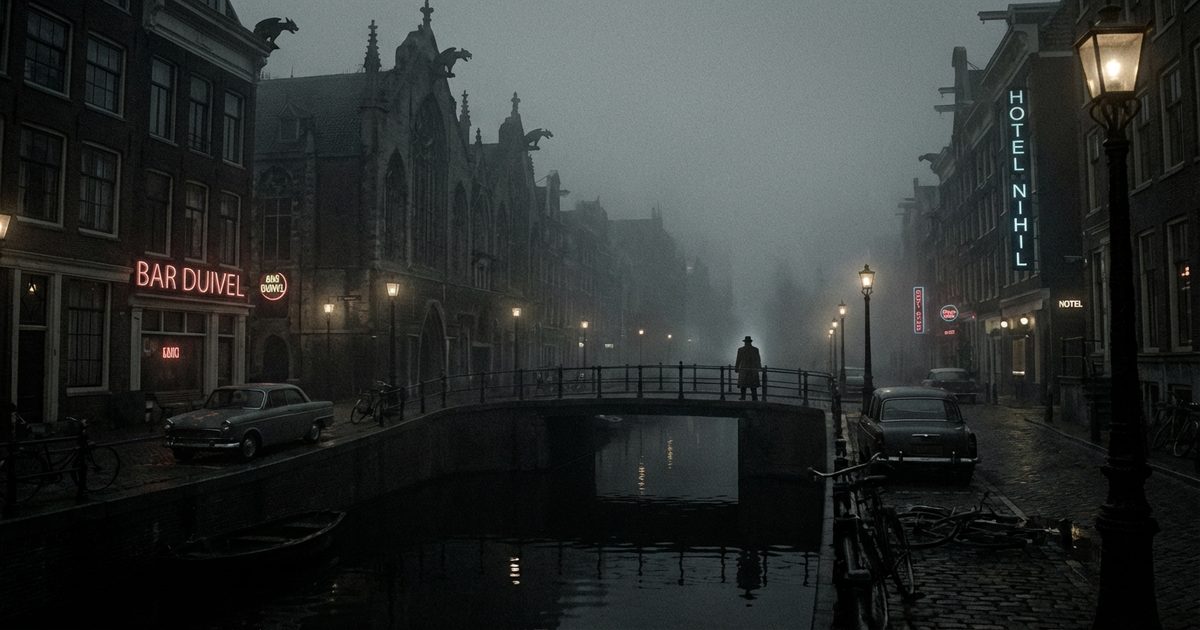
To understand 1980s Amsterdam, you have to forget everything you know about the city today. No tidy bike lanes, no tourists queued up outside museums, no Instagram-worthy canal-side cafes. The Amsterdam of that decade was an urban organism in the grip of a full-blown identity crisis — a city where institutions had lost control and the streets belonged to whoever had the courage, or the desperation, to claim them.
This is the city where The Brothel of Shadows takes place. Not the postcard Amsterdam, but one built of long shadows, alleyways where the streetlights never reached, and whispered promises that no one ever intended to keep.
Heroin and the fall: when the canals became open veins
In the late 1970s, a flood of cheap heroin swept across northwestern Europe, and few cities were hit as hard as Amsterdam. The Zeedijk — the narrow street snaking from Central Station down into the Red Light District — became the visible symbol of the epidemic. Along those few blocks you could buy any substance at any hour. Addicts occupied doorways, basement stairs, the bridges over the narrowest canals.
The police, overwhelmed and internally divided over strategy, swung between tolerance and crackdowns without ever finding a balance. Residents of the old center lived under a kind of silent siege: locks doubled, bicycles triple-chained, eyes cast downward after sunset. The city had developed a form of voluntary blindness — a collective survival mechanism that meant never looking too carefully at what was happening in the shadows of its own alleyways.
The squatters and the war for space
While heroin devoured an entire generation, another phenomenon was reshaping the face of the city: the kraker movement — the squatters. Thousands of buildings in the old center sat empty, abandoned by owners waiting for the right moment to speculate or simply unable to maintain seventeenth-century structures that were falling apart. Young people claimed them with a logic that was brutal in its simplicity: if nobody is using them, we will.
The occupations were anything but improvised. Entire networks of activists coordinated the opening of buildings, illegal hookups to electrical and water grids, and the construction of barricades in anticipation of evictions. Some squats became cultural centers, concert halls, and art studios. Others remained precarious shelters where the line between political idealism and social marginality blurred until it vanished entirely.
The most dramatic moment came on April 30, 1980 — the day of Queen Beatrix's coronation. While official celebrations proceeded across the city, violent clashes erupted between squatters and riot police. Tear gas mixed with smoke from burning barricades, and the slogan chanted by protesters entered the city's collective memory. Amsterdam burned — not metaphorically but literally — and that day marked a point of no return in the relationship between the official city and the one that lived underground.
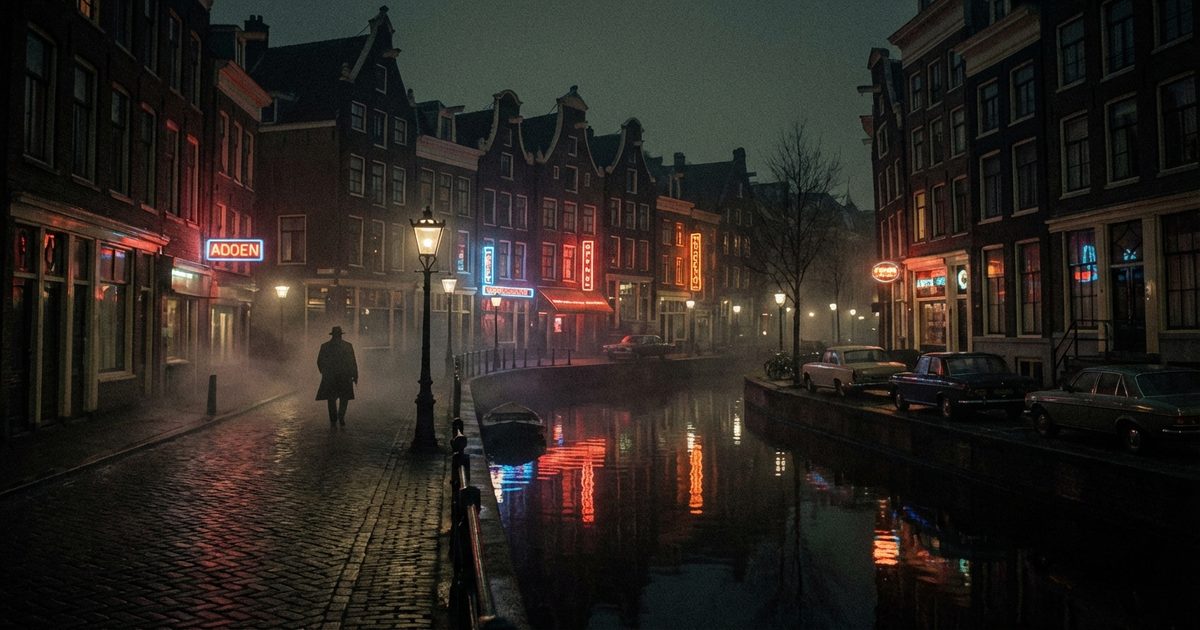
The Red Light District at its peak: a neighborhood without filters
The De Wallen of the 1980s was something radically different from what tourists encounter today. No serious regulation, no systematic health inspections, no security cameras on street corners. The windows extended well beyond the current boundaries of the district, creeping along side streets and occupying entire blocks that now house restaurants and souvenir shops.
Behind the crimson glow of the windows lay a complex and often brutal ecosystem. Trafficking networks operated in broad daylight with a brazenness made possible by the absence of oversight. Women from Asia, South America, and the Caribbean were lured with promises of honest work only to find themselves trapped in a system from which escape was nearly impossible. Violence, hidden behind velvet curtains, was business as usual.
And yet the neighborhood also possessed a dark, authentic vitality. Bars with walls blackened by decades of cigarette smoke, where sailors, artists, small-time criminals, and college students mingled in a kind of democratic chaos. Pool halls open all night, lit by low-hanging lamps that left every face half in shadow. Pastry shops that sold far more than pastries, and coffee shops still free of the reassuring aesthetic they would adopt in the decades to come.
The sound of darkness: punk, post-punk, and no wave
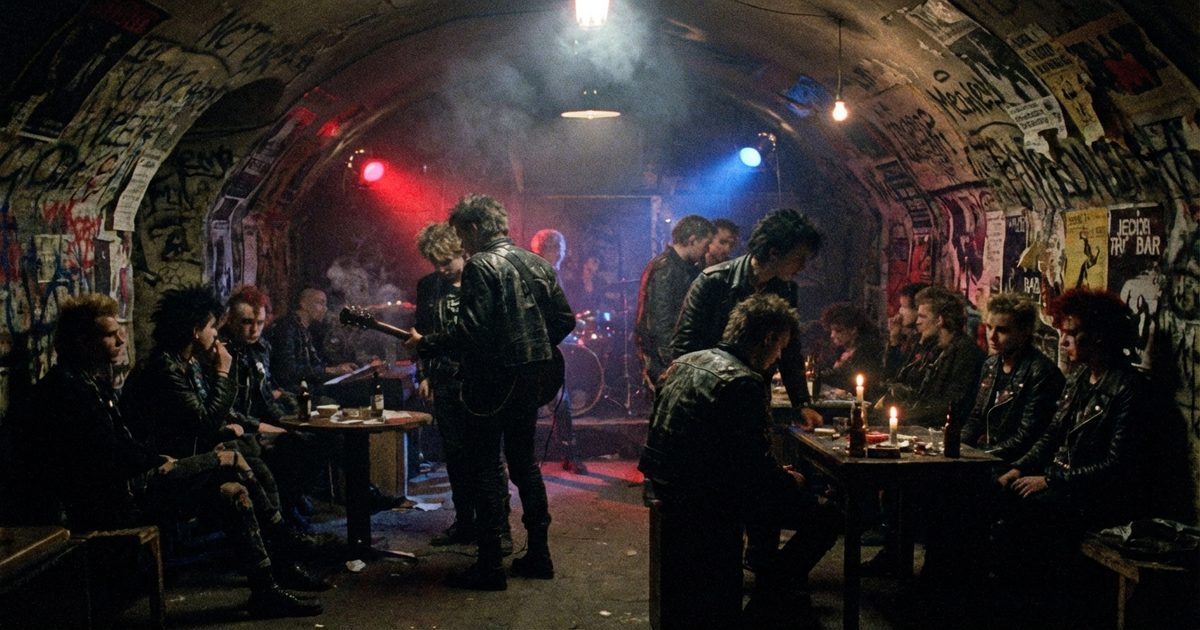
The music scene of 1980s Amsterdam was the sonic mirror of the chaos that ruled the streets. In the basements of squats and the cellars of occupied buildings, a visceral music was being born — distorted guitars, pounding drums, and voices that screamed more out of necessity than aesthetic choice. Bands like The Ex and Gore transformed urban despair into walls of noise that filled spaces where the ceiling dripped condensation and the floor vibrated underfoot.
The Paradiso and the Melkweg — both born from the occupation of disused buildings — became the temples of a scene that attracted musicians from all over Europe. There were no numbered tickets, no emergency exits, no capacity limits. There was only the music, the darkness, the crowd, and the sweat. Those who attended those shows speak of a physical intensity that went beyond listening: it was a bodily experience, a collective ritual that had more in common with an ancient ceremony than with an entertainment event.
The fog that swallows every rule
What made 1980s Amsterdam so singular was not simply the presence of drugs, crime, or transgression — elements that could be found in any major European city of the era. It was, rather, the total absence of clear boundaries between the lawful and the unlawful, between the respectable surface and the clandestine underworld. A university professor might live in the same occupied building as drug dealers. A punk musician could perform at a squat in the evening and work in a municipal archive the next morning. Identities were fluid, allegiances temporary, rules endlessly negotiated.
This structural ambiguity generated an atmosphere unlike anything else in Europe. A constant tension, a sense of limitless possibility — for better and for worse — that made every night potentially different from the last. You could leave home to buy milk and come back three days later having lived through experiences that would have been unimaginable anywhere else.
The Brothel of Shadows: inside the city without rules
This is exactly the Amsterdam that serves as the backdrop for The Brothel of Shadows by Jan Willem Koster. The novel does not merely reconstruct a historical setting: it breathes it, inhabits it, absorbs its poison, and transmutes it into narrative substance. The alleyways the protagonist walks are the same ones where squatters built barricades. The cellars hiding unspeakable secrets are the same ones that hosted illegal concerts. The air the characters breathe is identical — thick with smoke, canal moisture, and something far older, something that has no name.
1980s Amsterdam was not simply a city in crisis. It was a city that had temporarily suspended the social contract, allowing everything normally hidden beneath the surface of civilization to emerge. For a gothic horror novel, there is no more perfect setting: a real place where the unreal was already possible, where the borders between the ordinary world and whatever lies beyond had already dissolved before the narrative even began.
Koster did not have to invent the darkness of his Amsterdam. He only had to look it in the eye and tell what he saw.
Step into 1980s Amsterdam. Discover what hides beyond the red lights.
Read the Novel on AmazonReturn to the main site to learn more about the novel.