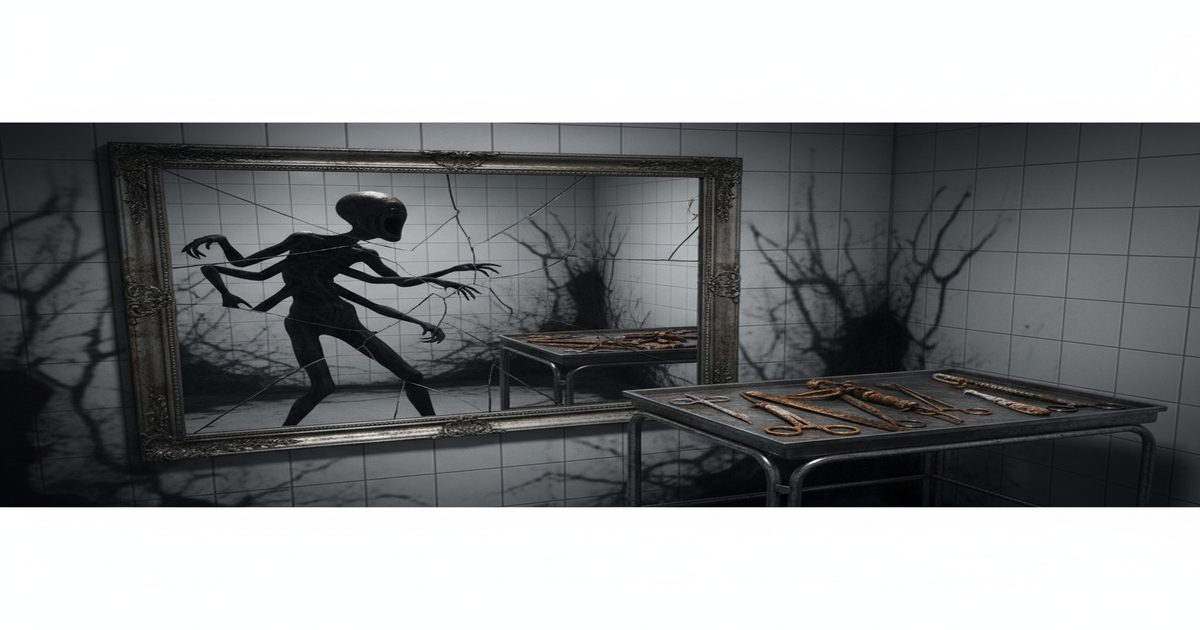
Your body is not yours. It never was. Cronenberg knew this in 1986: Jeff Goldblum dissolved in front of Geena Davis’s eyes — not dramatically, but slowly. Every scene of The Fly reads like a formal surrender document.
Seth Brundle’s organism had stopped waiting for instructions. His stomach produced acid that dissolved metal. His fingernails fell into the sink — painlessly, with the dull sound of tearing paper. The 2026 wellness market sells you the same story in 30ml bottles.
Cronenberg: the Flesh That Decides Alone
The Fly (1986) is not a story about genetic mutation. It is a story about the loss of sovereignty. Seth Brundle looks in the mirror and sees something he no longer recognizes. The epidermis loosens. Teeth wobble. The process is not painful — not at first — and that absence of pain is the most unsettling part.
Cronenberg calls this process “the new flesh.” It is not a curse: it is an evolution that did not ask permission. The disturbing thing about The Fly is that the body seems to prefer the transformation. It works more efficiently, manages energy with industrial precision. Brundle is becoming something superior — and that superiority is what destroys him.
In Videodrome (1983), James Woods develops a cavity in his chest. He feeds it videotapes. The boundary between biological organ and technology dissolves silently, the way inevitable things do. The question the film never answers is whether Woods wants it. And whether we, in his place, would want it too.
Cronenberg’s body horror works because it makes visible what we already sense: the body as foreign territory we inhabit on lease. A lease the tenant can terminate at any moment.
The Body-as-Project in 2026
Forty years later, wellness culture has built its own version of this terror — and made it aspirational.
The app tracks macronutrients with the precision of a forensic accountant. The wristband measures sleep phases, heart rate variability, hormonal stress response. An algorithm decides whether you slept “well” before you open your eyes. Your skin smells of matcha and collagen peptides. Every deviation from optimal standard arrives as a quiet vibration on your left wrist.
Luke Dumas’s Nothing Tastes as Good (2026) sutures these two worlds together. The protagonist stops eating not from anorexia but from optimization: diet as operating system, the body as hardware to be updated quarterly. The alarm sounds at five for cortisol management. When the organism protests, it does so like Brundle — silently, then all at once, then too late.
Sarah Gailey’s Make Me Better (2026) builds the same trap from a different angle: cognitive optimization, hormonal modulation, cosmetic surgery as routine maintenance. The moment the protagonist realizes something has gone wrong is not dramatic. It is an ordinary morning when she rises and does not recognize her own movements in the bathroom mirror.
The wellness horror of 2026 does not scream. It whispers metrics.
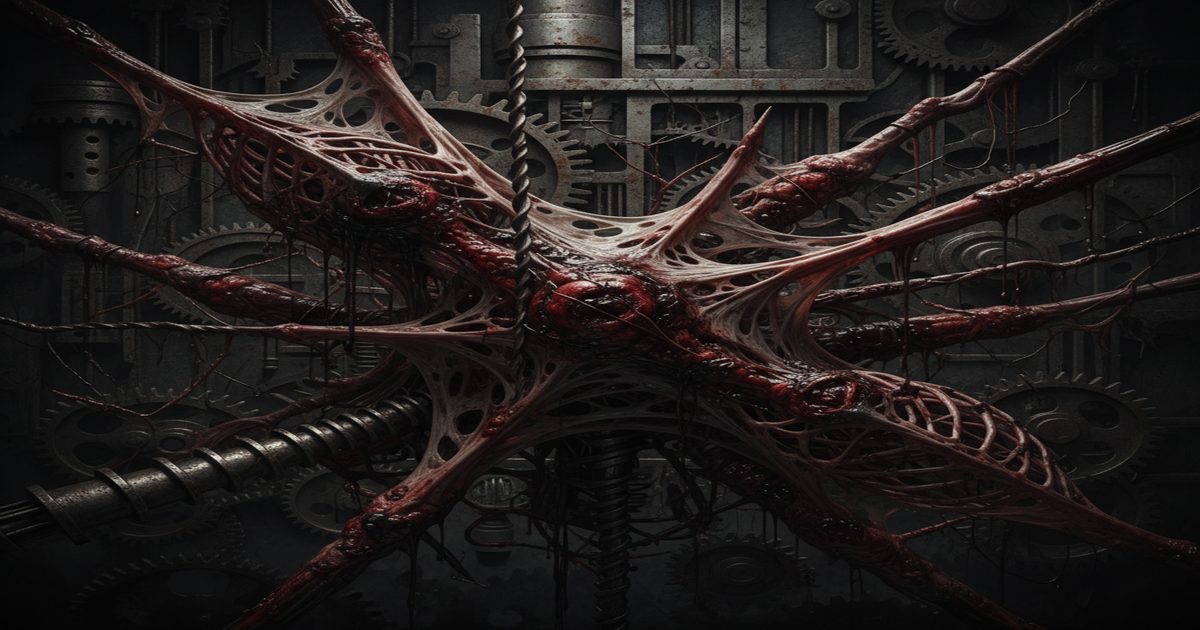
The Fly and Ozempic — What Actually Changes
The fundamental difference between Cronenberg’s body horror and contemporary wellness horror is consent.
Brundle did not choose the mutation. The wellness patient signs forms, pays monthly subscriptions, builds a routine with the focus of a project manager. The violence is voluntary — at least in the first weeks, before the line between routine and compulsion becomes unreadable.
But Cronenberg already imagined this in eXistenZ (1999): characters have biological ports implanted in their spines to access virtual realities. The procedure is almost tender. The surgeon’s voice is calm. Signing the consent form is a near-liturgical rite. The body accepts the modification because it desires it — the pain of implantation is part of the pleasure of immersion.
“The body never lies. The problem is that it says things we don’t want to hear.”
The desire for transformation is not new. What is new is the market that satisfies it with a subscription plan, a dedicated app, and a sixty-day money-back guarantee.
The Body That No Longer Obeys
There is a precise moment, in psychological horror fiction, when the protagonist understands the process is irreversible.
For Brundle it is the moment he tries to remember what his body felt like before — and cannot. Not the smell of his own skin. Not the weight of his step on wooden floorboards. Not the sensation of biting into something warm without calculating the protein count.
Contemporary wellness horror has moved that moment earlier. The loss of control begins weeks before physical collapse: when you realize you cannot remember the last meal you ate without checking your phone. When your resting heart rate is more real than the pulse you feel in your chest.
Agustina Bazterrica’s Tender is the Flesh — one of the most debated BookTok titles of the last two years — takes this logic to its endpoint: an economic system where human bodies become food products following the same optimization rules as livestock. It is not distant science fiction. It is wellness horror with the logic run all the way to the end. The smell of cooking meat in that novel has an almost familiar quality.
The body-as-project, when the project fails, does not stop. It reformulates.
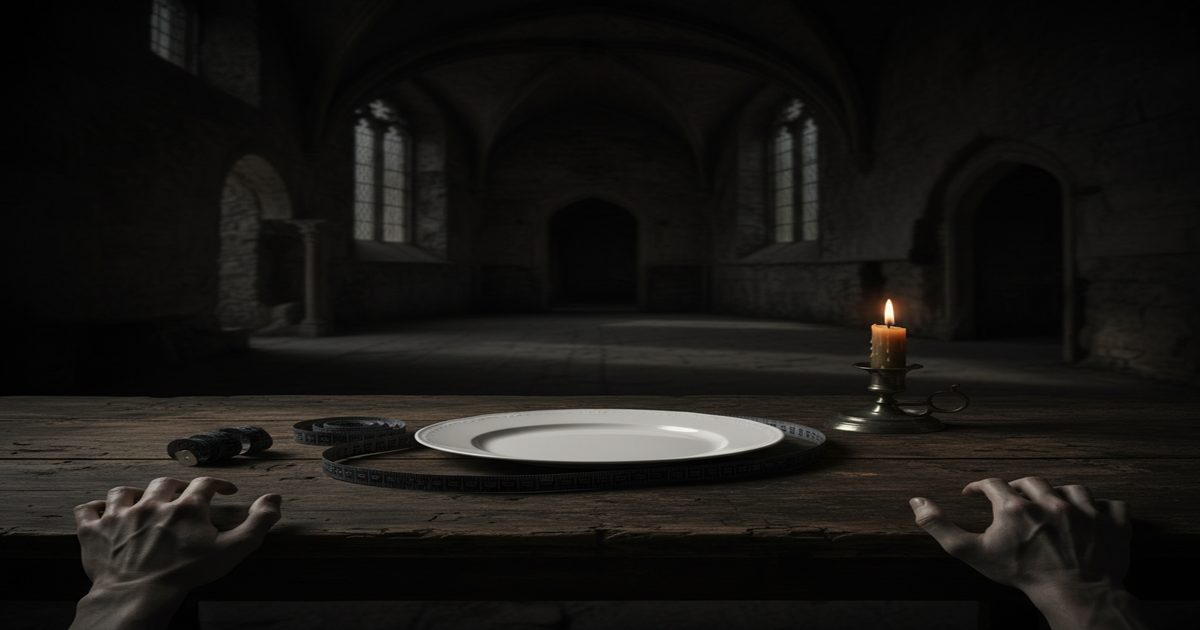
Xyl’khorrath and the Hunger That Never Ends
The Brothel of Shadows takes this confrontation to a cosmological scale. Xyl’khorrath does not transform Alex with the declared violence of a fly fusing with a teleporter. It seduces him with the promise that transformation is an improvement.
The brothel, in 1983 Amsterdam, is a space where the human body is pushed to its limits — and beyond — with the client’s full complicity. Like a luxury wellness center. Like a Swiss optimization clinic. The difference is that the contract’s real clauses are never written where you look for them.
The entity’s cosmic hunger never abates because it is not hunger in any sense we know. It is an ontological structure: Xyl’khorrath does not consume to survive, but because consuming is what it is. Jan Willem Koster builds a horror that works exactly like modern wellness horror: it never shows the mechanism. It only shows the result — and lets you deduce the contract you signed.
Alex enters the brothel of his own will. Every visit is a choice. The body that leaves is not the same body that entered — but the difference, the first time, feels like an improvement.
Cronenberg would have understood immediately. The body rewriting itself toward something no longer recognizable is his theme for forty years. The question both Cronenberg and Koster leave unanswered is the most unsettling: at what point does the transformation stop being yours?
Who Signed the Consent Form
Seth Brundle does not stop being Seth Brundle the moment the fly takes control.
He stops being himself the moment he stops asking whether he is losing something. That question — of control, of will, of complicity — is what the wellness horror of 2026 shares with Cronenberg and with the brothel between dimensions.
The bottles have reassuring labels. The consent forms have fine print. The body, meanwhile, has already decided on its own.
Cross the threshold of forbidden knowledge. Enter the brothel.
Read the novel →