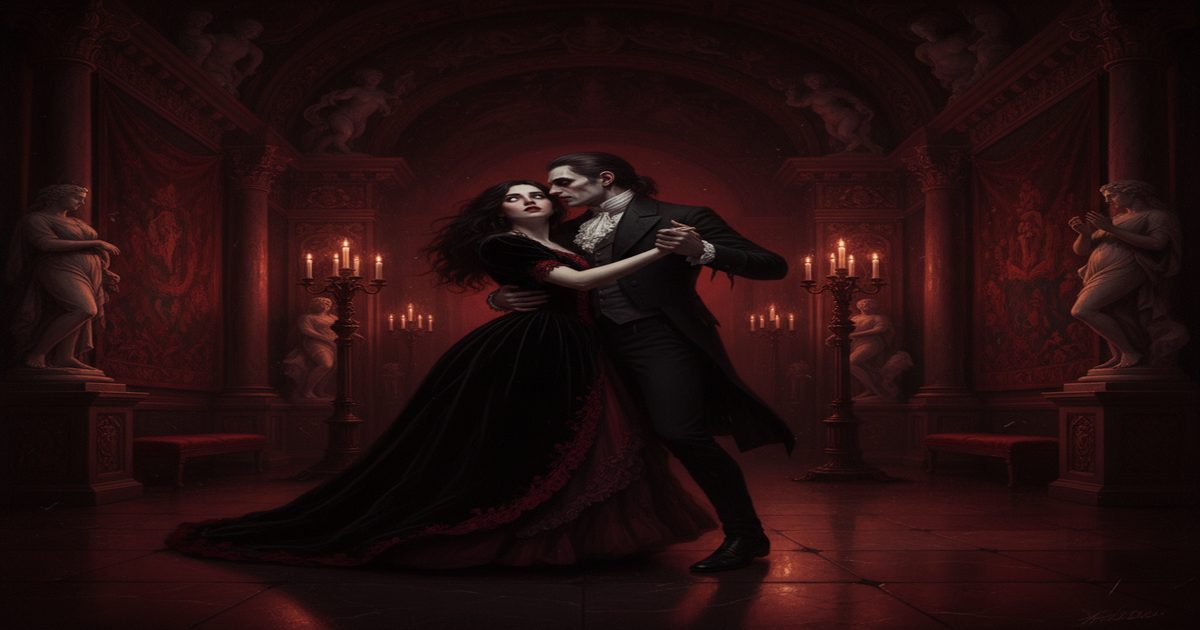
She knew something was wrong from the way he moved. Too quiet. Too deliberate. As though noise was a choice he had decided against.
The room smelled of wax and something older — iron, perhaps, or wet earth. He hadn’t touched anything yet. But she could already feel the pressure, like a thumb against her sternum, gentle and firm. She knew she should leave. She also knew she wouldn’t.
Desire and fear run on the same bones.
What Is Dark Romance — and What It Is Not
Dark romance is the fastest-growing literary genre of 2026. It is not erotic fiction with a brooding hero. It is not a thriller with a love story bolted on. It is something more precise: a narrative in which desire and danger share the same source.
The object of desire is also the threat. The boundary between attraction and terror is porous, sometimes nonexistent. This is not a structural flaw in the genre — it is its engine. Remove that tension and you have only romance.
The dark romance of 2026 has evolved beyond its new adult origins. H.D. Carlton, author of Haunting Adeline, opened the way for a generation of writers bringing true gothic — the kind that smelled of castles and secrets — into contemporary romantic fiction.
Why Does Desire Grow Stronger When It Frightens You?
The answer has physiological roots. Activation of the sympathetic nervous system — the fear response — amplifies all emotions. The heart accelerates. Perception sharpens. Every detail becomes vivid and weighted.
This state amplifies desire as well. It is not paradox: it is biochemistry. Danger focuses attention on the present moment in a way nothing else achieves. Every gesture becomes significant when it might be the last.
Narratively, this mechanism is extraordinarily powerful. Dark romance uses it as its primary dramatic engine. Every scene between the protagonists is charged because the threat is always present — not outside the door, but inside the room, embodied in the other person. Like the erotic gothic of literary tradition, fear does not push away. It draws closer.
“What frightens us and what attracts us often wear the same face. Gothic literature knew this before we had words for it.”
The Line Between Antihero and Monster
Dark romance exists on a razor edge. On one side, the antihero: dark, dangerous, morally ambiguous, but fundamentally human. On the other, the monster: something that cannot be redeemed, that consumes without possibility of return.
The best texts in the genre play this ambiguity deliberately. For many pages, the reader genuinely cannot tell which side they are on. The tension is simultaneously romantic and terrifying — you want the protagonist to step closer and you are afraid of what will happen when she does.
When the line is crossed — when the antihero becomes monster — dark romance merges with pure horror. This is territory the literary market of 2026 is exploring with increasing boldness. Gothic-slasher romance, supernatural entity romance, cosmic romance: all push into what happens when there is no way back.
From Gothic to Dark Romance: 200 Years of Dangerous Seduction
Ann Radcliffe — whose bicentenary we celebrate this year — was the first to understand that danger is seductive. Her heroines are drawn to the castles they should flee. They are fascinated by the dark figures who threaten them. Not from naivety: from that same logic that pulls you to the edge of a precipice to feel the void below.
After Radcliffe came Sheridan Le Fanu with Carmilla (1872): a vampire who is also a lover, who seduces before she feeds. Then Bram Stoker’s Dracula — whose hold over Mina carries something beyond mere terror. The vampire as dark romance figure runs deep: the bite as sexual act, transformation as consummation.
The genre has evolved — witches, demons, dark fae — but the structure is the same. A being of superior power. A protagonist who could escape. The choice to stay.
Dark Romance in 2026: Where the Genre Is Heading
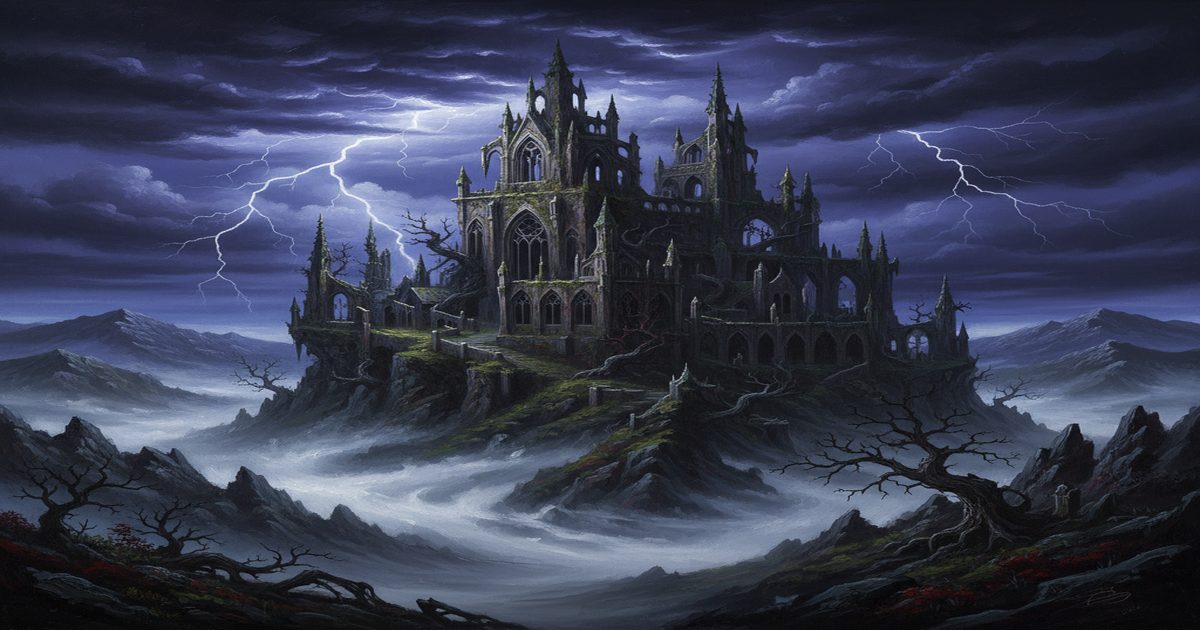
2026 has brought a significant shift. Dark romance is moving toward true gothic: oppressive architecture, suffocating atmospheres, the weight of past crimes returning. A dangerous protagonist is no longer enough — the setting itself must be a threat.
Ava Reid’s Innamorata (2026) places dark romance inside Renaissance Italian gothic: love as irrevocable condemnation, desire as a portal toward something that cannot be undone. The structure is Radcliffian — the breathing castle, the walled secret — with a love story at its center that is also a trap.
On BookTok, the dominant genre is no longer pure romance: it is “horrormance,” the conscious fusion of horror and romance. Those who have explored the gothic horrormance tradition know the boundary between the two genres was always permeable. In 2026, it has become invisible.
When the Brothel Is Also a Promise
One text takes this fusion to its logical extreme. Jan Willem Koster’s The Brothel of Shadows is set in 1980s Amsterdam: Alex, an ordinary man, receives a dream summons. A brothel between dimensions. A cosmic entity — Xyl’khorrath — that seduces before it consumes.
It is not dark romance in the traditional sense. But it uses the same architecture: the danger that comes from the object of desire. The choice to draw closer despite — or because of — what is known. The line between antihero and monster that never resolves. As in the witches of gothic tradition, seductive power and destructive power are the same thing.
The dark romance of 2026 has brought mainstream readers into territory horror literature has explored for centuries. The question — what do you do when what you desire is what might destroy you — has no easy answer.
Perhaps that is why we keep searching for it, page after page, in the dark.
Amsterdam, 1983. A man dreams of an impossible brothel. And the brothel dreams of him.
Enter the dream →