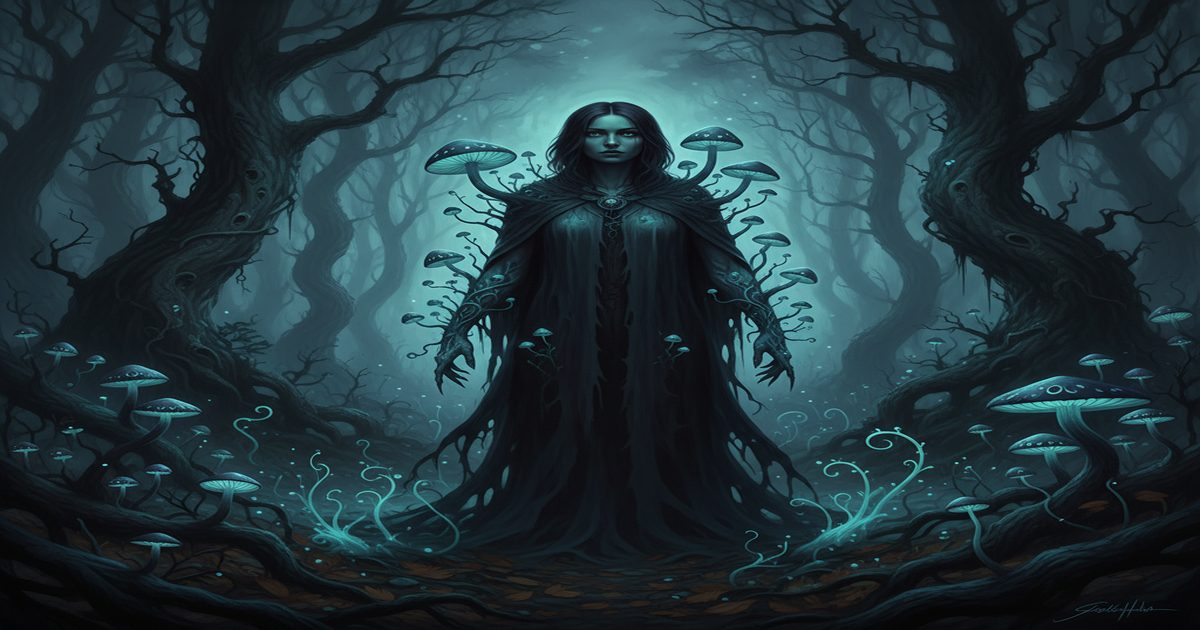
The morning Elena noticed the first mushroom on her wrist, she thought it was a bruise.
Three weeks later there were seventeen. They grew toward her elbow like a silent vine. Her husband said: “You look fine, it’s just stress.” The doctor: “I don’t see anything unusual.” Her mother-in-law: “You should eat more iron.”
Elena stopped mentioning them. The mushrooms didn’t.
The mushroom season in 2026 horror
This is the premise of Wife Shaped Bodies by Laura Cranehill, releasing April 14, 2026. A novel with a precise, unsettling argument: the female body is already a contested territory. The fungus doesn’t invade — it reveals.
The ground was prepared by others. T. Kingfisher explored mycelium as organic threat in A House With Good Bones. The Last of Us embedded fungi into popular culture as a metaphor for collective loss of autonomy, for the horror of the hive mind absorbing the individual.
But 2026 brings a distinct shift: fungi become specifically feminist. They don’t colonize cities or infrastructure. They colonize bodies. The bodies of women that medical systems refuse to hear.
Why are mushrooms so effective in body horror?
A fungus doesn’t kill quickly. It transforms slowly. That’s its truest horror — not death, but altered continuity.
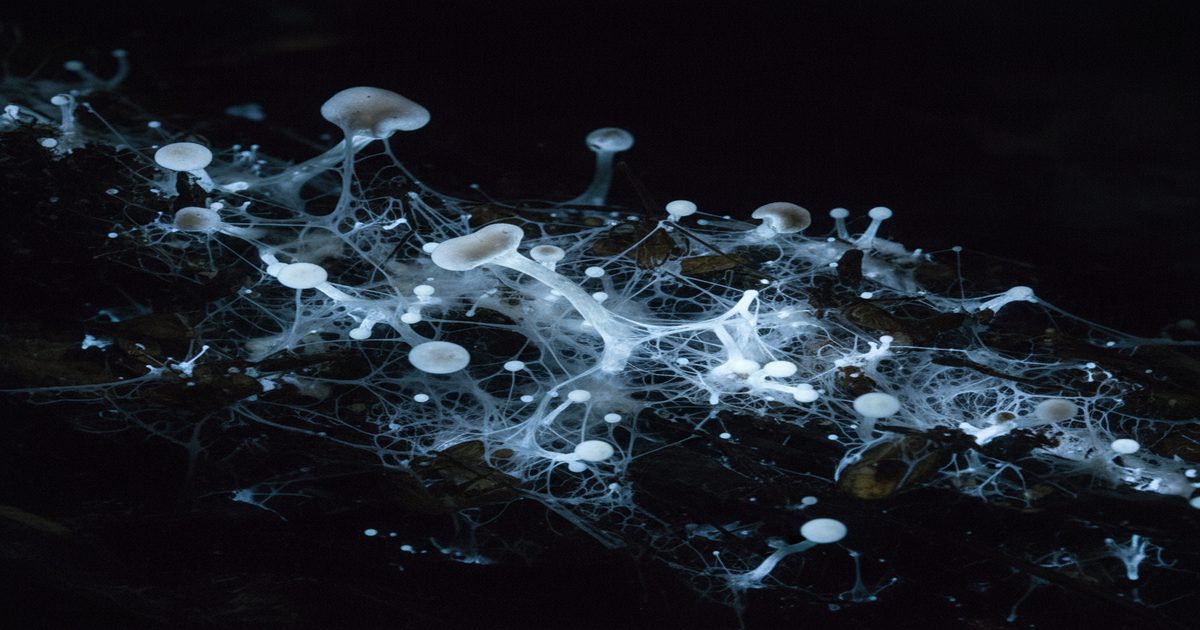
You keep existing. Your breath is still your breath. Your thoughts are still your thoughts. But something beneath the skin is pushing outward, patient in a way that doesn’t belong to human things. The smell of damp earth. The sensation of pressure from inside. The faint sound, almost imagined, of something expanding while you sleep.
Thomas Ligotti wrote that the worst thing isn’t annihilation but transformed survival: still being here without recognizing yourself. The fungal body makes this concrete. You can’t argue with it. You can’t rationalize it away. It is there, on your skin, in the morning light.
The body no one sees: gaslighting as body horror
In Wife Shaped Bodies, the mushrooms grow on all the women in a small community. Only the husbands don’t see them. Only the doctors don’t see them. Cranehill turns gaslighting into the literal: the transformation is real, visible, documentable — yet denied by everyone with institutional authority to name it.
This is the subtlest mechanism of feminist body horror. It isn’t the body that frightens. It’s the world’s response to the body. The deepest horror isn’t the fungal growth: it’s being left alone with that growth because no one believes you.
“The female body has always been political territory. Feminist body horror in 2026 takes that metaphor and makes it visceral, literal, impossible to look away from.”
This wave runs parallel to wellness horror, where self-improvement systems turn the body into a site of surveillance and control. And to the classical body horror tradition from Cronenberg onward, which has always used flesh as society’s mirror.
Cronenberg already saw all of this
David Cronenberg made Dead Ringers in 1988. Twin gynecologists who invent surgical instruments for “mutant women.” The film is a study in male medical control over the female body dressed as psychological thriller.
The horror writing of 2026 inherits that thread and pulls it to its explicit conclusions. If Cronenberg whispered, Wife Shaped Bodies speaks clearly.
The tradition of ecological folk horror had already opened the door to mycelium as unsettling organism. What arrives now is more personal, more intimate, harder to hold at arm’s length with rational thought.
The Brothel of Shadows and the changing body
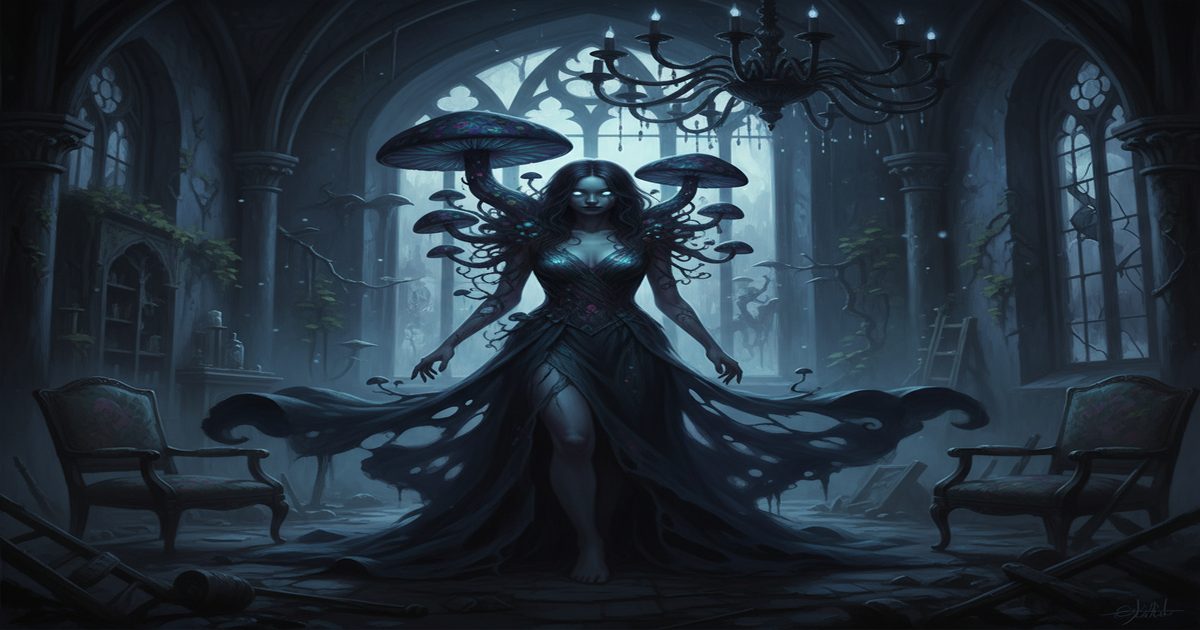
In The Brothel of Shadows, Alex undergoes something similar. The transformation Xyl’khorrath offers isn’t violent — it’s seductive. His body changes, and the most terrifying part is that some part of him wants it to.
Jan Willem Koster understands this specific horror: the transformation of the body isn’t the monster. It’s the impossible question the transformation poses. Did you want this to happen? Something has grown in you, with you, perhaps even for you — and now you no longer know where you end and the other thing begins.
The line between desire and horror is the most interesting territory in dark literature. Gothic erotic horror has always lived in that border zone, using seduction as a form of existential terror.
The cosmic hunger of Xyl’khorrath is never satisfied. And the brothel is its favorite dish.
Read the novel →Elena stopped hiding the mushrooms. She started tending them, giving them names. It wasn’t healing — it was something more complicated than that. Maybe it was the only possible response to a body that had decided to tell you something the rest of the world refused to hear.