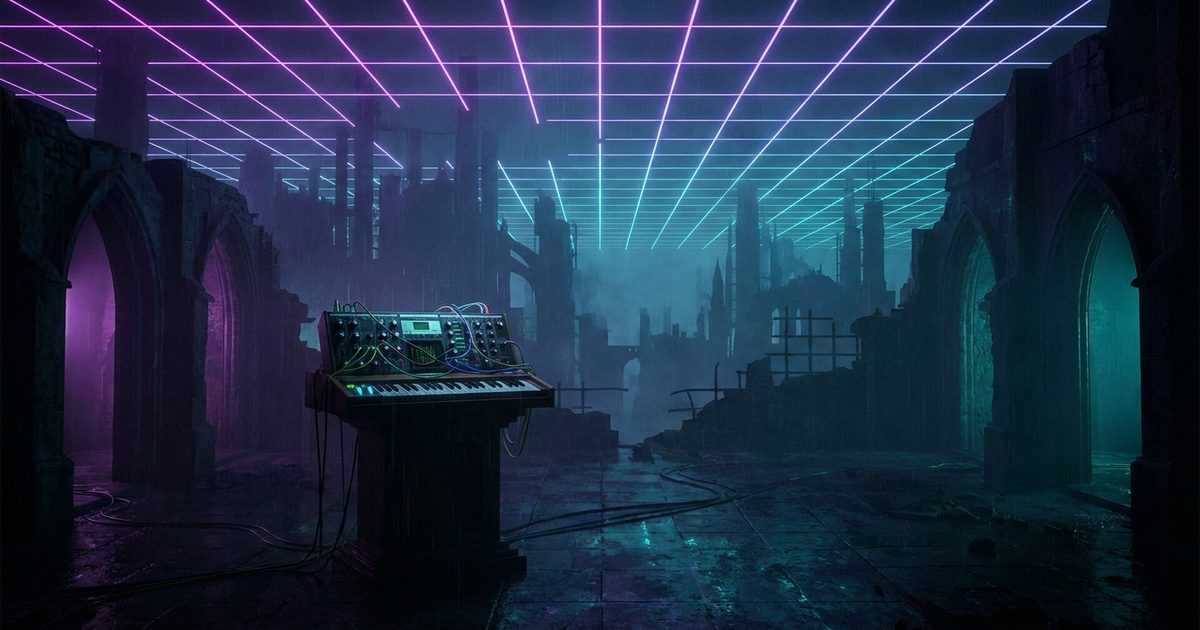
The cassette starts turning. First comes the low hum of tape, then a synthesizer arpeggio climbing slowly like smoke. You don’t know yet whether what you’re about to hear will make you want to run — or hide.
Synthwave and darkwave were born from the same decade, the same technology, the same diffuse sense that something in the air of the 1980s was fundamentally wrong. But the answers they gave to that shared dread couldn’t be more opposite. One looks back with neon-lit nostalgia. The other looks down, into the darkness beneath that era’s glossy surface.
Synthwave: The Future as Retroactive Grief
Synthwave wasn’t born in the 1980s. It was born afterward, as mourning for the future that decade had promised.
The early albums of Kavinsky, Perturbator, Carpenter Brut — all released between 2010 and 2015 — build sounds that seem 1980s but are more saturated, denser, darker than anything actually produced in that era. It’s grief dressed up as celebration. Nostalgia as a form of pain.
The horror element in synthwave is implicit in its structure. The genre’s most effective tracks — Perturbator’s Miami Disco, Kavinsky’s Night Call, most of Gunship’s catalogue — have a narrative arc. They begin as promises and end as ruins. That progression is the mechanism of psychological terror: show you something beautiful, then reveal it was already lost.
Synthwave asks: remember how good it was? Then reminds you that you can’t go back. That is a precise kind of terror.
Darkwave: Grief Without a Future
Darkwave is older. It grew directly from the 1980s as a dark branch of post-punk, and it carries the cold without detour — no nostalgia, no neon, no polished retro sheen.
Bauhaus, Siouxsie and the Banshees, The Cure at their coldest, Dead Can Dance. Sounds built around bass as a disturbed heartbeat, vocals recorded in what seem like abandoned spaces, lyrics that don’t describe the end of the world — they state it. Darkwave’s tense is the present: not “it will be dark,” but “it has always been dark and you simply hadn’t noticed.”
Where synthwave uses colour — purple, teal, coral on black — darkwave uses monochrome. The cover of The Cure’s Pornography (1982) is a shade of grey on grey on grey. Not as a graphic choice: as a statement of poetics.
The fundamental difference between the two genres isn’t sonic — it’s temporal. Synthwave looks toward an idealized past that never really existed, and aches for it. Darkwave doesn’t look anywhere: it inhabits the present the way one inhabits a haunted house — knowing something moves behind the walls, smelling damp and burnt wax, no longer surprised.
The Body, the Sound, and the Flesh That Trembles
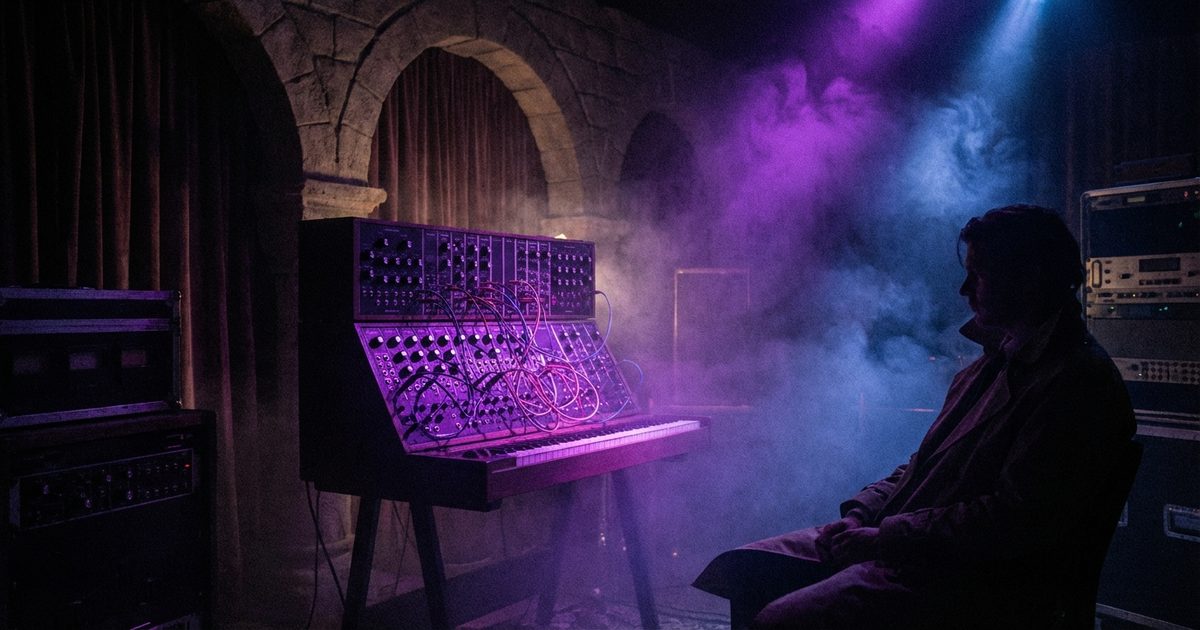
Music reaches terror by a route literature cannot take: the physical body before the conscious mind. A bass at 40 Hz registers in the sternum before you hear it with your ears. A minor arpeggio produces a measurable galvanic skin response — pores contracting, hair rising — before the brain has processed the sound as “unsettling.”
Both horror synthwave — Perturbator’s Dangerous Days, Gost’s Behemoth — and the darkest darkwave use this physicality as a narrative tool. Volume building, low frequency increasing, voice distorting slightly: these aren’t aesthetic effects. They’re biological manipulation.
- Synthwave: tension through rhythmic acceleration and timbral saturation
- Darkwave: tension through rarefaction, empty space, silence as threat
- Both use reverb to create the sensation of physically impossible space
- Both use the loop as hypnotic device — repetition that erodes resistance
When Horror Sounds: Soundtracks as Portals
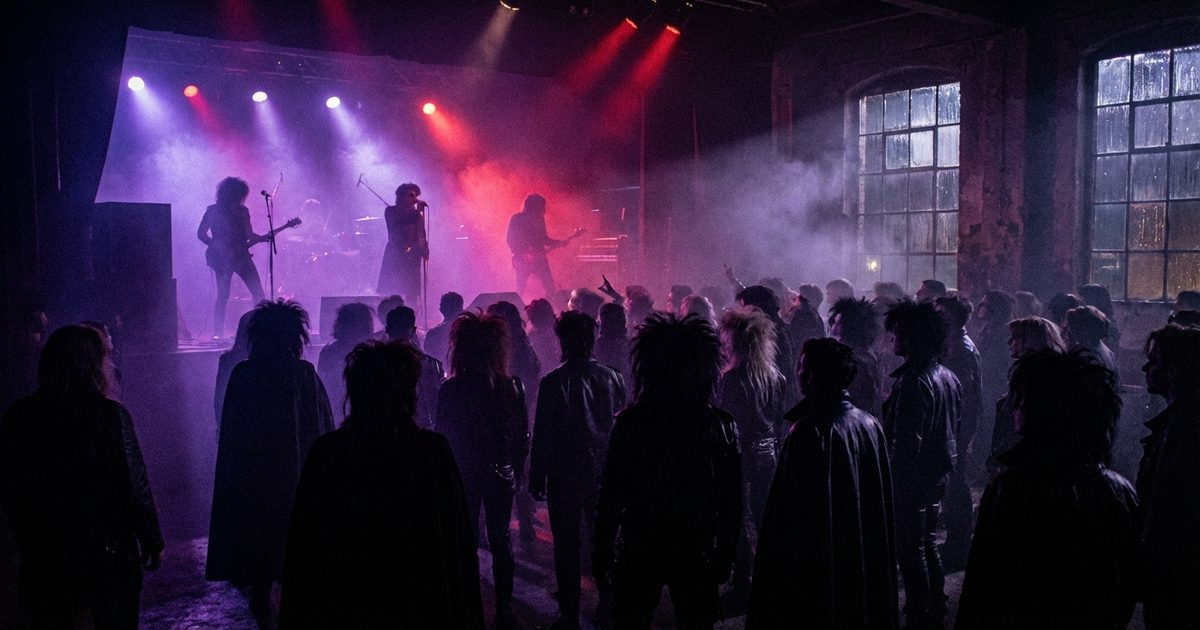
John Carpenter is not just a director. He’s the junction point between both worlds. His self-composed scores for Halloween (1978), The Fog (1980), and Christine (1983) use analog synthesizers in ways that anticipate synthwave while sharing darkwave’s emotional register.
The Halloween theme is technically simple: a chord progression in 5/4 over a bass pedal. But the irregular meter — five beats instead of four — creates a physical sense of something displaced, a foot that can’t find the next beat, a breath that doesn’t arrive when it should. Carpenter built discomfort directly into the mathematics of time.
That tradition lives today in composers like Disasterpeace (It Follows, 2014) and Mark Korven (The VVitch, 2015), who combine synthetic drones with historical instruments to create soundscapes without precise period — neither past nor future, only a liminal space where terror has no expiration date.
The Amsterdam Night Played Both
In 1980s Amsterdam — the setting of Jan Willem Koster’s The Brothel of Shadows: Cosmic Interception — both aesthetics had a physical presence. The clubs around Leidseplein received the first cassettes of German and British electronic music. Darkwave filtered through the record shops of Jordaan. The synthesizer wasn’t yet a tool for everyone: it was expensive, difficult, reserved for those building something the market hadn’t understood yet.
Alex, the novel’s protagonist, wouldn’t listen to a synthwave soundtrack — it’s 1983, and the genre doesn’t exist yet as a category. But the sound he hears in the brothel between dimensions — that low hum rising through the floor, that tone he recognizes and has never heard — is precisely what both of these aesthetics try to capture: the frequency of the imminent.
That feeling that something is about to happen. And that you probably shouldn’t want to hear it.
For more on the horror cinema of the 1980s and its relationship to these aesthetics, or to explore the Amsterdam of the 1980s that forms the novel’s backdrop, follow the links deeper into the decade.
Sixty-four chapters of pure cosmic terror. An Amsterdam you won’t forget.
Read the novel →