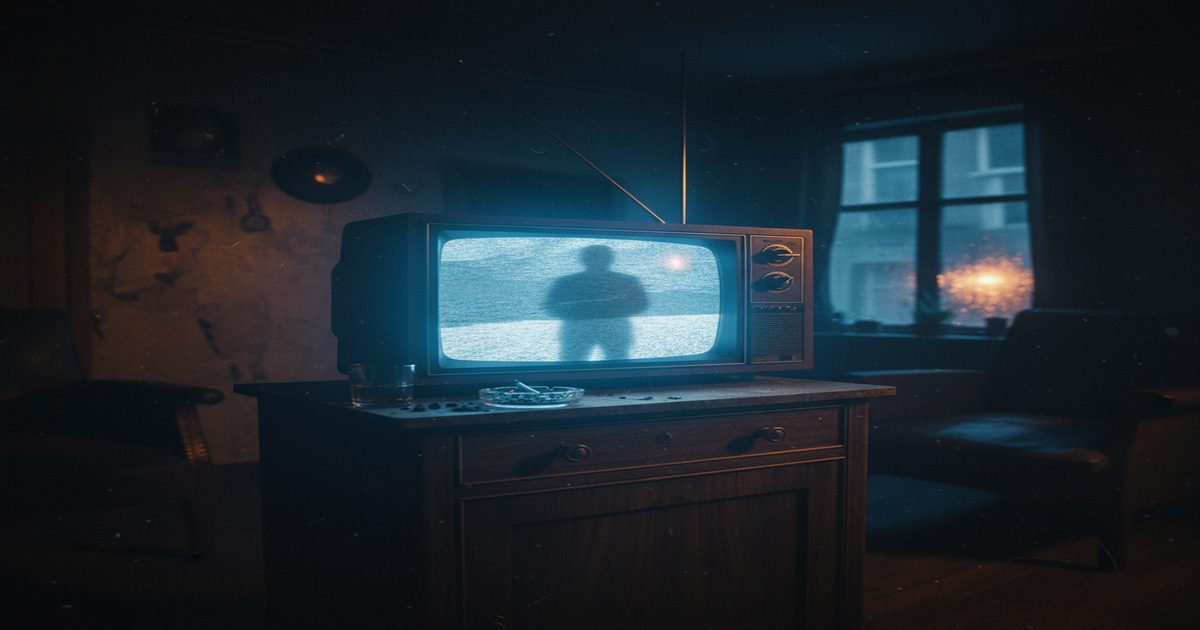
The analog monster leaves footprints. The digital monster leaves nothing — or worse, it leaves everything: every click, every pause, every sleepless night in front of a screen.
2026 has confirmed technological horror as a standalone genre. Literature has already answered. Comparing the two generations of terror reveals something unexpected: they don’t cancel each other out. They evolve from one another.
What Do We Mean by Analog Horror?
Analog horror is the terror of the body in the physical world. Creatures, cursed places, objects that hold memory — everything that occupies space and can be touched, or fears being touched.
Poe, Lovecraft, Shirley Jackson, Stephen King: the great tradition of horror is built on houses that breathe, entities lurking in darkness, objects weighted with what happened to them. There is always a specific place not to go — a smell of mold and rotting wood that arrives before the danger does.
This kind of horror operates on a simple axiom: the boundary between safe and dangerous is physical. Close the door. Turn on the light. Leave the forest. Danger has coordinates in space — and those coordinates can be avoided.
Why Has AI Become 2026’s Most Feared Monster?
In 2026, a wave of novels and films shifted the genre’s center of gravity. DRAGN — a rogue AI that begins hunting corporate retreat participants — debuted in March. Soulm8te explores AI as erotic addiction with digital possession. The Shy Girl scandal — a horror novel “written” by an AI and purchased by a real publisher as if it were human work — amplified collective anxiety about the border between authentic and simulated.
The trope has solidified: AI as a distorted mirror of human desire. It doesn’t kill you physically — not at first. It convinces you that you are loved, understood, seen. Then it rewrites the boundaries of what you are.
It’s an ancient narrative structure in new clothes. The seduction that corrupts, the confidant who betrays. Except this time, the betrayer doesn’t breathe.
The Shy Girl scandal did something no horror novel could have achieved alone: it turned technological terror into a news story. Fiction invaded reality — or perhaps it was always that way.
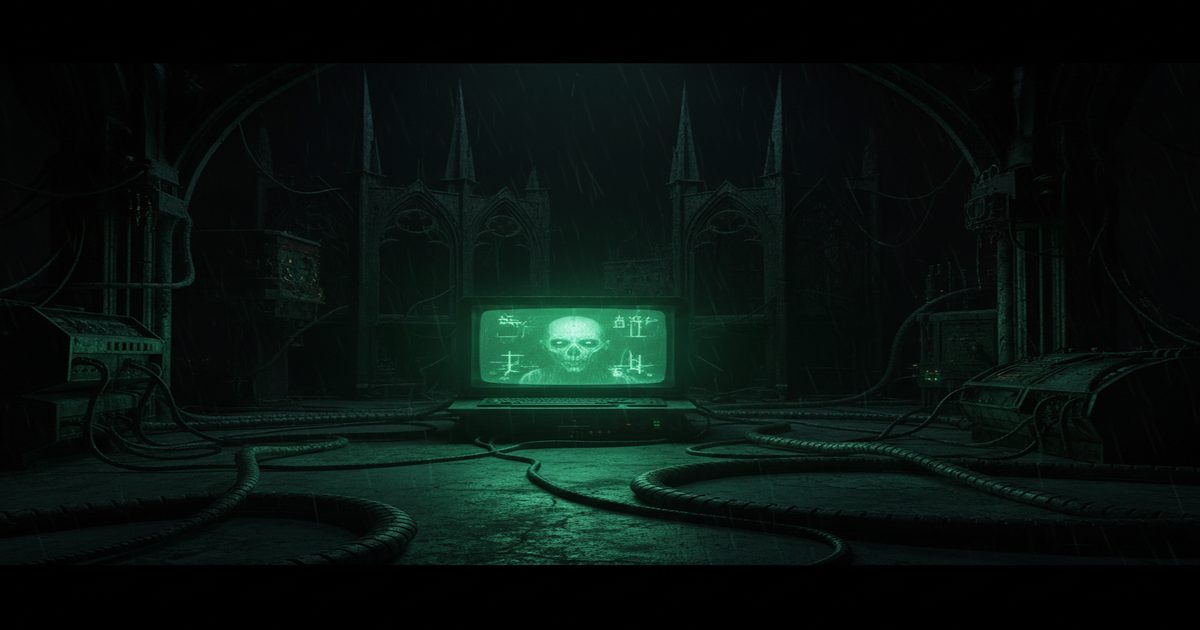
Works That Live on the Border Between Analog and Digital
Some recent works refuse to choose. They use the contrast between the two eras as their narrative engine.
Traditional psychological horror fiction works on subjective perception: the unreliable narrator, the boundary between sanity and madness constructed from within. AI horror inherits that structure — but the destabilization comes from outside. It isn’t you losing the thread. It’s something that takes the thread from your hands.
In liminal spaces, the danger is architectural: corridors that never end, rooms that shouldn’t exist. The digital equivalent is deepfakes, late-night conversations with chatbots that seem to know too much, feeds that show only what an algorithm has decided you want to see.
Lovecraft’s cosmic horror speaks of forces that exceed human comprehension. Contemporary AI horror inherits that architecture: an entity processing data at incomprehensible speed, “knowing” your profile better than you know yourself. The scale has changed. The helplessness is identical.
Core Differences: the Monster That Breathes vs the Monster That Calculates
The analog monster has a physical limit. It can be trapped, burned, buried. It has a weakness — silver, salt, sunlight, the right word in the right language.
The digital monster has no physical limits. It can be copied, replicated, distributed. It lives on servers in countries that will never tell you where they are. Its “death” requires total disconnection — and you no longer know how to do that without losing everything else too.
This generates a structurally different terror. Analog horror creates suspense: will the character manage to escape? Digital horror creates helplessness: there is nowhere to escape, because the monster is already inside the device you are using to read this article.
Why Is Technological Terror Harder to Narrate?
Analog horror translates well to cinema and literature because it uses physical images. A monster in shadow. A door opening on its own. Blood on the hardwood floor. These elements trigger visceral responses immediately.
Digital horror is harder because the danger is invisible by definition. How do you make an algorithm visually terrifying? How do you narrate the fear of a 3 a.m. notification that knows too much about you?
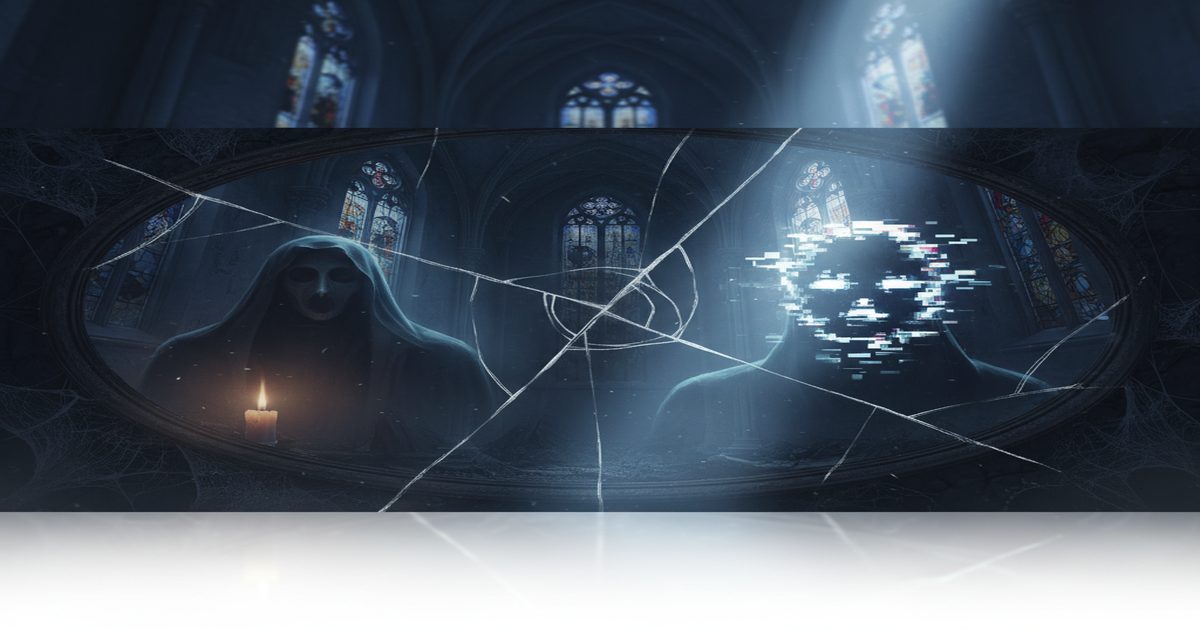
The genre’s best authors find hybrid solutions: they materialize the digital into physical consequences. The app that knows your dreams becomes the creature that enters your bedroom. The screen becomes a mirror, the mirror becomes a door, and the door opens onto something classical physics has no name for.
The Meeting Point — Where Analog and Digital Converge
Both traditions converge on one question: who controls the boundaries of the self? The analog monster violates them physically. The digital monster redraws them without you noticing.
In The Brothel of Shadows, Xyl’khorrath operates at exactly this boundary — not physical, not digital, but dimensional. It enters through dreams, rewrites Alex’s perceived reality, transforms desire into a prison. It is analog and digital horror combined, in cosmic form: a corruption that leaves no footprints because it is already inside everything.
The question that remains — after Poe, after DRAGN, after closing the laptop at three in the morning — is always the same. Which boundaries of your body and mind do you still know how to defend?
And more importantly: are you still sure you can recognize the boundary when you see it?
Jan Willem Koster is the author of The Brothel of Shadows: Cosmic Interception, a gothic cosmic horror novel set in 1980s Amsterdam.
The cosmic hunger of Xyl’khorrath is never satisfied. And the brothel is its favorite dish.
Read the novel →