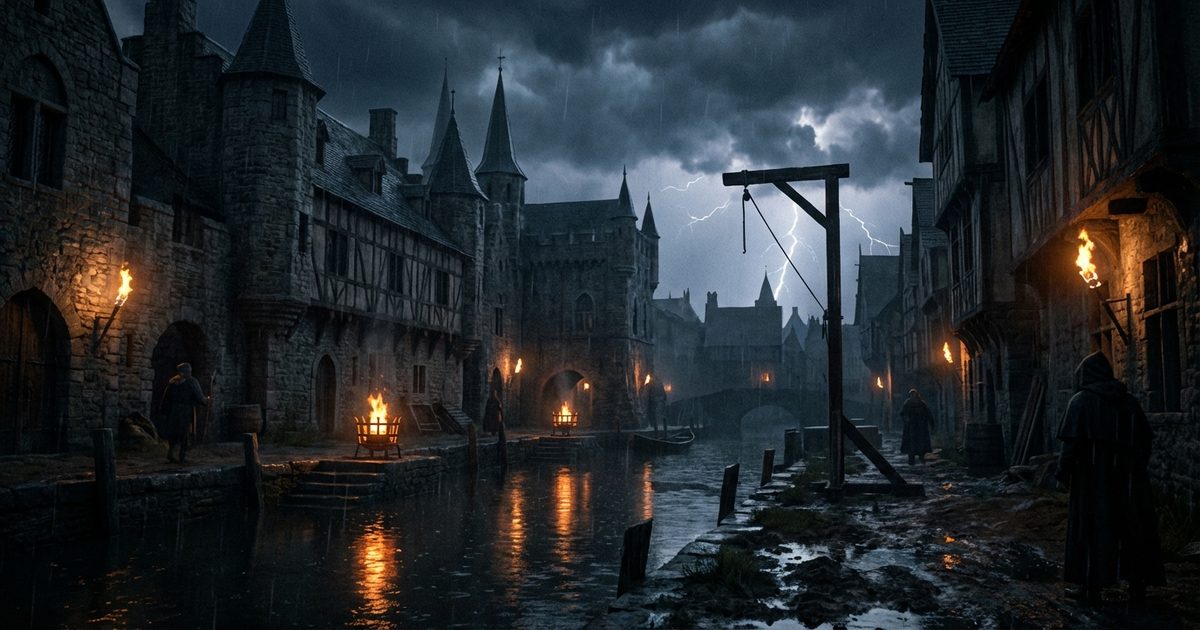
Bones still drift beneath the canals. Amsterdam turns 750 in 2026, and the world is celebrating tulips, bicycles, and Rembrandt. Nobody talks about what the city buried.
The “Amsterdam in Motion” exhibition projects 750 years of city history across a 200-square-meter model. It’s spectacular. It’s also selective. There are versions of Amsterdam that official culture prefers to skip.
Born in the Mud: a City Built on Violence
Amsterdam began in 1275 as a fishing settlement dammed across a peat bog. The smell was rotting fish and waterlogged timber. The ground was swamp, not stone.
The city’s first centuries brought religious persecution alongside trade. Between the 14th and 17th centuries, Amsterdam was contested ground between Catholics, Protestants, and Anabaptists. Heretics were executed on Dam Square. The smoke from pyres drifted across the Amstel.
The Alteration of 1578 — the Calvinist coup that handed the city to Protestants — was not bloodless. Churches sacked, nuns expelled, priests imprisoned. Amsterdam changed religion the way you change a coat, leaving those who couldn’t undress quickly enough behind on the street.
The Torture Museum: Forty Instruments and a Strange Silence
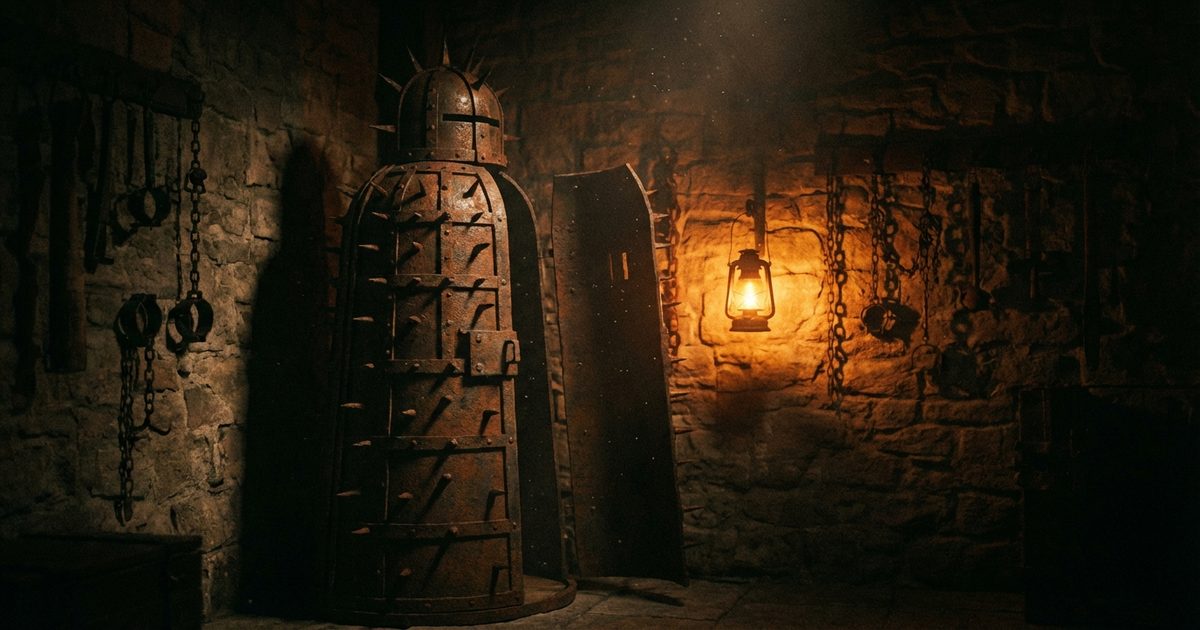
At Singel 449, the Torture Museum still stands. Forty instruments of the Inquisition arranged in a low-lit room. Wrought iron, rusted chains, blades that still smell of old metal.
It doesn’t appear in most top-ten Amsterdam lists. It doesn’t get the tourist crowds of the Rijksmuseum. But it’s there, and it receives visitors in quiet.
“Each instrument describes a procedure. The iron chair, the spikes, the bellows. Medieval torture was bureaucratic: a process with phases, documentation, signatures. The ordinary made monstrous through paperwork.”
The victims were usually ordinary people — women accused of witchcraft, men who said the wrong thing in front of the wrong witness. Unremarkable bodies handed over to extraordinary procedures. Not unlike the psychological horror novels where violence blooms from the banality of the everyday.
The Golden Age and the Other Side of Greatness
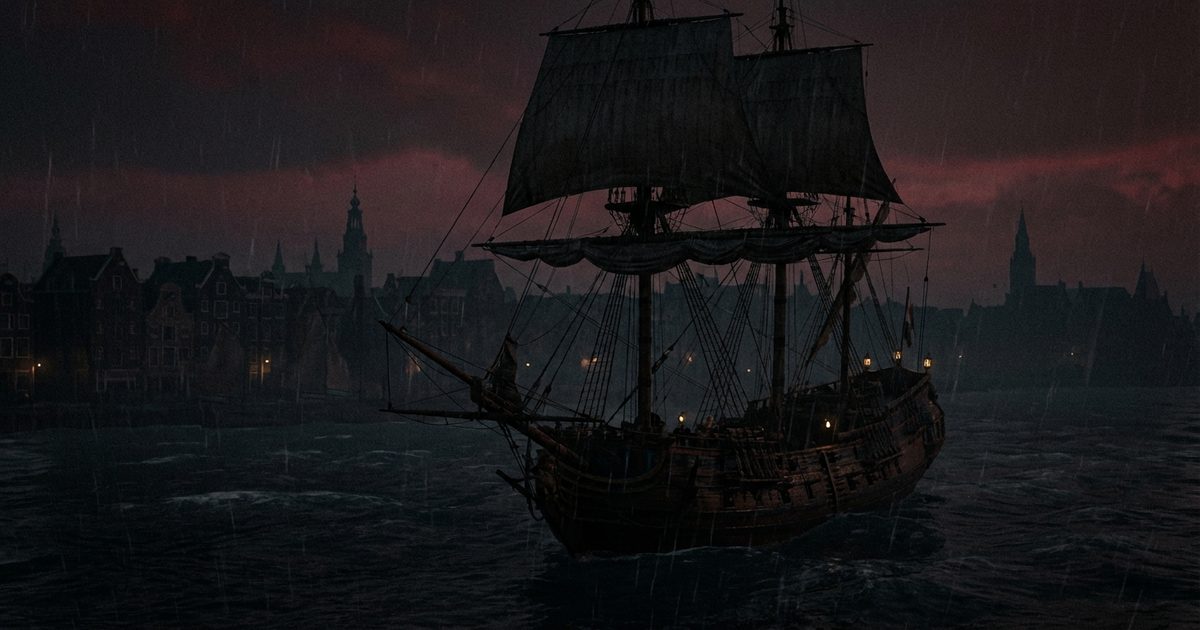
The 17th century was Amsterdam’s most glorious period. The VOC — the Dutch East India Company — turned the city into the world’s commercial center. Rembrandt painted light. The Herengracht, Keizersgracht, and Prinsengracht canals were built as a triple ring of wealth.
The ships returned loaded with spices, porcelain, textiles. They also returned loaded with enslaved people.
The VOC transported approximately 660,000 Africans as slaves to its colonial plantations. Amsterdam wasn’t just the operation’s brain — it was the wallet. The merchants who commissioned Vermeer’s paintings invested the same capital in the human trade. Those beautiful canal facades were paid for, at least in part, with this blood.
The “Mokum” exhibition at the Nieuwe Kerk, open through April 2026, tells another wound: the history of Amsterdam’s Jewish community, the persecutions, the expulsions, the Shoah. The Jewish quarter that no longer exists. Names engraved on walls as testimony for those who didn’t return.
Amsterdam’s Dark Tourism: Where to Go When You Want the Shadows
An unofficial dark tourism circuit runs through Amsterdam at night. Those who know it know where to go.
The Torture Museum at Singel 449. The Amsterdam Dungeon near Rembrandtplein, where costumed actors reenact bubonic plague, inquisition, a Dutch version of Jack the Ripper. The Zorgvlied cemetery, where artists, writers, and figures who built and destroyed the city’s reputation lie buried.
Then there are the places that aren’t museums. The hidden annexes on the Prinsengracht where Jews concealed themselves for years — Anne Frank’s was the most famous, not the only one. The World War II bunkers beneath Vondelpark. The detention cells below the former city hall on Dam Square, visible during special openings.
Amsterdam has layered its shadows with architectural care. The canal warehouses, built for goods, also housed what couldn’t be shown in daylight. In this, the city resembles the liminal spaces of horror fiction: gorgeous surfaces concealing rotted foundations.
The Brothel of Shadows and the Amsterdam No Postcard Shows
Jan Willem Koster set The Brothel of Shadows in 1980s Amsterdam. Not by accident. He chose a city where contradictions are architecture: beauty and decay sharing the same building, the same canal.
His protagonist Alex walks real streets — the canals at night, the alleys where mist rises off the water and dissolves the edges of things. That mist is literary atmosphere, but it’s also real. Amsterdam in winter, after dark, smells of stagnant water and old wood. The boundary between dreaming and waking thins when the light disappears and the city shows its age.
750 years of history don’t vanish into a multimedia exhibition. They stay in the cobblestones, the architecture, the specific smell of certain alleys. For those who know how to read a city, every stone is a document. Every canal, a submerged archive.
The guidebooks show the facade. The shadows remain where they always were, patient, waiting for the wrong visitor — or the right one.
The brothel exists between dimensions. Alex entered. Will you?
Discover the story →