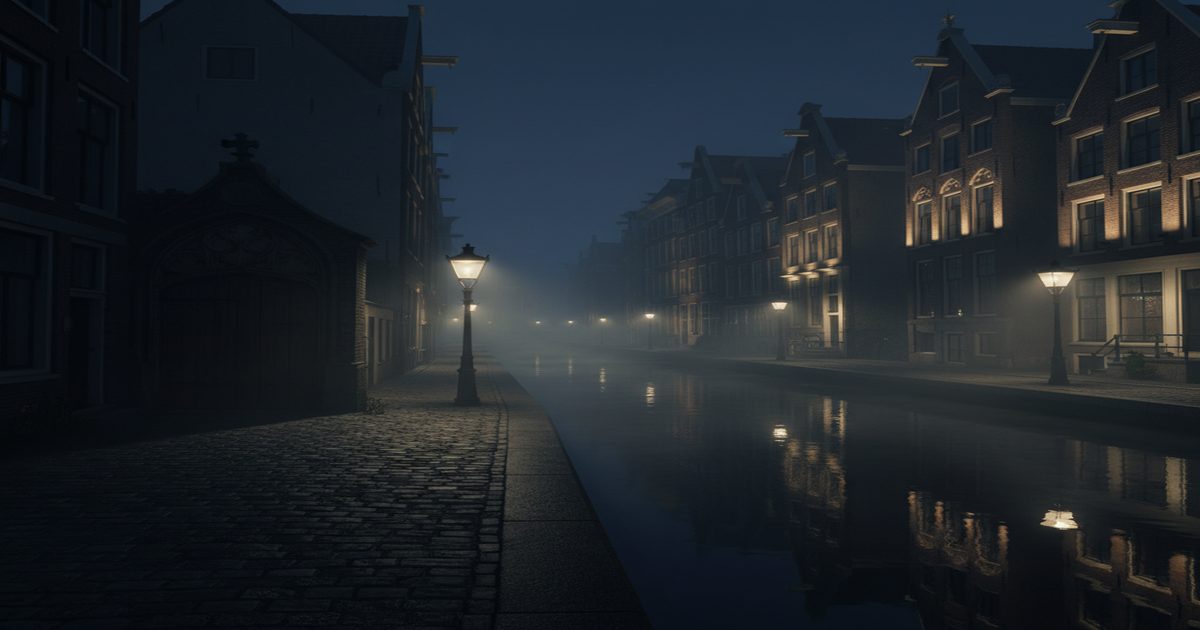
Amsterdam has a secret the guidebooks don’t mention. Beneath the romantic canals and the tulip markets, there’s a city built on blood, on the smell of burning, on water used to make bodies disappear.
Dark tourism — travel to sites of death and historical suffering — isn’t a trend here. It’s the most honest way to encounter the city. And Amsterdam, among all European capitals, has the most to hide.
What Is Dark Tourism and Why Has Amsterdam Practiced It for Centuries?
Dark tourism is the practice of visiting places connected to death, pain, and tragedy. Not for voyeurism — for understanding. Philip Stone, founder of the Institute for Dark Tourism Research, defines it as travel to sites “where death, disaster, atrocity and seemingly dark heritage have left a permanent mark.”
Amsterdam is the perfect laboratory for this discipline. Between 1550 and 1750, the city carried out more than 1,400 public executions in Dam Square. Crowds gathered and brought their children. It was entertainment, warning, spectacle.
Today those same spaces hold souvenir shops and stroopwafel stands. But the violence remains, beneath the cobblestones. In the stories the walls still carry.
“Dark tourism isn’t about death. It’s about how the living choose to remember.”
— Philip Stone, Institute for Dark Tourism Research
1. The Amsterdam Dungeon: Where History Screams
The Amsterdam Dungeon is the most obvious entry point to the city’s dark tourism — and the most honest in its theatricality. No cultural pretense. Pure immersion in historical terror.
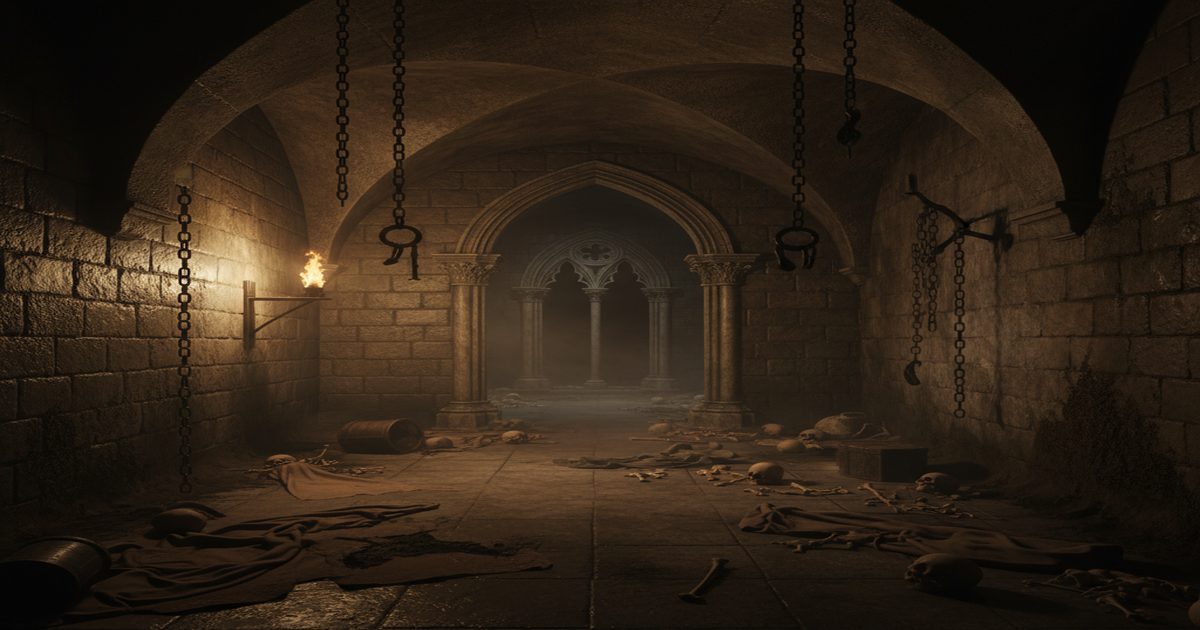
Costumed actors guide visitors through scenes drawn from the darkest chapters of Dutch history. The 1663 plague killed 24,000 people in two years. The witch trials. The inquisitorial courts. Each room recreates a chapter Amsterdam would prefer to forget.
What strikes you isn’t the stagecraft — it’s the detail. The Dungeon has done serious historical research. The damp cold of the stone walls, the metallic clang of chains, the smell of centuries compressed into a single corridor: every element forces the past to stop being abstract.
2. The Canals at Night: Ghosts on Black Water
Amsterdam’s canals at night have a specific sound. Dark water striking stone edges in a slow, measured knock — like a clock counting backward.
Between 1600 and 1900, hundreds of bodies were recovered from the waters of Herengracht, Keizersgracht, and Prinsengracht. Not all by accident. Night boat tours reveal a different city: bridges throw deep shadows across dark facades, and the medieval cellars — used for illegal trade in the seventeenth century — remain invisible from the surface.
During excavations for the Noord/Zuidlijn metro, construction unearthed 700,000 artifacts spanning seven centuries of urban life — and urban death. Amsterdam’s layered history is written into the foundations of every building along every canal.
3. The Red Light District: A Liminal Zone Between Desire and Fear
De Wallen is not just an adult entertainment district. It’s a liminal space in the anthropological sense: a zone that exists between categories, neither fully ordinary nor fully forbidden.
The red windows glow through the fog like eyes in the dark. Tourists photograph things they won’t show at home. Dark tour guides describe the crimes of the 1980s: unsolved murders, disappearances, trafficking that the canals swallowed in silence. The 1980s in Amsterdam were grimmer than collective memory wants to acknowledge.
De Wallen is also the geographic heart where Jan Willem Koster set The Brothel of Shadows. That threshold between desire and fear — between red light and the dark beyond the doorway — is the novel’s very substance. Alex enters that liminal zone and finds that what waits inside defies every category he knows.
4. The Medieval Cellars: Seven Centuries of Buried Secrets
Beneath the canal houses of Jordaan and the Grachtengordel, a second Amsterdam exists. Cellars built between 1300 and 1600 served for goods storage. Then, over time, for something else.
Some are accessible through private tours. The smell hits first: wet stone, rotting wood, a cold that rises from the foundations and settles in your stomach. The darkness beyond the torch is absolute. Not theatrical — real.
Excavations under Rokin in 2019 brought to light objects linked to eighteenth-century magical practices: amulets, animal bones, votive figures. Amsterdam, even in its underground city, guards strata it preferred to leave unlit.
5. The Ghost Tour: Walking the Condemned Men’s Alleys
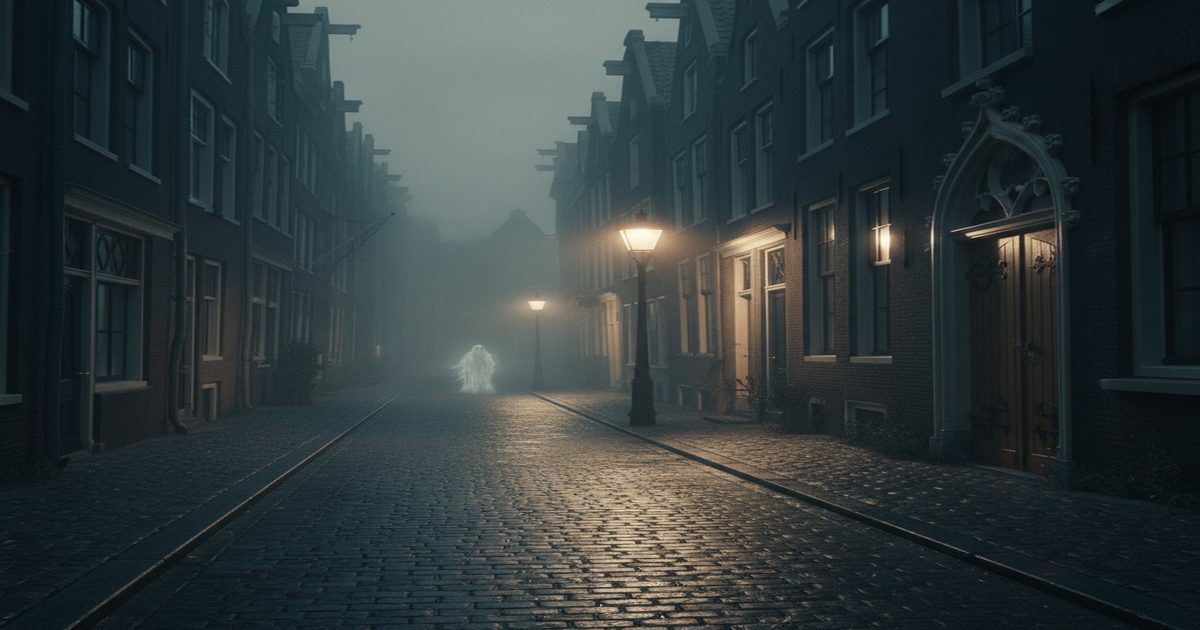
Amsterdam’s night ghost tours depart from Dam Square and trace the paths of public executions, unsolved murders, and apparitions documented in city historical records going back to the sixteenth century.
This isn’t theater. Guides cite sources: archives, notarial acts, period chronicles. The alley of Enge Kapelsteeg, where an accused witch was executed in 1673, carries a cold that thermometers don’t explain. So the guides say — and so say the visitors who return each year.
6. The Rasphuis: The Prison That Invented Modern Punishment
Founded in 1596, the Rasphuis was Europe’s first modern house of correction. Inmates were forced to rasp guaiacum wood to produce dye — hence the name. Work was the punishment. The body was the instrument of forced redemption.
The Rasphuis no longer stands, but its site — now a shopping center — carries that specific quality of places where suffering was systematized. Some foundations remain visible through glass panels in the floor. Stone remembers even when humans choose to forget.
7. Zorgvlied Cemetery: The Most Recent Secrets
Zorgvlied is Amsterdam’s monumental cemetery, opened in 1830 along the Amstelkanaal. It has the uneasy beauty of well-kept graveyards: tall trees, time-tilted headstones, a silence the city traffic can’t quite reach.
Alongside historical figures rest anonymous women recovered from the canals in the 1980s and 1990s, their cases still unsolved. Dark tourism isn’t only distant history. It’s also what happened yesterday — and what nobody has answered for yet.
Why Dark Tourism Is Archaeology of the Soul, Not Voyeurism
There’s an objection anyone who’s visited a dark site has encountered: “Isn’t it morbid? Isn’t it disrespectful?” The answer lies in the distinction between those seeking cheap thrills and those seeking contact with reality.
Honest dark tourism is archaeology of the soul. It means standing before what humanity has done — and understanding what it’s capable of. Amsterdam’s dark places aren’t horror museums. They’re mirrors.
Jan Willem Koster wrote The Brothel of Shadows on precisely that threshold. Alex, the protagonist, is an ordinary man who enters a liminal space and discovers that the line between desire and fear is far thinner than he imagined. Like every visitor who walks De Wallen at night. Like every tourist who descends into the medieval cellars and feels the cold rising through the bricks.
The dark city exists. It’s waiting for you to look.
About the author: Jan Willem Koster is a Dutch-born author whose debut novel The Brothel of Shadows: Cosmic Interception explores Amsterdam’s liminal spaces through the lens of cosmic horror and erotic gothic fiction.
The brothel exists between dimensions. Alex entered. Will you?
Discover the story →